Cast Concrete vs. Natural Stone Pavers:
A Commercial Performance Comparison
What is the True Lifecycle Cost of Commercial Paving?
For commercial paving applications, natural stone and cast concrete pavers differ significantly in durability, lifecycle cost, maintenance requirements, and environmental impact. While concrete pavers typically cost 15–20% less upfront, natural stone consistently delivers lower total cost of ownership over a 30-year period — and outperforms concrete in virtually every structural and aesthetic performance metric that matters for commercial projects. Here’s what the data shows.
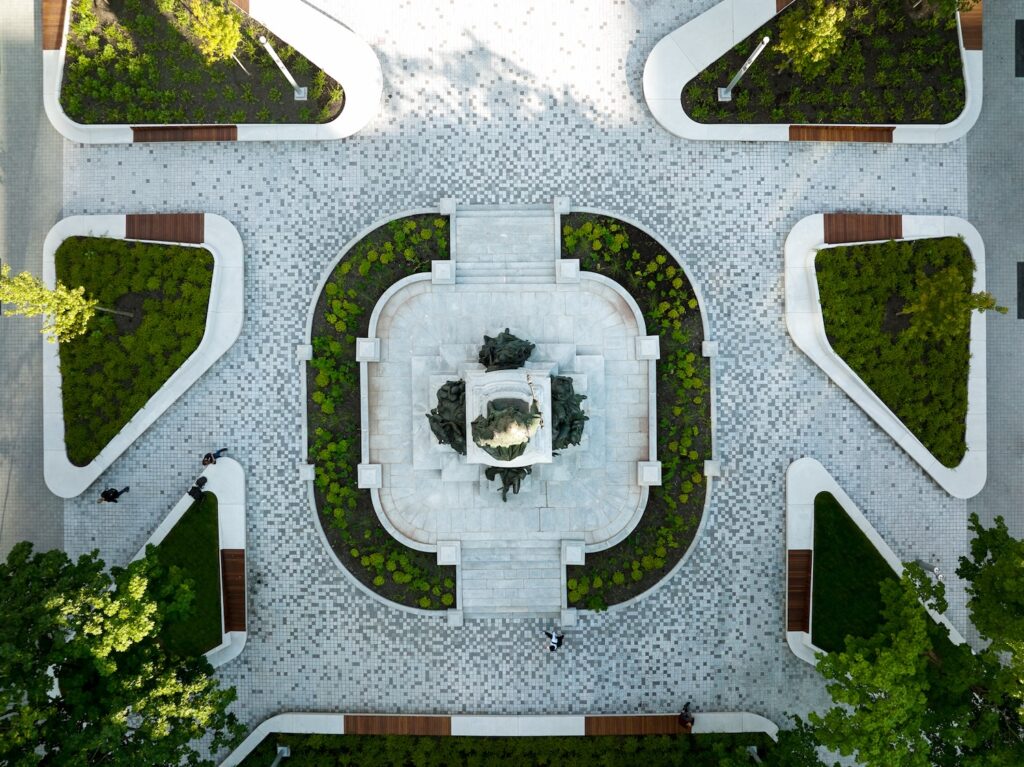
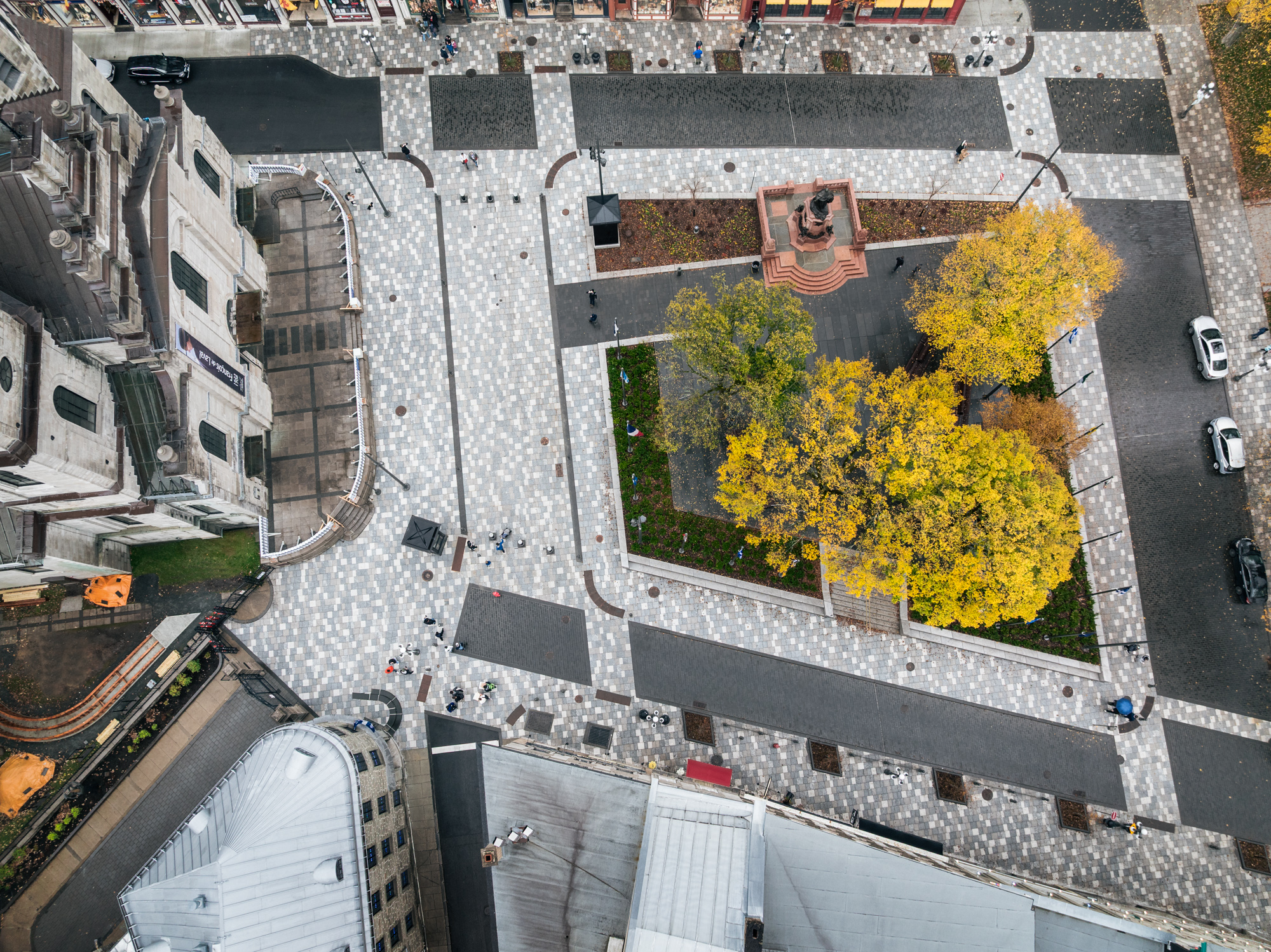
Picture two commercial plazas, both installed ten years ago. The first, paved with cast concrete, shows faded colors where synthetic pigments have surrendered to UV rays, exposed aggregate creating rough surfaces, and an overall drab appearance demanding replacement. The second plaza, constructed with natural stone pavers, maintains the same rich color and smooth texture as installation day, with surfaces that have only grown more distinguished with age.
This scenario illustrates a fundamental truth: initial cost and lifecycle value tell very different stories. While concrete pavers may sometimes win the first-cost competition, natural stone delivers superior long-term performance that transforms the economic equation over time. For commercial developers and municipal planners, understanding these performance differences when considering specifying natural stone becomes crucial to making decisions that serve projects for decades.
How Does Material Composition Affect Commercial Paver Performance?
Cast Concrete Construction
Cast concrete pavers combine Portland cement, aggregates, synthetic pigments, and additives through molded formation processes. The fundamental challenge lies in their composite nature—concrete pavers typically rely on surface-applied colors and textures, creating a superficial layer that differs from the underlying base material. When weather and wear expose the aggregate beneath, the original aesthetic appeal disappears.
Manufacturing inconsistencies result in dimensional tolerances up to 1/8 inch, creating installation challenges and potential lippage between pavers. These variations stem from the molding and curing processes where specific temperature, humidity, and curing times affect final product quality.
Natural Stone Characteristics
Natural stone pavers represent millions of years of geological formation, compressed and mineralized through natural processes that create exceptional density and strength. The quarrying process extracts solid stone blocks, then saws them to smaller sizes of precise dimensions using diamond-blade technology, achieving tighter tolerances than most concrete manufacturing.
Most importantly, natural stone’s color and texture remain consistent throughout the entire thickness. What appears on the surface represents the same mineral composition at the core, ensuring wear reveals more of the same material rather than exposing different underlying components.
How Does Natural Stone Perform vs. Concrete in Commercial Paving Applications?
Color Retention and Surface Integrity
Cast concrete relies on synthetic pigments and dyes, creating vulnerability to UV degradation. These artificial coloring agents begin breaking down within the first few years, leading to gradual fading accelerated by sun exposure and weather cycling. As surfaces wear, the colored finish layer gradually disappears, revealing rough, gray aggregate beneath—transforming attractive surfaces into industrial-looking expanses requiring costly restoration.
Natural stone eliminates these concerns through natural, mineral-based coloration created by the earth. Colors in granite, limestone, and marble result from natural mineral clustering formed during geological processes, not added pigments or dyes. This means color remains stable indefinitely under UV exposure and all weather conditions, confirmed by centuries-old installations maintaining their original appearance.
Structural Performance Data
ASTM testing reveals significant performance differences. Compressive strength testing shows natural stone consistently outperforming concrete alternatives, with granite specimens like Cambrian Black™ granite achieving 30,550 psi compared to concrete’s typical 8,000 psi specification for paving.
Natural stone’s homogeneous composition ensures even wear across surfaces, maintaining structural integrity over extended periods. Concrete pavers develop uneven wear patterns as softer matrix materials erode around harder aggregates, creating exposed ingredients and increasingly rough surfaces requiring maintenance.
Freeze-thaw performance data shows natural stone’s low absorption rates—typically 0.01% to 0.14% by weight according to ASTM C97 testing—provide superior frost damage resistance compared to concrete’s higher porosity. This is especially important for materials used near water, such as fountains, public pools and splashparks, or along seawalls and breakwaters.
What is the Lifecycle Cost Difference Between Natural Stone and Concrete Pavers?
Initial vs. Long-Term Investment
Initial material pricing can sometimes favor concrete pavers, with costs 15-20% lower than natural stone alternatives. However, replacement cycle expectations reveal dramatic differences: concrete pavers require replacement after 20-25 years due to fading and deterioration, while natural stone installations perform effectively for 100+ years with minimal intervention.
A real-world municipal plaza case study demonstrates these economics clearly. Concrete pavers cost $8.50 per square foot average versus natural stone at $14.25—a $23,000 difference for 4,000 square feet. However, lifecycle analysis showed concrete requiring replacement after 15 years ($34,000 future cost) plus $1,200 annual maintenance. Natural stone projected 50+ year service life with only $400 annual maintenance, resulting in 30-year total costs of $71,000 for concrete versus $59,000 for natural stone.
| Cost Factor | Concrete Pavers | Natural Stone Pavers |
|---|---|---|
| Initial Cost per sq ft | $8.50 | $14.25 |
| Annual Maintenance | $1,200 | $400 |
| Expected Replacement | 15-20 years | 50+ years |
| 30-year Total Cost | $71,000 | $59,000 |
Maintenance Cost Differences
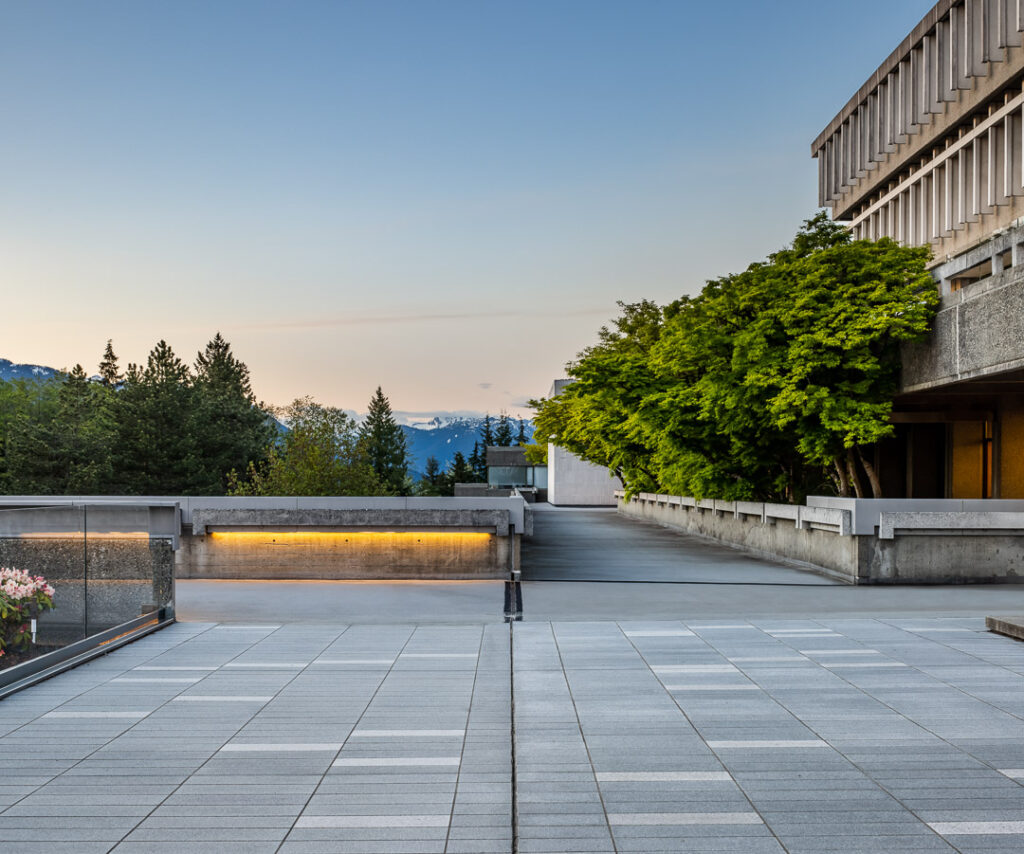
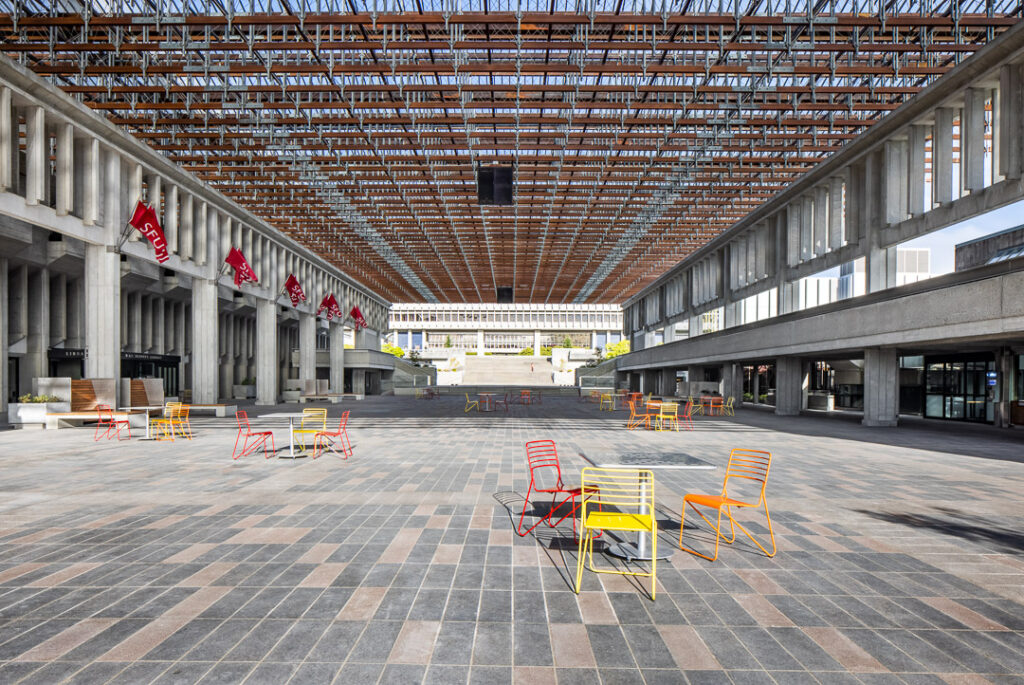
Concrete installations require regular sealing, cleaning with specialized equipment to address exposed aggregate, and periodic color restoration treatments. In some cases, trapped water can begin degrading the concrete, or alkali-silica reactions can occur, leading to replacement. The negative effects of water retention can be seen in the SFU Campus case study. Natural stone requires only basic cleaning and occasional sealing, with individual unit replacement rarely necessary except for extreme damage.
Is Natural Stone More Sustainable Than Concrete for Commercial Paving?
Manufacturing Footprint
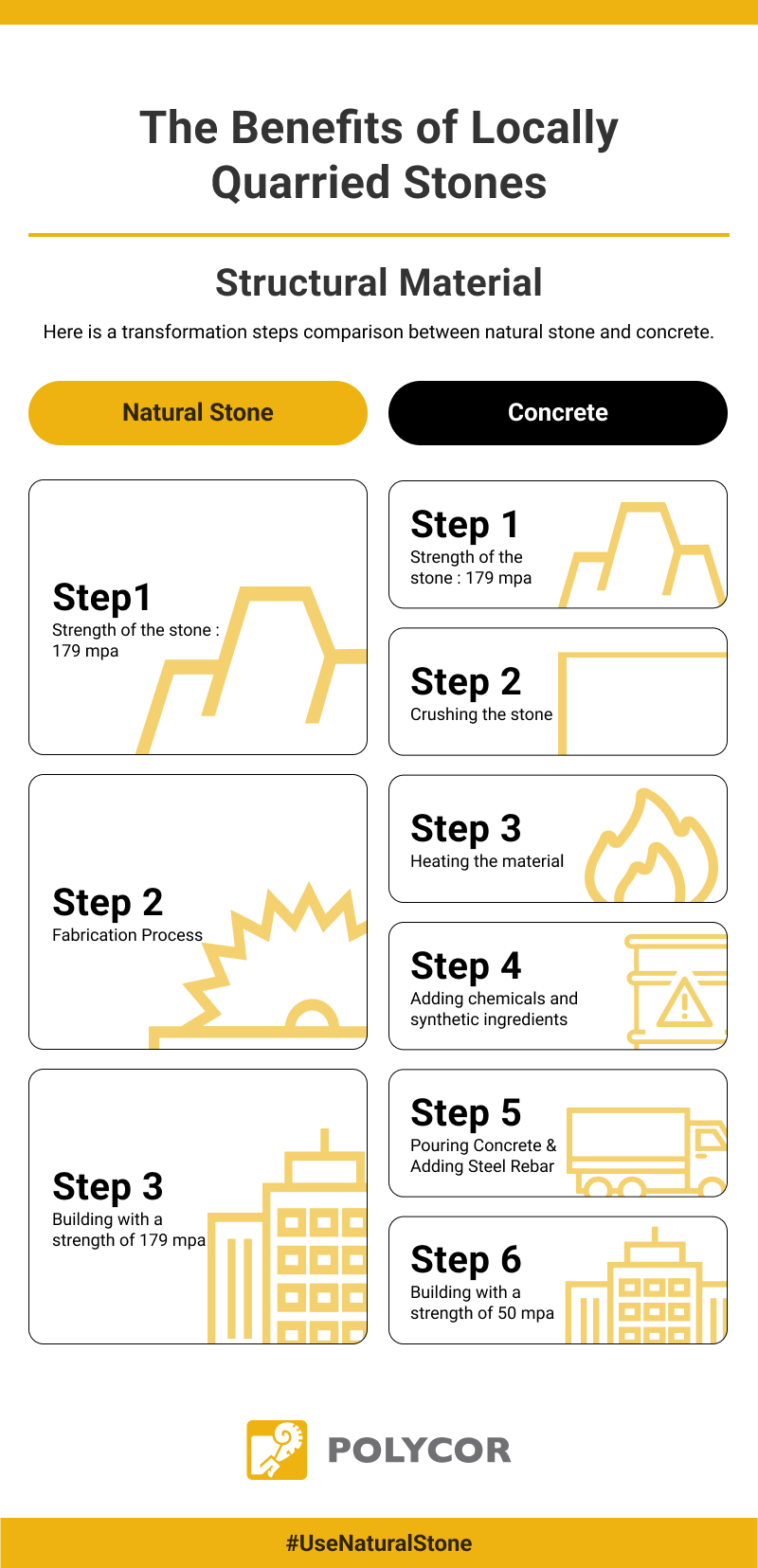
Environmental comparison reveals substantial differences in resource consumption. Concrete production generates approximately one ton of CO2 for every ton produced, representing roughly 8% of global CO2 emissions. The cement manufacturing process requires extreme heat in kilns exceeding 2,600 degrees F to form clinker, making it one of the most energy-intensive industrial processes globally.
Natural stone extraction operates through mechanical quarrying and no furnaces or burning required, consuming significantly less energy. Comprehensive lifecycle analyses show natural stone requires 30% less energy consumption, generates 5 times less CO2 emissions, and produces 200 times less waste compared to concrete manufacturing.
Water consumption patterns further highlight differences. Concrete production accounts for approximately 1/10th of global industrial water use, while natural stone processing requires minimal water, primarily only used for dust control during cutting operations.
End-of-Life Value
Natural stone offers infinite recyclability—materials can be repurposed, cut to new sizes, and adapted for different applications throughout their extended service life. The structural integrity and natural composition enable creative reuse scenarios extending value far beyond initial installation.
LEED credits favor natural stone specifications significantly. Projects utilizing natural stone can earn multiple LEED points for material selection, contributing to green building certification goals through low embodied carbon, extended service life, and complete recyclability.
Which Commercial Paving Applications Benefit Most From Natural Stone?
High-Traffic Areas
Commercial pedestrian applications demand materials that withstand constant foot traffic while maintaining safe, attractive surfaces. Natural stone’s superior wear resistance stems from dense, homogeneous composition that distributes loads evenly. Concrete pavers develop uneven wear patterns as softer materials erode around harder aggregates, creating increasingly rough surfaces.
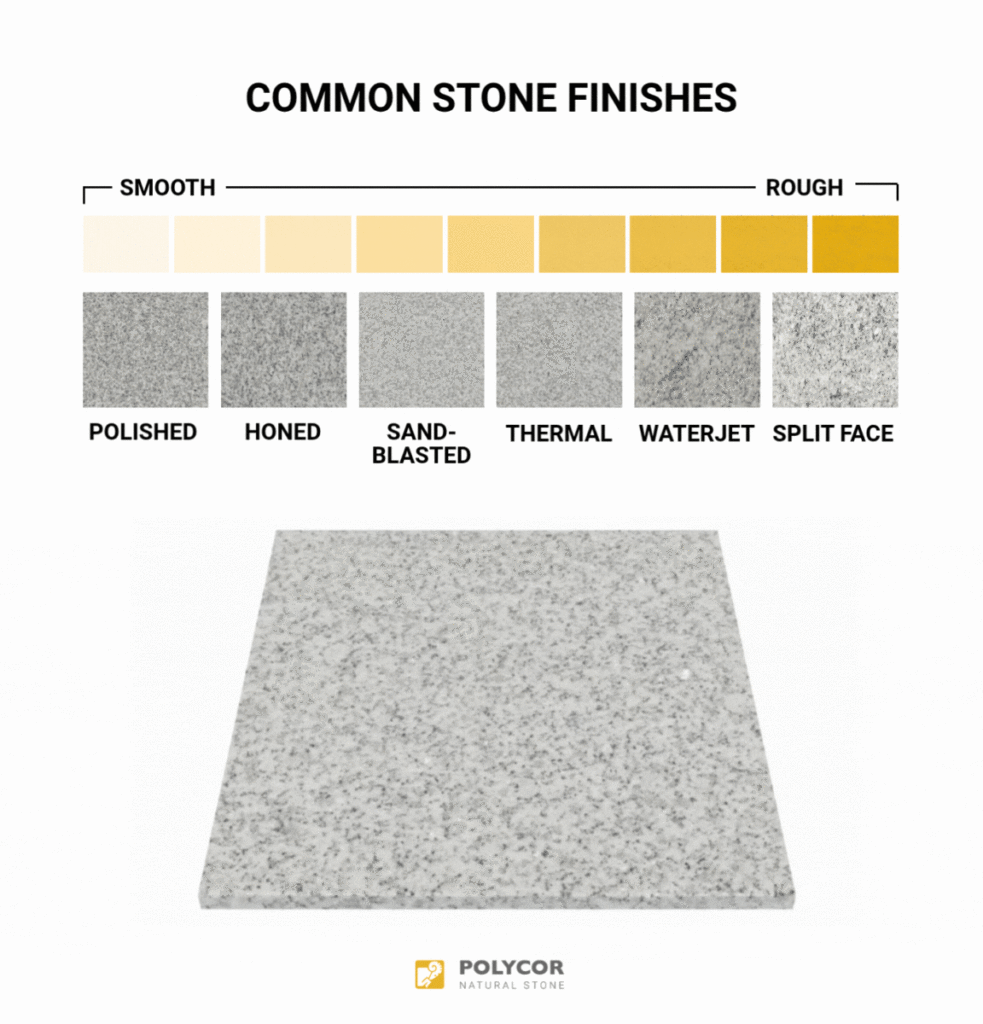
Natural stone offers multiple finish options that achieve desired friction coefficients (DCOF) while maintaining aesthetic appeal. Thermal finishes provide excellent slip resistance for wet conditions, while the material’s compatibility with standard cleaning equipment simplifies maintenance protocols.
Vehicular Applications
Commercial parking and loading areas represent demanding applications where natural stone’s exceptional compressive strength provides superior load-bearing capacity. Granite pavers achieve compressive strengths exceeding 30,000 psi, far surpassing requirements for any commercial vehicular application.
Natural stone maintains smooth surfaces throughout its service life, with granite’s crystalline structure actually becoming more homogenous under traffic. Concrete pavers develop surface roughness as their matrix becomes worn and aggregates get exposed, creating surfaces that trap debris and become difficult to maintain.
Water Feature Applications
Commercial water features and pool surrounds create unique requirements favoring natural stone significantly. Chemical resistance to chlorine and water treatments ensures long-term compatibility without surface degradation. Lighter natural stone’s high solar reflectance keeps surfaces cooler under direct sunlight, reducing burn risk and improving user comfort—especially valuable for commercial pool decks where public safety is paramount.
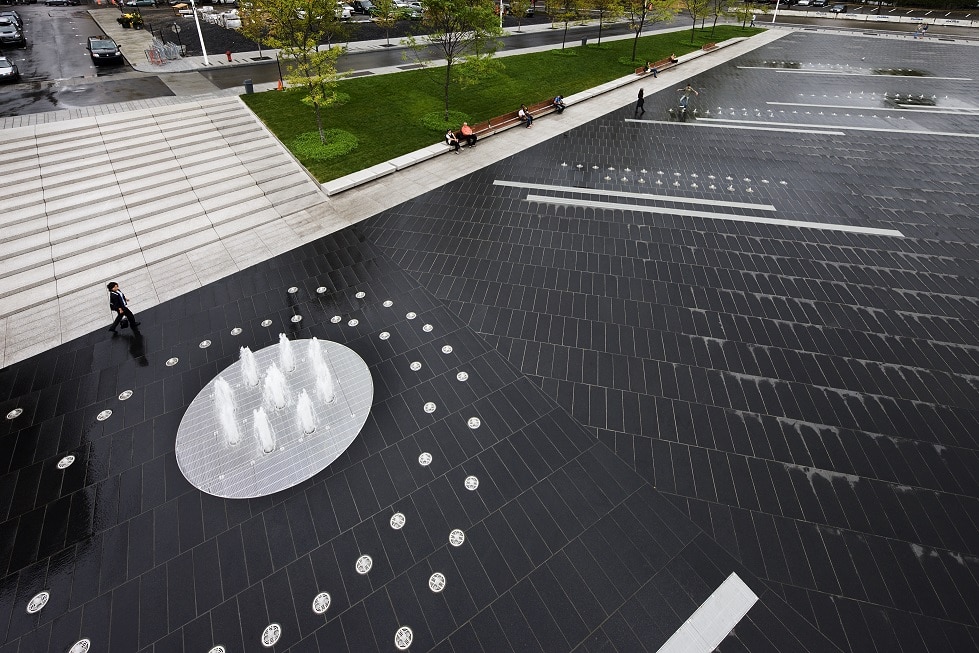
Natural Stone vs. Concrete Pavers: Which is the Better Investment for Commercial Projects?
The choice between cast concrete and natural stone for commercial paving ultimately depends on project priorities and evaluation timeframes. While concrete offers lower initial costs, natural stone delivers superior long-term value through enhanced durability, permanent color retention, and minimal maintenance requirements.
Natural stone’s four times greater durability, five times lower CO2 emissions, and proven century-long performance record create compelling advantages for projects prioritizing sustainability and long-term value. The material’s ability to maintain appearance and performance for generations while contributing to green building goals makes it an investment in both project success and environmental responsibility.
For commercial paving projects where lifecycle costs, sustainability goals, and long-term appearance matter more than initial budget constraints, natural stone represents the optimal choice. The performance data speaks clearly: natural stone doesn’t just compete with concrete—it surpasses it in virtually every long-term performance metric that matters for commercial success.
For detailed performance data, specification assistance, or project-specific cost analysis, contact Polycor’s technical team for expert consultation tailored to your commercial paving requirements.
Ready to specify natural stone for your next commercial paving project? Download Polycor’s paver range sheets or order stone samples and ASTM performance data from our architectural team.