
Value Engineering Commercial Stone Paving:
How Quarry Knowledge Reduces Project Costs
Changing paver dimensions by just a few inches can save thousands of dollars on large commercial projects. It’s a subtle adjustment visitors never notice—but one that dramatically improves yield from quarried granite blocks. The key lies in understanding how quarrying operations affect costs and using that knowledge for strategic value engineering that doesn’t compromise design intent.
Why Quarry Knowledge Matters in Paving Specifications
The most significant cost savings in commercial stone paving don’t come from substitutions or design compromises; they come from choices made early in the design development phase. Dimensional adjustments of just a few inches can translate to significant budgetary savings because they align with the natural economics of quarrying and fabrication labor.
Modern quarrying produces blocks in somewhat predictable size ranges—dimensions determined by both geology, aesthetics, equipment, and extraction techniques. When paving specifications work within those block sizes rather than against them, projects benefit from higher yield, less waste, and lower material and fabrication costs. Ignoring those realities can drive up costs even if the project’s total installed square footage remains the same. Working within the parameters of a well-developed natural stone specification guide will also greatly improve efficiencies across the board.
The Economics of Quarry Block Dimensions
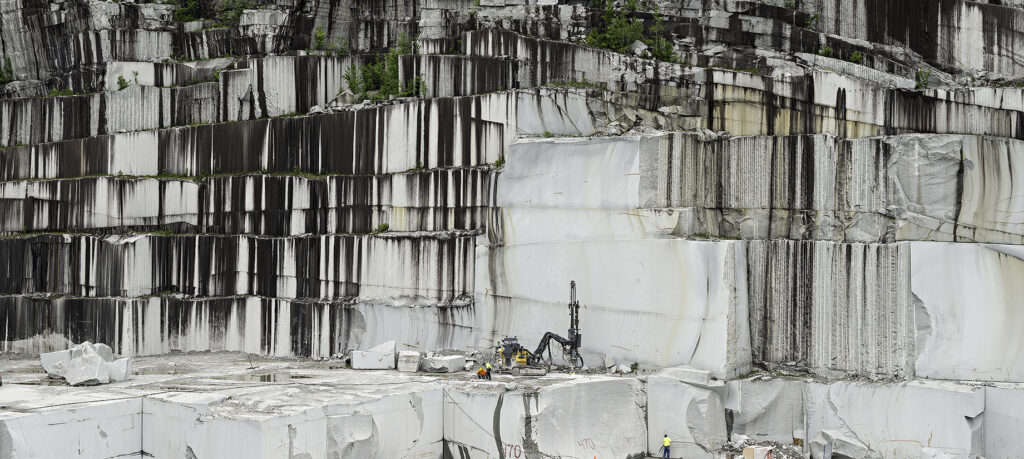
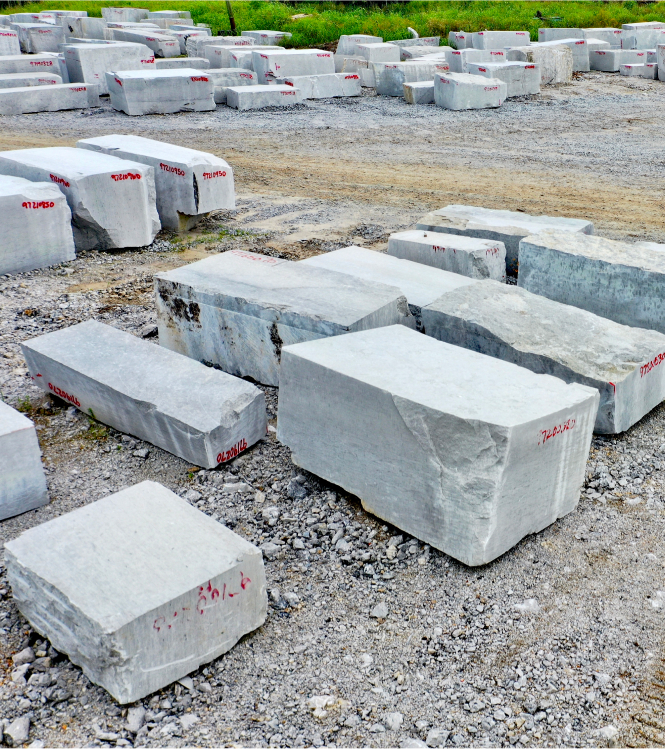
Granite blocks from fine-grain deposits in high-volume quarries can typically average 10 by 6 feet, and limestone and marble blocks average slightly smaller in the 9 by 5 feet range. These aren’t arbitrary figures; they reflect the geological characteristics and cutting methods that preserve block integrity, quarry operations, and maximize yield.
When paver dimensions align with these block sizes, fabricators cut more efficiently, achieve higher yields, and minimize waste in the process. For example, a plaza designed with 4-by-2-foot granite pavers may be re-specified to 3-by-2-foot pavers, improving yield from a 10-by-6 block and reducing waste without altering the project’s overall look. Multiplied across a large installation, those savings become substantial and lead to better alignments with material budgets.
Modern Quarrying Techniques Create New Efficiencies
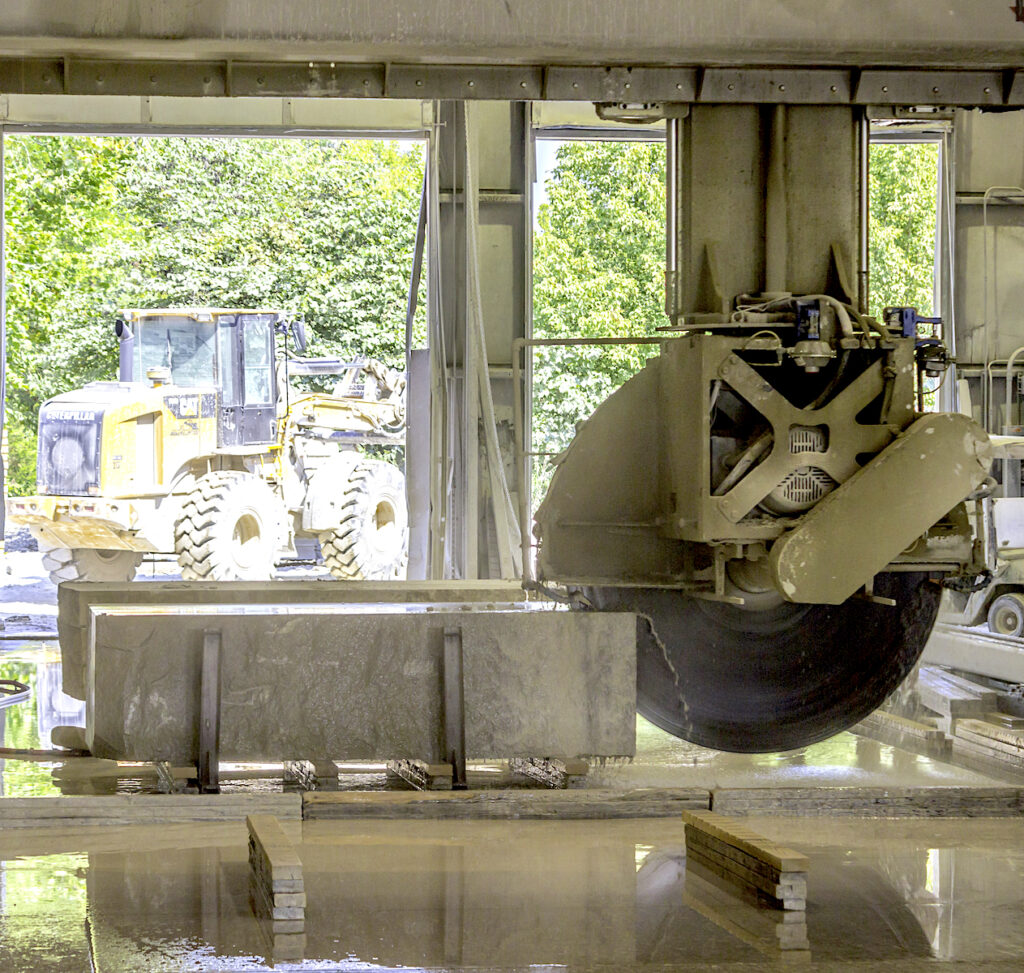
Today’s quarrying operations utilize advanced methods, including wire saws, belt saws, precision drilling, and minimal explosives usage, to produce larger, cleaner blocks with greater predictability. Petrographic analysis, drone surveying, 3D modeling, and ground-penetrating radar to allow quarry operators to anticipate block quality and extraction patterns from the benches inside the quarry before cutting operations even begin.
These technologies save time, create more consistent, reliable blocks, and improve efficiencies, which in turn open new value engineering opportunities. Suppliers with quarry ownership and direct control of where, when, and how quarrying is performed can pass along these efficiencies, giving design teams more accurate projections of cost, lead times, and availability than distributors or wholesalers who sit several steps downstream in the supply chain.
Stone Quarry Process
How Stone Quarries Operate
Early Supplier Collaboration Multiplies Cost Savings
The most successful projects bring quarry-direct suppliers, like Polycor, into the conversation before specifications are finalized. This early engagement uncovers opportunities that typically would disappear once documents are locked: adjusting paver thickness to improve yield, defining or widening stone range acceptance to increase availability, or simplifying fabrication details to reduce costs.
For instance, instead of cutting solid curved pavers, a design might use segmented straight pieces assembled into the same arc—achieving the visual intent while improving recovery and lowering fabrication costs. These strategies are easiest to implement during design development, when dimensional and aesthetic choices are still flexible. Additionally, evaluating material cost comparisons, such as reviewing the lifecycle cost comparison of natural stone vs. concrete pavers, will help inform purchasing decisions based on relevant data.
How Block Yield Drives Budget Outcomes
Yield efficiency — the percentage of usable stone produced from a quarried block — is one of the most important variables in stone project economics. A specification aligned with block dimensions might achieve 85% yield, while one that ignores them may fall to 60% or less.
On a 10,000-square-foot project, that difference translates to a 40% increase in raw material requirements. The ripple effect shows up not only in material costs but also in fabrication time, transportation, and installation logistics.
These trade-offs become even sharper and more pronounced when projects demand tight color or range matching. Cherry-picking blocks for uniform appearance further reduces yield. With better quarry knowledge, specifiers can weigh whether consistency or cost optimization takes priority—and design accordingly based on those priorities.
How Does Stone Range Acceptance Affect Commercial Paving Costs?
Dimensional yield is only half the story. Stone range acceptance, which represents the amount of natural variation a project can accommodate, plays an equally important role in project economics.
Projects that require uniform stone tie themselves to premium blocks, which make up a smaller percentage of total quarry output. This reduces availability and can drive up costs. By contrast, accepting controllable or variable range categories makes more of the quarry’s inventory usable, thereby lowering price and improving lead times.
Polycor’s paver range sheets document these relationships, providing visual examples of light, medium, and heavy variation in the form of veining, color, shading, or other geological “features” and inclusions. Specifiers can see how accepting broader ranges not only reduces cost but often enhances aesthetic authenticity, delivering a look that feels rooted in the material’s natural character and less like something manmade.

What Are the Cost Advantages of Working with a Quarry-Direct Stone Supplier?
Suppliers and manufacturers with direct quarry ownership, like Polycor, offer a multitude of value engineering opportunities that distributors and retailers cannot. Quarry integration provides real-time access to block availability, SKU management, stone block grading, seasonal production cycles, and long-term consistency expectations. This information helps project teams set accurate budgets, sequence phases, and even coordinate custom production schedules – all in live time.
Large, complex commercial projects, in particular, benefit from this integration. Quarry-direct collaboration allows specifiers to design around real production capabilities, rather than forcing production to adapt to impractical specifications. The result is a win-win: better communication, improved material utilization for the quarry, and better pricing and availability for the project.
Recovery Size Planning and Implementing Value Engineering Strategies
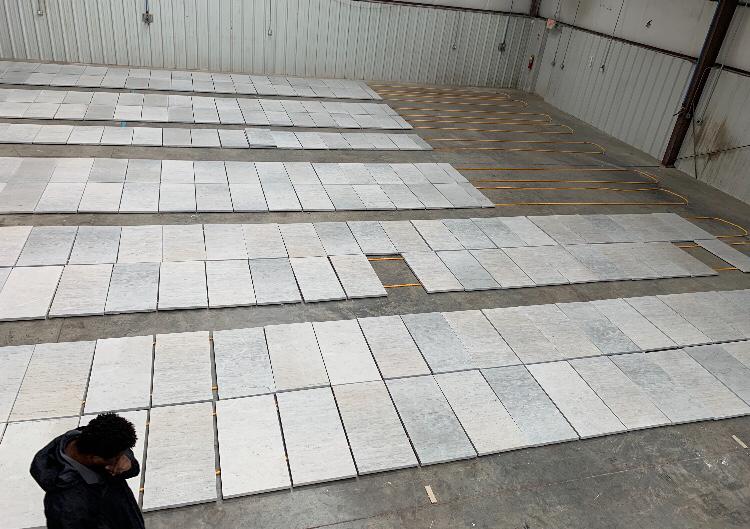
Another often-overlooked factor is recovery size—the relationship between quarried block dimensions and production equipment. Sawing capacity, finishing machines, and quality control processes all determine the dimensions that can be fabricated efficiently.
Projects that plan around these realities experience smoother execution, more predictable costs, and higher-quality outcomes. This is especially critical for installations with split-face products, variable lengths, or specialized edge treatments. Early collaboration identifies potential challenges before they affect timelines or budgets.
For quarry knowledge to make an impact, it must be built into project workflows. That means including stone suppliers in design development, setting up regular specification reviews, quarry visits, mock-ups, and documenting decisions about dimensions, ranges, and fabrication strategies.
Projects that capture these lessons create a knowledge base that benefits future work. Over time, design teams develop more sophisticated approaches to stone specification, consistently delivering projects that meet both aesthetic and financial goals.
The Long-Term Value of Quarry Knowledge
Having a deep understanding of natural stone characteristics, quarrying operations, and their cost implications creates competitive advantages that extend beyond individual projects. Design firms and construction companies that develop expertise in stone value engineering can offer clients better value propositions, more accurate cost projections, and more reliable project delivery timelines.
This knowledge also supports better client communication between suppliers, architects, fabricators, installers, and building owners about the trade-offs between aesthetic preferences and budget realities. Teams that can explain how dimensional adjustments or range acceptance decisions impact costs help clients make informed decisions that align with their priorities and constraints.
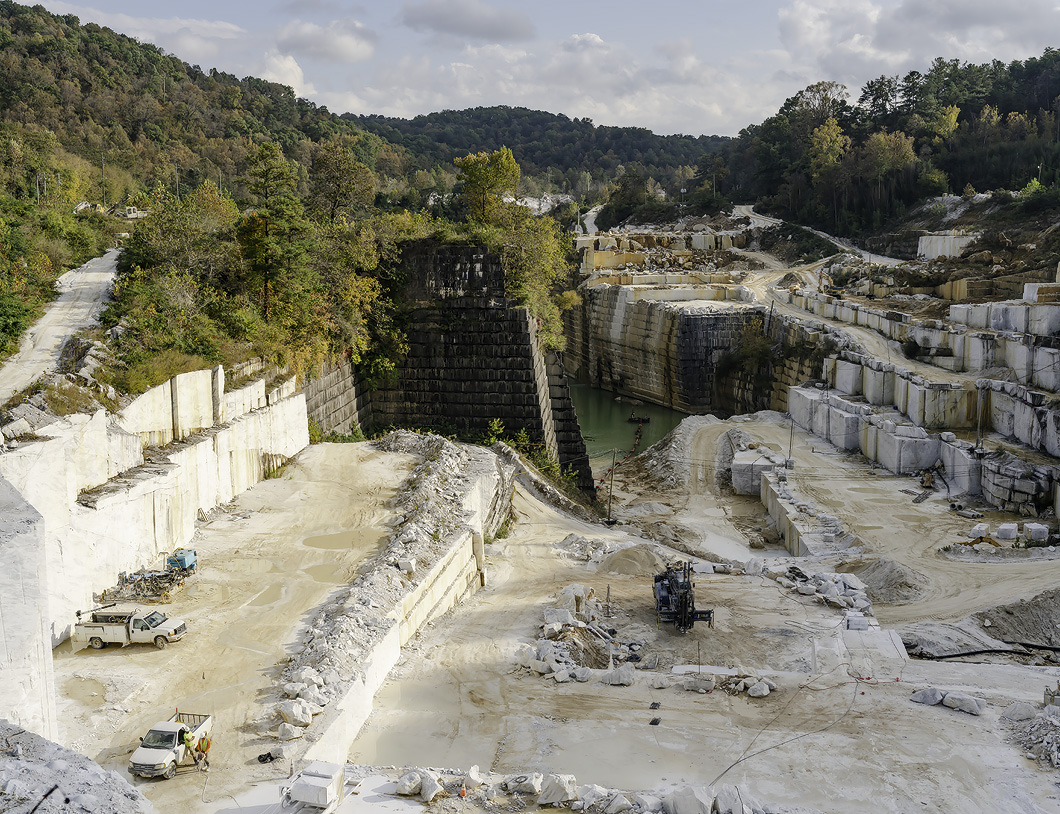
The best commercial paving projects treat quarry realities not as limitations but as design parameters and even opportunities. By understanding block dimensions, yield efficiency, range acceptance, and production capabilities, specifiers can unlock significant cost savings without sacrificing design intent.
Polycor’s integrated quarry-to-finished-product approach, combined with resources like paver range sheets, physical samples, and 3D design tools give project teams the insights needed to implement these strategies effectively.
In an industry where small adjustments create outsized impacts, quarry knowledge becomes a powerful lever for value engineering. Projects that master these principles consistently deliver designs that are both beautiful and cost-effective—projects that meet aesthetic aspirations, respect budget realities, and celebrate the authentic character of natural stone.
Explore Polycor’s full range of technical resources and paver range sheets on the resources page of the website.
Specifier Checklist: Quarry Knowledge
for Cost-Effective Paving

- Review quarried block sizes early and align paver dimensions accordingly
- Engage quarry-direct suppliers during design development, not after
- Weigh the cost benefits of broader range acceptance using tools like Polycor’s range sheets
- Consider fabrication realities such as sawing limits, edge treatments, and finishing equipment
- Document dimensional and range decisions to inform future projects
A. Value engineering in commercial paving means optimizing paver dimensions, range specifications, and fabrication strategies to align with quarry block realities—reducing costs without compromising design intent. It involves adjusting specifications by just a few inches to improve yield efficiency, accepting broader natural stone ranges, and simplifying fabrication details. These strategic choices can improve material recovery from 60% to 85% or more, translating to significant reductions in raw material requirements on large projects.
A. The most significant savings opportunities occur during the design development phase, before specifications are finalized. This is when dimensional adjustments, range acceptance decisions, and fabrication strategies remain flexible. Cost optimization also happens at the quarry level, where understanding block dimensions (typically 10 by 6 feet for granite, 9 by 5 feet for limestone and marble) allows specifications to work with natural extraction patterns rather than against them.
A. Quarry knowledge reduces costs because it reveals how geological characteristics, extraction methods, and block dimensions impact material yield and fabrication efficiency. Specifications aligned with quarry block sizes achieve higher yields, minimize waste, and reduce labor costs. Suppliers with direct quarry ownership can leverage modern quarrying technologies and pass savings to projects while offering better cost projections and lead times than consultants or distributors alone.
A. Suppliers should be engaged during design development, before specifications are locked. Early collaboration uncovers value engineering opportunities that disappear once documents are finalized—such as adjusting paver thickness for better yield, widening range acceptance to increase availability, or substituting curved pavers for segmented pieces.