How to Clean & Maintain Limestone Pavers:
A Complete Care Guide
Is Limestone Hard to Maintain?
The short answer: No. Indiana Limestone is one of the most workable, low-maintenance natural stones available, and has been used in American architecture for over 150 years for exactly that reason. Landmarks from Rockefeller Center to the Empire State Building are built with it. Homeowners often ask about limestone maintenance before committing to it outdoors, and the concern is understandable. Natural stone does require a different approach than concrete or engineered man-made pavers, but “different” doesn’t mean “difficult.”
Indiana Limestone has a low absorption rate, high compressive strength, and a natural resistance to the freeze-thaw cycles common in U.S. climates, as verified by ASTM standards (ASTM C568). With routine limestone cleaning and the right products, your pavers will hold their character and beauty for decades.
This guide covers everything you need to know about routine limestone pavers maintenance, how to clean outdoor limestone pavers, how to handle specific stains, and when and how to seal.
Exploring Indiana Limestone for
Your Project?
Connect with an authorized Polycor dealer for samples, technical specifications, and project consultation.
Routine Cleaning: What to Use and What to Avoid
Most limestone cleaning starts and ends with a pH-neutral cleaner and a soft brush. Limestone is a calcium carbonate-based stone which means it reacts to heavy acids. Many cleaning products and multi-surface sprays can contain hidden acidic ingredients that could potentially alter the surface appearance or affect the finish.
Use the table below as your quick reference for limestone floor cleaning:
| Do Use | Avoid |
|---|---|
| ph-neutral stone cleaner | Acidic cleaners including vinegar |
| Mild dish soap diluted in water | Bleach or ammonia-based products |
| Soft-bristle brush or mop | Wire brushes, steel wool or abrasive scrub pads |
| Garden hose or low-pressure washer | High-pressure washer (risk of surface erosion) |
| Stone-safe degreaser or poultice for oil stains | Citrus-based sprays |
| Penetrating sealer designed for limestone, or no sealer at all | Topical sealers that trap moisture below the surface |
How Often Should You Clean?
- Early fall wash: blow leaves and twigs off surfaces to prevent them from clumping together in wet weather
- Post-winter wash: always recommended after the freeze-thaw season to remove salts, debris, or efflorescence
- Light sweeping or rinsing: monthly, or as needed after rain or heavy use
- Deep limestone wash outdoor: 2–4 times per year to remove mildew buildup
How to Clean Outdoor Limestone Pavers
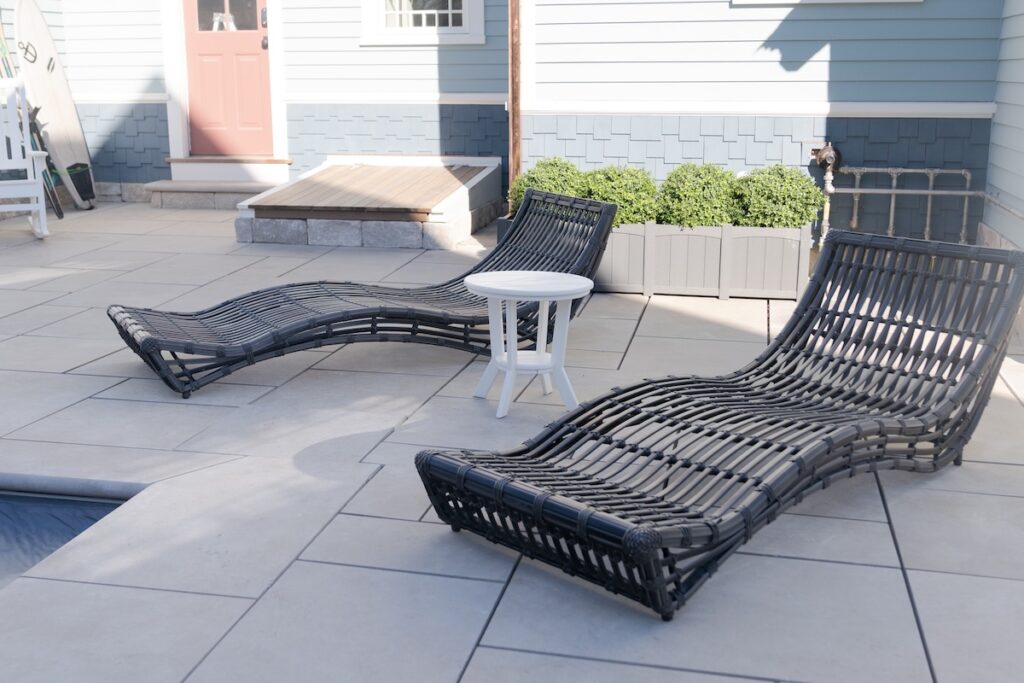
Whether you’re dealing with a patio, walkway, or pool deck, the process for how to clean outdoor limestone is largely the same. Here’s a step-by-step approach:
- Clear the surface. Remove furniture, planters, and debris. Sweep or blow off loose dirt and leaves.
- Wet the stone. Rinse the pavers thoroughly with a garden hose. Pre-wetting prevents the cleaner from absorbing unevenly.
- Apply a pH-neutral stone cleaner. Dilute according to product instructions and apply evenly across the surface.
- Scrub gently. Use a soft-bristle brush or deck brush. Work in sections methodically and focus on any visible staining. Avoid wire brushes as they can scratch the surface.
- Rinse completely. Rinse with clean water until all cleaner residue is gone. Residue left behind can attract dirt or dull the finish over time.
- Allow to dry fully. Let pavers air dry or use a blower before replacing furniture or applying sealer. Indiana Limestone dries quickly in good conditions but give it 24 hours before sealing.
A note on power washing: low-pressure rinsing is fine for outdoor limestone pavers. High-pressure washing at close range can erode the surface texture over time, especially on honed, smooth finishes. If you use a pressure washer, keep the setting low (under 1,200 PSI) and hold the nozzle at a safe distance about 2′ away from the surface.
Cleaning Limestone Around Pools & High-Traffic Areas
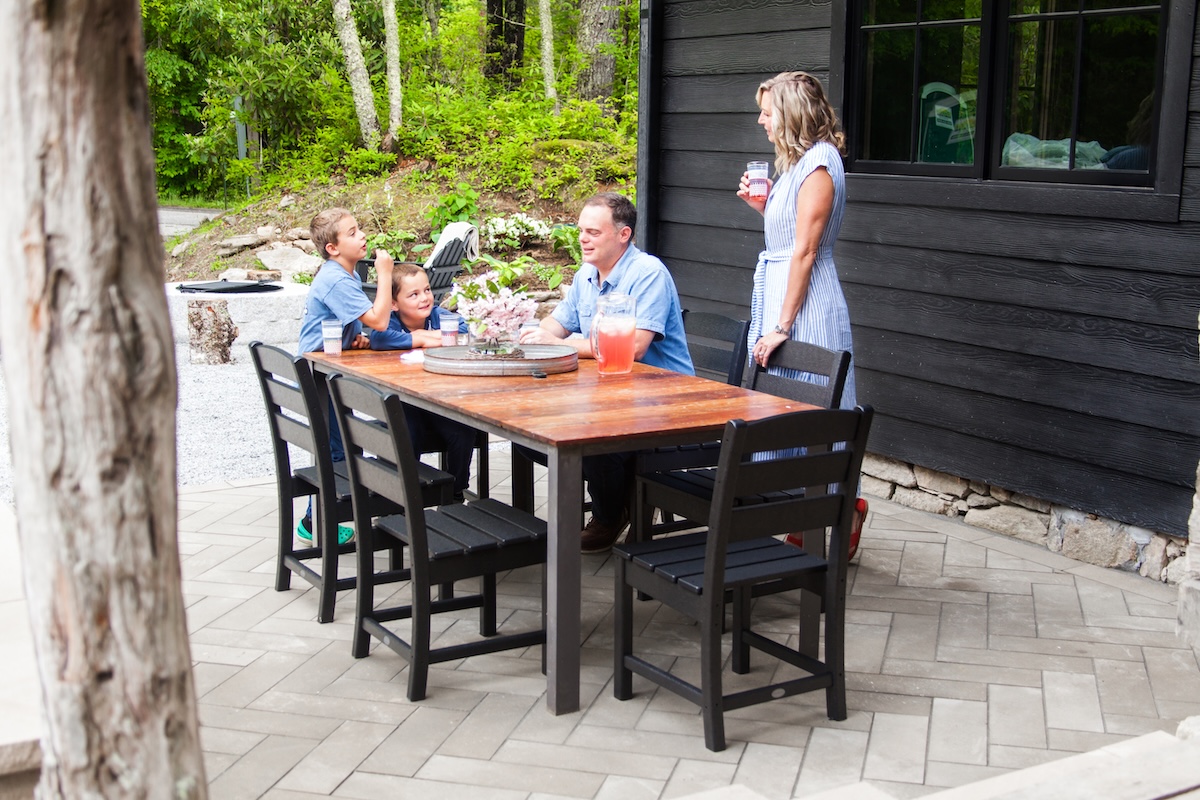
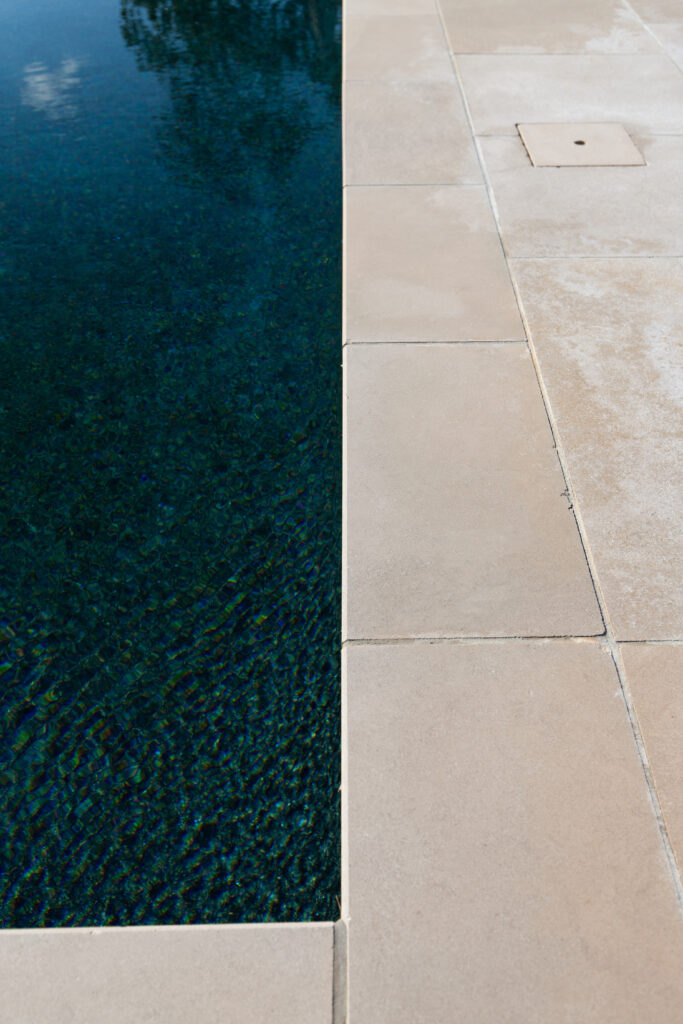
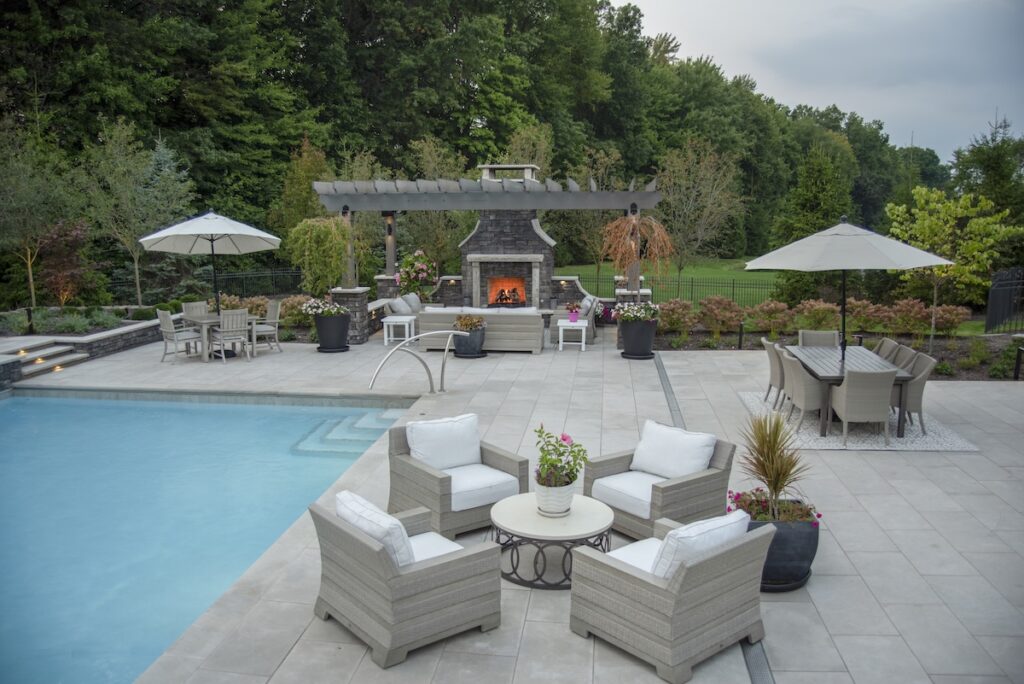
Limestone is a popular choice for pool surrounds and coping because it stays cooler underfoot better than many other materials, has a natural slip resistance, and its neutral color palette looks beautiful next to blue water. But pool environments do introduce some specific limestone cleaning considerations.
Chlorine and Pool Chemicals
Chlorinated water and pool chemicals are generally safe for limestone in normal splash and runoff situations. However, repeated direct contact with concentrated pool chemicals (particularly at pH extremes) can affect the surface over time. Rinse pool deck pavers regularly with fresh water to dilute any chemical buildup and avoid cleaning limestone with pool chemical solutions.
Salt and Efflorescence
In coastal areas or homes with saltwater pools, salt residue can accumulate on the stone surface and contribute to efflorescence, a white, chalky mineral deposit that migrates from within the stone or from the substrate below. Regular rinsing and sealing are your best defenses. See the stain removal section for treating existing efflorescence.
Algae and Organic Growth
Shaded or consistently wet areas around pools are prone to algae and biofilm. A pH-neutral stone cleaner combined with a soft brush handles most algae growth effectively. For persistent cases, a stone-safe algae remover (not bleach) can be used. After removing algae, applying a penetrating sealer will reduce the surface moisture that encourages regrowth.
For more detail on pool-specific applications and coping profiles, see our dedicated guide to limestone pool deck and coping applications.
How to Remove Stains from Limestone Pavers
The key to how to clean limestone stains is acting quickly and using the right treatment for the stain type. Most stains respond well to targeted, gentle treatment. The table below covers the most common types:
|
Stain Type |
Likely Cause |
Recommended Treatment |
|---|---|---|
|
Oil / Grease |
Cooking, sunscreen, machinery |
Apply pre-made poultice or handmade mix of baking soda + acetone, let sit 24 hrs, remove and rinse |
|
Rust |
Metal furniture or planters |
Use a stone-safe rust remover (no hydrochloric acid); consult a pro for sever cases |
|
Efflorescence |
Mineral salts migrating through stone |
Dry-brush first, use efflorescence remover or diluted non-acidic stone cleaner, reseal after |
|
Organic (Leaves, Algae, Mildew) |
Moisture and shade |
Apply ph-neutral stone cleaner or diluted hydrogen pyroxide, rinse thoroughly |
|
Tannins (Tannin-rich leaves & wine) |
Organic matter sitting on surface |
Use stone-safe tannin remover, blot and treat promptly before stain settles in |
What Is a Poultice?
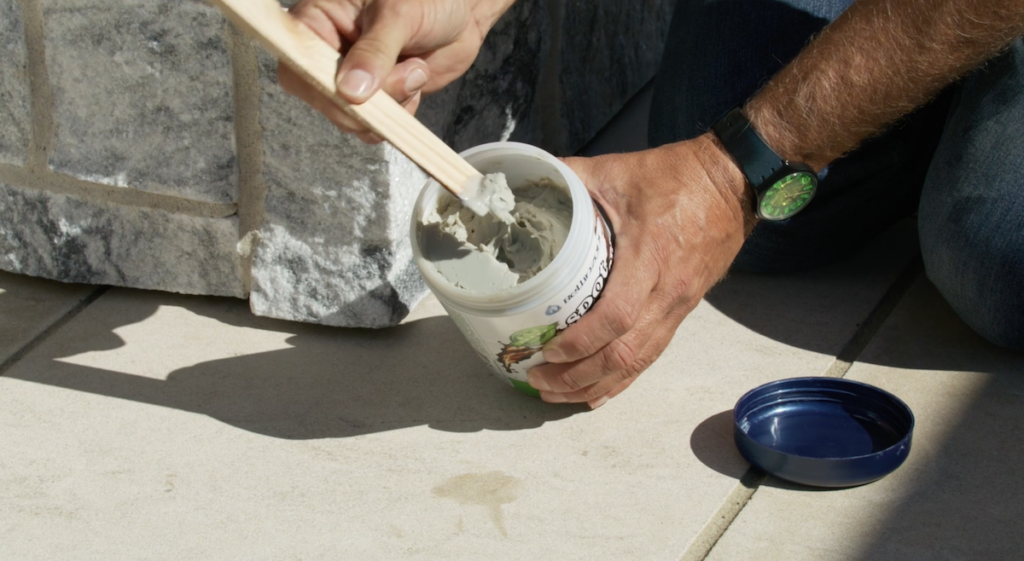
A poultice is a paste-like mixture applied to a stain that draws it out of the stone as it dries. For oil stains on limestone, a common DIY approach is to mix baking soda with a solvent like acetone or mineral spirits into a thick paste, apply it over the stain, cover with plastic wrap, and leave for 12–24 hours before removing and rinsing. Stone-specific poultice products are also available.
Sealing Limestone Pavers: Do You Need It?
Sealing is not strictly required, but it is recommended as a preventative measure for outdoor limestone pavers, particularly in high-traffic areas, pool surrounds, and climates with hard winters. An ounce of preservation is worth a pound of cure, as the saying goes, and this is equally true when it comes to sealing limestone.
Penetrating vs. Topical Sealers
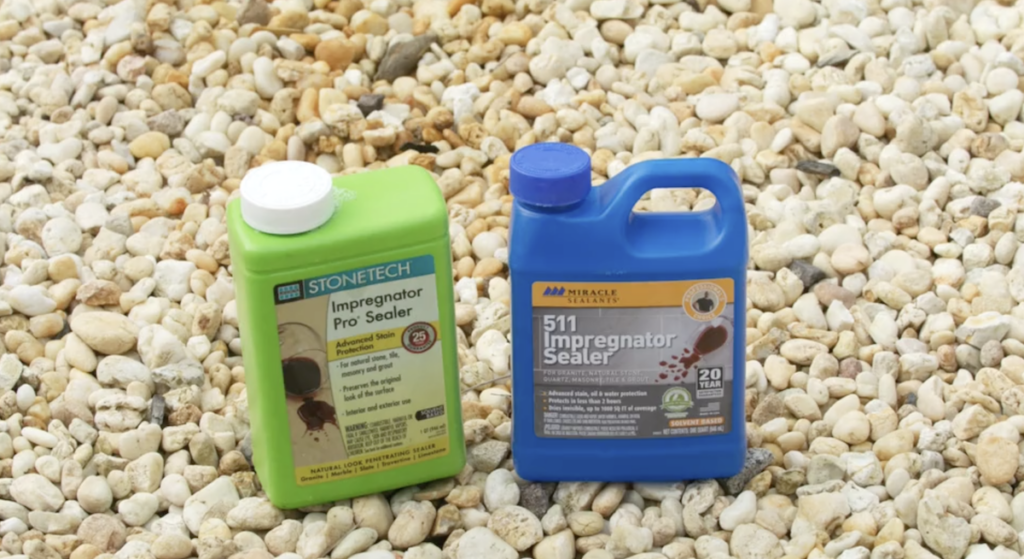
Penetrating (impregnating) sealers absorb into the stone and protect from within without changing the surface appearance. They allow the stone to breathe and are generally the preferred choice for exterior limestone pavers. They repel water and oil at the surface while preserving the stone’s natural look. Most importantly, they allow for natural airflow and vapor migration instead of creating a vacuum seal that traps it.
Topical sealers coat the surface and, in some cases, create a visible sheen if choosing a “wet look” sealer. They can look attractive on interior applications but are generally not recommended for outdoor limestone pavers because they trap moisture beneath the surface, peel under UV exposure, and become slippery when wet. Be vigilant when reading labels of sealers and avoid any of the “wet look” labels as those typically indicate it is a form-filming sealer creating an artificial texture.
When to Seal
- New installation: seal after the initial deep clean, once pavers are fully dry
- Post-deep cleaning: reseal whenever you notice water no longer beads on the surface
- Seasonal: resealing can be done annually before winter or in early spring. If higher quality sealers are used, longer periods in between are common
How to Seal Limestone Pavers
- Allow a full cure time before foot traffic (typically 24 hours for penetrating sealers).
- Clean the pavers thoroughly and allow to dry completely (24–48 hours).
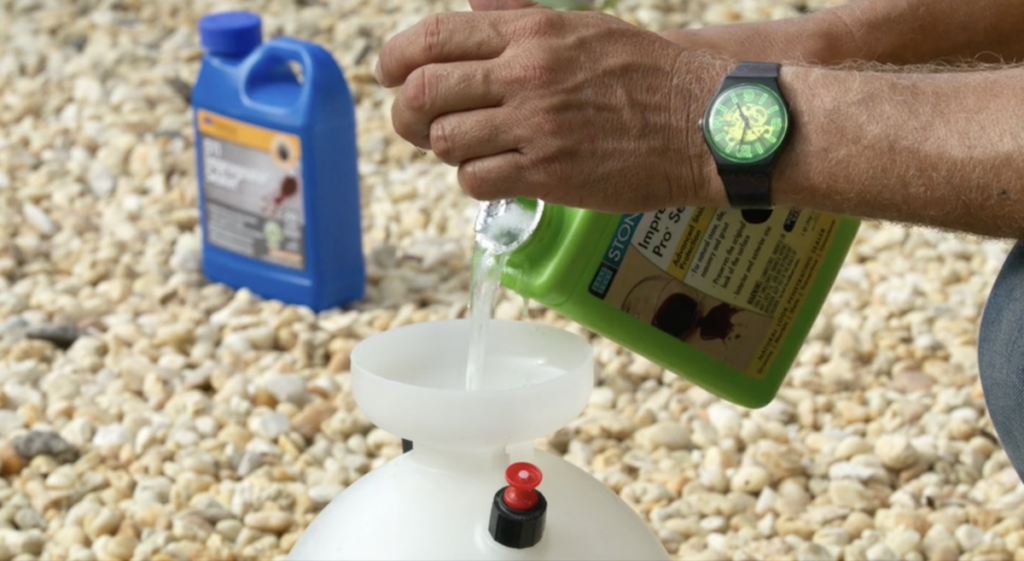
- Apply the sealer evenly using a roller or pump sprayer. Follow the manufacturer’s instructions.
- Allow to penetrate for the recommended dwell time, then wipe off any excess before it cures.
Seasonal Maintenance Tips
Indiana Limestone is well-suited to the American climate and has been quarried in the U.S. Midwest since the mid-1800s. The material has a long track record in freeze-thaw conditions on skyscrapers in Chicago and even buildings in the Canadian provinces. That said, proactive seasonal care will extend the life and appearance of your outdoor pavers significantly.
Winter: Freeze-Thaw Protection
- Seal pavers before freeze season to minimize water absorption. Water that penetrates unsealed stone can expand and cause chipping or spalling during freeze-thaw cycles.
- Use calcium chloride or magnesium chloride ice melt if needed, or sand, but never rock salt (sodium chloride), which can cause surface spalling and staining.
- Avoid using metal shovels directly on the stone surface. Rubber-edged shovels reduce the risk of scratching.
- In spring, perform a full limestone wash outdoor to clear de-icing residue and any efflorescence that may have developed over winter.
Summer: Algae, Heat, and Organic Matter
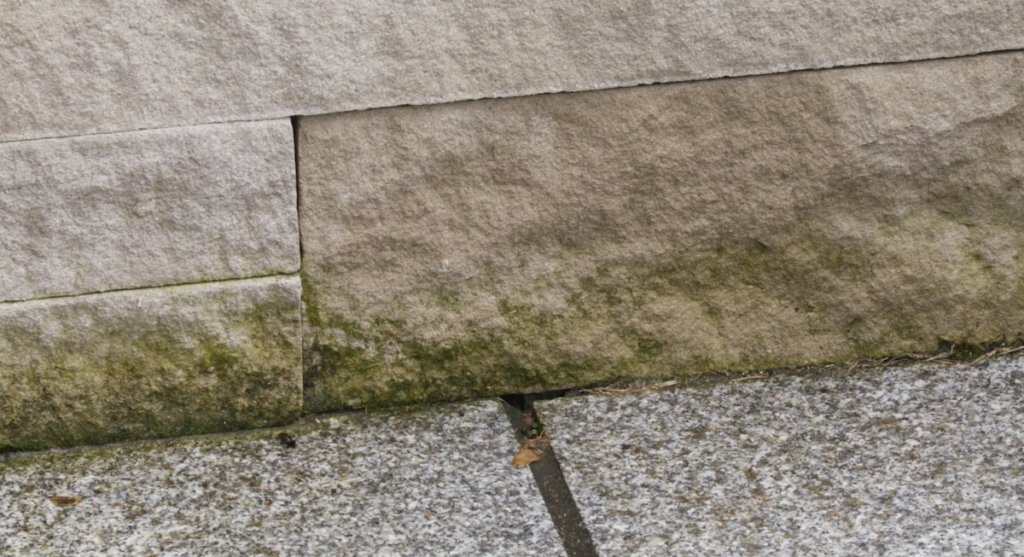
- In warm, humid regions, algae and mildew can develop in shaded or wet areas. Treat with a pH-neutral stone cleaner or stone-safe algae remover, scrub with bristle brush and hose down. Improve drainage or trim shade-casting vegetation if the problem recurs.
- Remove leaves, pine needles, and organic debris promptly to prevent tannins from decomposing organic matter penetrating the stone.
- Sunscreen and body oils are common summer culprits on patio and pool deck pavers. A seasonal deep clean after summer heavy-use periods is a good habit.
Fall: Pre-Winter Prep
- Confirm your sealer is in good condition; reapply if the water bead test fails (water should bead on the surface of a properly sealed paver).
- Clear leaves before they break down and stain the surface.
- Inspect grout lines and joints for cracking or displacement — address before
Product Recommendations
Always choose products specifically formulated for natural stone. Many general-purpose cleaners, degreasers, and sealers are too aggressive for calcium carbonate-based stones like limestone.
What to Look For in a Limestone Cleaner
- pH-neutral (pH 6–8) is best for protecting the stone surface
- Labeled safe for natural stone or calcium carbonate-based stone
- Biodegradable formula for outdoor use near landscaping and water features
For deep cleaning and restoration, Prosoco Sure Klean 942 Limestone and Marble Cleaner is a good non-acidic gel formulated for moderate to severe atmospheric staining on polished and unpolished surfaces.
What to Look For in a Limestone Sealer
- Penetrating/impregnating type for exterior applications
- Breathable to allow vapor transmission from within the stone
- UV-stable so it won’t yellow or cloud outdoors
- Listed as safe for limestone or calcite-based stone.
Recommended options include Miracle Sealant 511 Pore Plus, Dry Treat Stain Proof Sealer, and Prosoco Sure Klean Weather Seal Natural Stone Treatment.
Frequently Asked Questions
Yes, with caution. Keep PSI under 1,200 and maintain distance from the surface. High-pressure washing at close range can erode texture, particularly on honed or smooth finishes. A garden hose with a spray nozzle is sufficient for routine limestone cleaning and is always safe.
For most applications, once a year is a good rule of thumb. A simple test: pour a small amount of water on the surface. If it beads up, the sealer is intact. If it absorbs quickly, it’s time to reseal.
The same pH-neutral cleaner and soft-bristle brush approach applies to limestone step cleaning. Pay extra attention to the nose (front edge) of each step, where foot traffic is heaviest. Rinse thoroughly and dry before resealing if necessary.
No. Bleach is alkaline and can discolor limestone and damage its surface. For algae, mildew, or organic staining, use a pH-neutral stone cleaner or a stone-safe algae remover.
This is called efflorescence — mineral salts that migrate through the stone from beneath and crystallize on the surface. It’s common in new installations and after wet seasons. Dry-brush first, then treat with an efflorescence remover or diluted stone-safe cleaner. Sealing helps prevent recurrence.
No. Vinegar is acidic and will etch the surface of limestone, dulling the finish and potentially causing long-term damage. Always use a pH-neutral cleaner.