Limestone Patio Ideas: Design Inspiration, Applications & Why Indiana Limestone Delivers
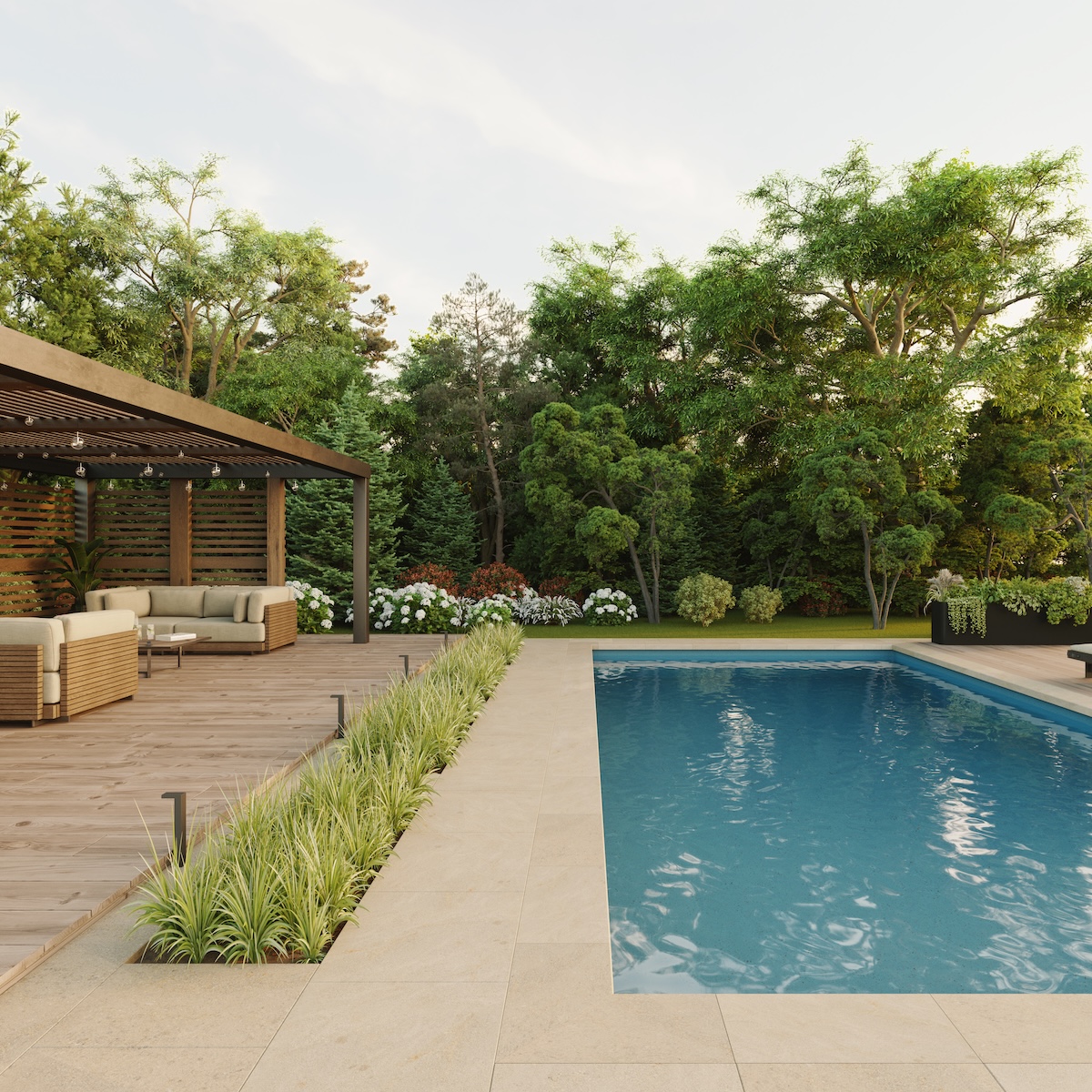
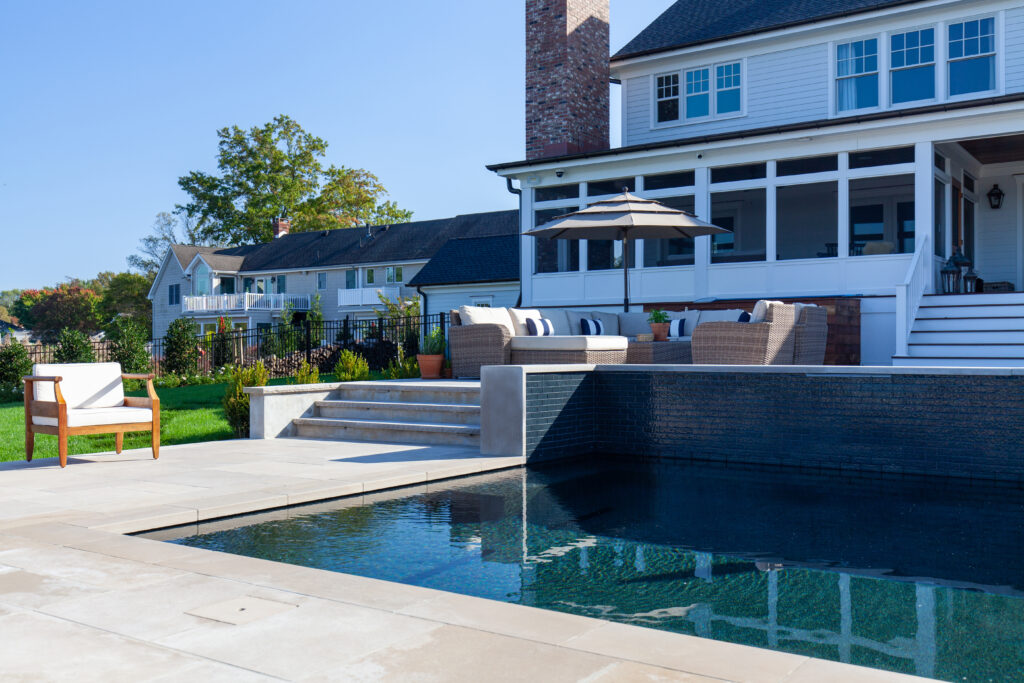
A limestone patio is one of those outdoor investments that pays back in ways you don’t fully anticipate when you make it. Yes, it looks beautiful the day it’s installed. But it also stays beautiful, and it changes in the right direction over time, developing a patina that manufactured materials try and fail to imitate. Two kids, two dogs, outdoor furniture dragged across it for years: Indiana Limestone holds.
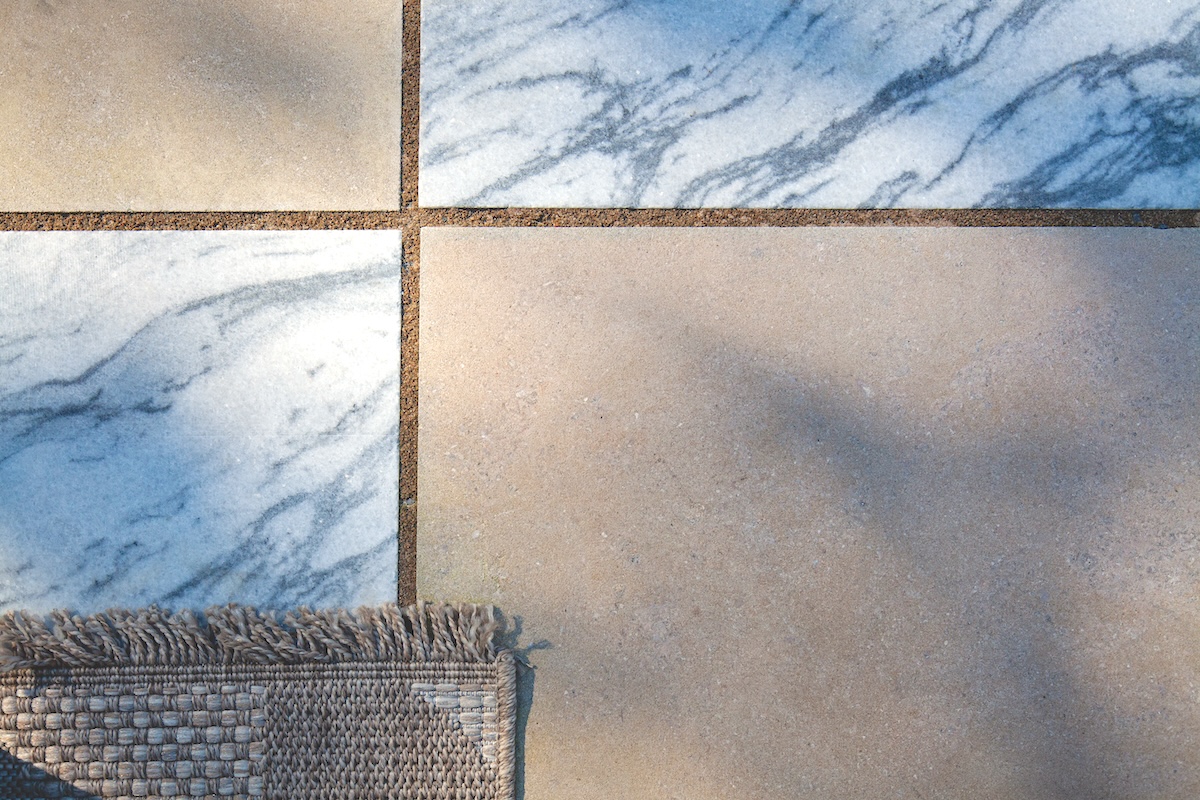
That’s the experience Jaclyn Isaac describes of her New Jersey farmhouse patio, a large-scale checkerboard of Indiana Limestone™ and Georgia Marble™ – Pearl Grey™. “I still don’t understand how it looks so great,” she says. “We usually destroy everything that we touch, so I’m still really impressed.”
Discover everything you need to design a limestone patio that performs as well as it looks: why Indiana Limestone is the right material outdoors, the three product formats and how to choose between them, every available finish and what it changes, curated design ideas drawn from real projects, and the practical installation and maintenance basics.
Exploring Indiana Limestone for
Your Project?
Connect with an authorized Polycor dealer for samples, technical specifications, and project consultation.
Why Limestone Is a Go-To Material for Outdoor Patios
It Stays Cool When Everything Else Doesn’t
Step onto dark concrete pavers or porcelain tile on a July afternoon in direct sun, then step onto Indiana Limestone and you will notice the difference immediately. Limestone’s light-toned, fine-grained, calcium carbonate composition reflects solar radiation rather than absorbing it, staying meaningfully cooler to the touch under the same conditions. For barefoot summer living where morning coffee, evening entertaining, and children running across the patio are the norm, that thermal behavior is the single most underrated functional advantage of a natural limestone outdoor patio.
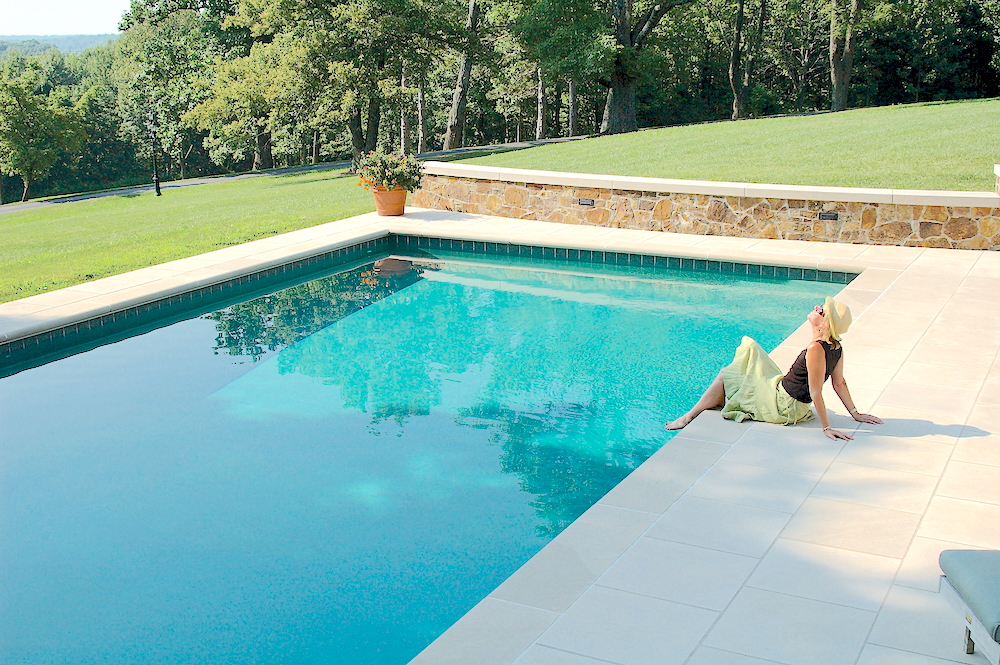
“I like limestone for a couple of reasons. When it gets hot outside, limestone doesn’t absorb the heat. It’s lighter in color and more walkable when barefoot. Other stones like bluestone heat up a lot; unless you hose them down often, they can be very hot. Our property receives full sun all day — morning, afternoon, and evening. You need something that doesn’t absorb as much heat because that would be blistering. The solar reflectance is just better with limestone.” — Lou Padula, Padula Builders
Natural Variation, Not Manufactured Uniformity
Every piece of Indiana Limestone is unique. The oolitic formation of the stone, created by compressed calcite particles from an ancient Midwestern seabed, gives it a fine-grained character that reads as refined and natural at the same time. The Full Color Blend™ range spans buff, cream, grey, and blue-grey tones within a single delivery, so a limestone backyard patio has the visual depth and authenticity that uniform manufactured pavers can’t replicate.
As Jaclyn Isaac puts it: “It came to us with a little patina. Things are a little different. Every stone is different. And that’s the cool part about it. There’s nothing that is builder basic about it.”
A Surface That Performs Outdoors
Indiana Limestone meets ASTM C568 for Limestone Dimension Stone, the benchmark architects and specifiers use to confirm a material’s fitness for outdoor paving applications. That means controlled absorption rates (limiting water infiltration and freeze-thaw risk), minimum compressive strength of 4,000 psi, and UV-stable color that doesn’t fade with sun exposure. It’s a material with a 150-year American track record in exterior applications, from public plazas to private patios.
Natural Stone vs. Manufactured Alternatives
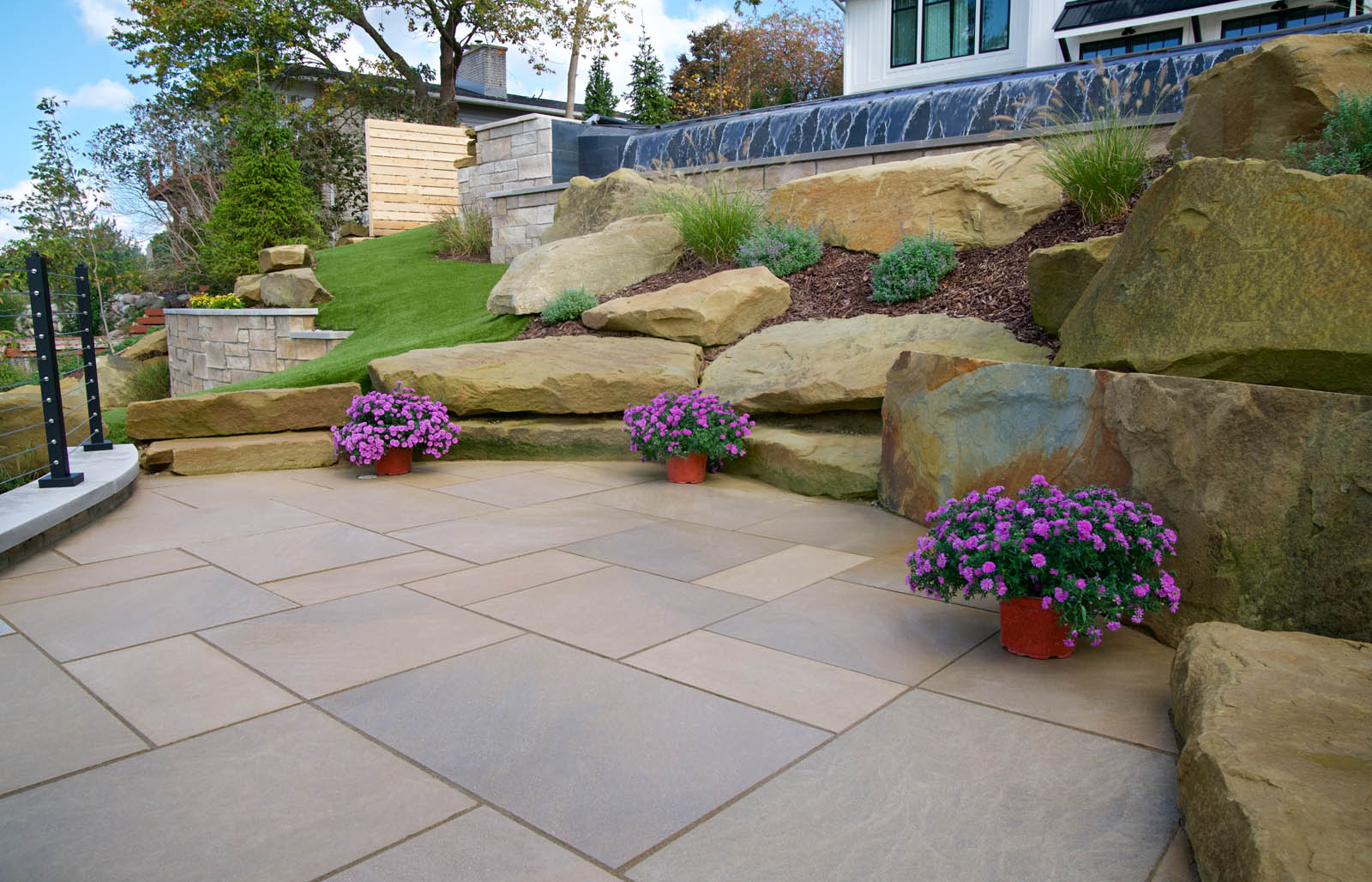
The comparison that matters most isn’t cost-per-square-foot at installation, it’s performance over decades. Natural limestone outdoor flooring doesn’t fade, delaminate or show exposed aggregate like concrete pavers. It doesn’t require replacement every ten years the way many manufactured pavers do. It doesn’t stain permanently from organic matter. And it doesn’t go out of style, because it was never a fad or trendy material that fell out of favor — it was always just the right material.
“I don’t like the man-made products. I don’t think they hold up well, the appearance seems to fade. And, you know, they may look okay when they go in, but they don’t last long. I am a big advocate for natural stone. We rarely use anything else on our projects.” — Lou Padula, Padula Builders.
Indiana Limestone for Patios: Quarry-to-Project Provenance
Polycor’s Indiana Limestone is quarried at multiple quarries in Indiana, the heart of Indiana Limestone country known as “the belt”. Polycor owns and operates the quarries directly, which means an unbroken chain of custody from extraction through processing to your project with no importers, intermediaries, or traceability gaps.
For patio projects, that direct ownership means two practical advantages. First, color consistency: because the stone comes from a single, well-understood geological deposit, material ordered months apart matches. For large patios or phased outdoor projects, that reliability matters. Second, supply chain stability: domestic production is not subject to ocean freight delays, port backlogs, or tariff volatility. You get what you ordered, when you need it.
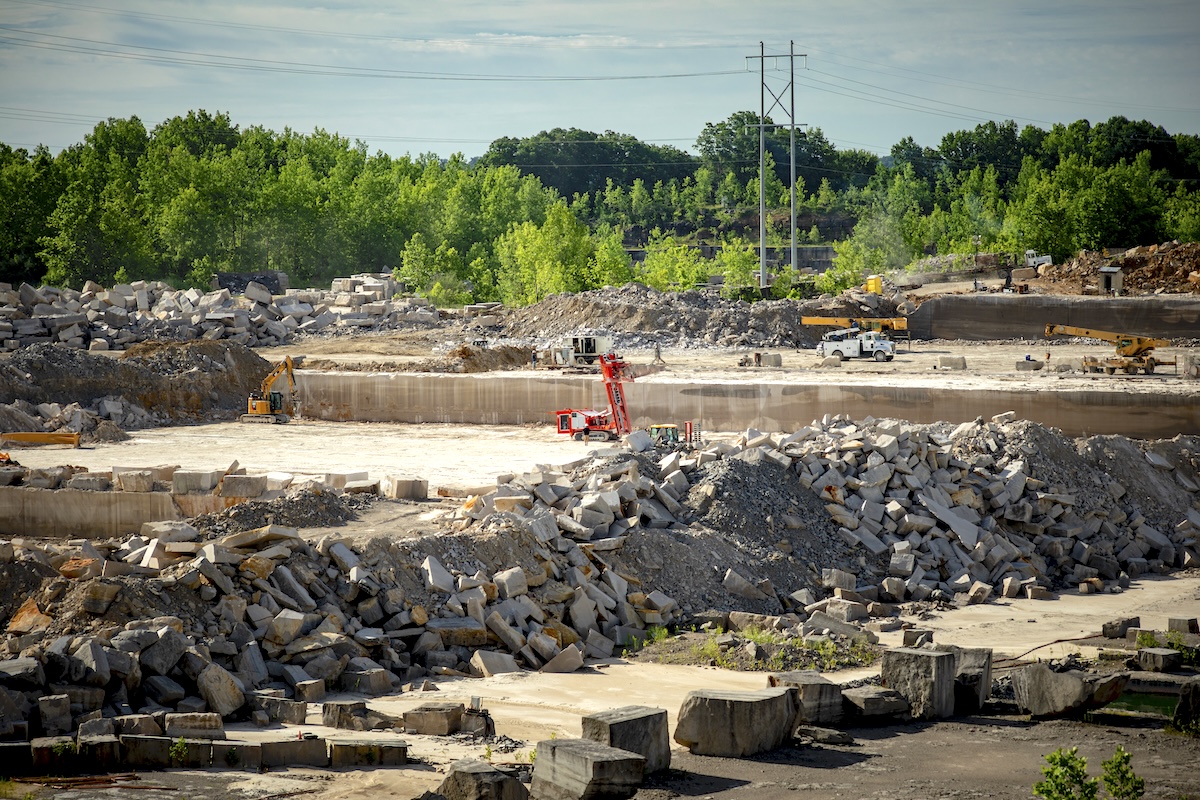
Indiana Limestone quarries have been in operation since the mid-1800s. The Empire State Building, Rockefeller Center, and the Lincoln Memorial are all built with it. The material’s fitness for exterior exposure, including freeze-thaw performance across U.S. climate zones, is not a claim. It’s a 150-year record.
“Natural stone is classic and timeless, and that is the look we were trying to achieve in this home. We wanted a more European look that reflects our lifestyle.” — Ginny Padula, Town & Country Design Studio
Patio Applications: Standard Pavers, XL Pavers & Pattern Paver Pallets
Indiana Limestone patio pavers are available in three format categories, each designed for a different aesthetic intent and project scale. The table below summarizes the key differences; detailed descriptions follow.
|
STANDARD PAVERS |
XL PAVERS |
PATTERN PAVERS |
|
|---|---|---|---|
|
FORMAT |
Individual units are square and rectangle sizes |
Oversized single-unit pieces |
Pre-designed pallet mixes (multiple sizes) |
|
TYPICAL SIZES |
12″x12″, 12″x24″, 16″x24″, 18″x18″, 24″x24″, 24″x36″ |
24″x48″ and 36″x36″ |
12″x24″, 24″x24″ and 24″x26″ mixed configurations: e.g. Sherbrooke, Biltmore patterns |
|
JOINT LINES |
Regular – stacked grid or running bond patterns |
Minimal – fewer joints, longer planes |
Irregular – varied joint lines create visual interest |
|
AESTHETIC |
Classic, versatile, suits most styles |
Contemporary, luxurious, modern |
Organic, transitional, artisan character |
|
BEST FOR |
Versatile layouts; most patios; any budget |
Large patios, outdoor rooms, contemporary homes |
Patios where visual movement and classic, historic character are a priority |
Standard Pavers
Standard limestone patio pavers are the workhorses of the range because they are versatile, reliable, easy to install and available in the widest selection of sizes. Common formats, such as 12″×12″, 12″×24″, 16″×24″, 18″×18″, and 24″×24″, suit virtually any patio layout and work across traditional, transitional, and contemporary design styles. In a running bond layout, the 12″×24″ and 16″×24″ formats create a horizontal rhythm that reads as clean and elegant without being stiff. In a stacked joint (grid) layout, they deliver a more formal, symmetrical feel.
Standard pavers are available in a full color blend, offering a blend of colors ranging from dark gray to blue-gray and beige / buff hues serving genuine palette flexibility for different architectural contexts and landscape schemes.
XL Pavers
XL pavers, 24″×48″ and larger, are oversized limestone pavers for homeowners and designers who want fewer joints, longer visual planes, and a more sleek, contemporary feel. A patio in large limestone pavers reads as luxurious and intentional; the stone takes center stage due to their commanding appearance. Extra large paver formats work particularly well for modern outdoor rooms and covered patio areas where the material flows visually from interior floors through glass doors.
The practical consideration with large limestone patio pavers is base preparation: larger formats require a more precisely level sub-base or full mortar bed wet-setting to prevent differential settlement at the edges and corners. Your installer should be experienced with large-format natural stone.
Pattern Paver
Pattern pavers, like the Biltmore and Modesto configurations, combine multiple sizes in a pre-designed layout that creates organic visual movement across the patio surface. Rather than a uniform grid of joints, a pattern paver patio has varied joint lines that intersect each other and create a more handcrafted, European-influenced character. The mix of sizes within each pallet is carefully proportioned so the pattern scales across a larger area without reading as repetitive.
Limestone paver patterns are particularly well-suited to traditional and transitional outdoor spaces (think of cottage gardens, historic homes, or courtyards) and any project where a homeowner wants their patio to feel timeless. Jaclyn Isaac’s checkerboard design is a good example of how a deliberate paving pattern, in this case with just two stones in the same size, can become the defining feature of an entire outdoor space.
Design Styles & Finish Selection: How Finish Choice Shifts the Aesthetic
The finish applied to a limestone patio paver changes its visual character, its traction, and the architectural styles it suits. Indiana Limestone is one of the most versatile natural stones in terms of finish options, the same stone reads very differently depending on how it’s processed. Use the table below as a quick reference, followed by more detail on the most common patio finishes.
|
VISUAL CHARACTER |
SLIP RESISTANCE |
BEST PATIO STYLE |
|
|---|---|---|---|
|
SMOOTH / SAWN |
Clean, precise, refined; shows lighter shade of natural color |
Great – suitable for average traffic patios |
Contemporary to classical |
|
HONED |
Flat, matte surface; slightly smoother than smooth / sawn |
Moderate – use with caution near pool edges |
Transitional, modern farmhouse, interior – exterior flow |
|
BRUSHED / ANTIQUED |
Worn, aged character, organic and artisinal feel |
Good – texture provides natural grip |
Cottage, rustic, European-inspired, eclectic |
|
BUSH-HAMMERED |
Deeply textured; roughest finish, more industrial feel |
Excellent – very high traction & great slip resistance even in wet conditions |
Cottage, rustic, European-inspired, eclectic |
|
SANDBLASTED |
Fine, even texture; more subtle than bush-hammered; light, airy appearance |
Good – uniform, frosted surface texture provides reliable traction |
Coastal, Mediterranean, light and warm palettes |
Smooth / Honed: Contemporary Restraint
A smooth or honed finish reads as contemporary and refined — flat, matte, controlled. It suits modern outdoor rooms, interior-to-exterior transitions where the floor plane continues through glass doors, and minimalist landscape designs where the stone’s color and form are the design statement. Traction is moderate; smooth-finish limestone is better suited to covered patios or low-traffic areas than to open pool surrounds.
Antique / Brushed: Old-World Character
An antique or brushed finish gives Indiana Limestone the worn, aged quality that traditionally took decades to develop. The surface is mechanically worked to soften edges, open the grain slightly, and produce a character that feels inherited rather than new. This is the finish of choice for European-inspired designs, cottage gardens, and historic restoration projects, and it’s the look Jaclyn Isaac responded to when she described her limestone as arriving “with a little patina.”
Bush-Hammered: The Roughest Choice
The bush-hammered finish, produced by manually chiseling the stone’s surface to create indented marks, is the most textured finish for outdoor limestone patios. It provides excellent slip resistance, reliably meets ASTM DCOF requirements for exterior wet applications, and produces a unique design element. For Indiana Limestone patio applications, the bush-hammered finish is the roughest option available.
How Limestone Pairs with Other Materials
Indiana Limestone’s neutral palette makes it one of the most combinable patio materials available. A few combinations that work particularly well:
- Limestone + dark steel or Corten: the stone’s warm buff or grey tones ground the metal’s warmth; a contemporary pairing
- Limestone + teak or ipe wood: natural warm tones that reinforce each other; classic outdoor living palette
- Limestone + water features: limestone’s color shifts and brightens near water; works beautifully as the surround material for fountains, rills, and reflecting pools
- Limestone + planting beds: the stone’s neutral tones recede and let planting color come forward; ideal for garden patios
- Limestone + Georgia Marble: the Jaclyn Isaac combination — warm buff limestone against cool grey marble — demonstrates how two natural stones from the Polycor range can create a signature statement pattern
Frequently Asked Questions
Yes, with caution. Keep PSI under 1,200 and maintain distance from the surface. High-pressure washing at close range can erode texture, particularly on honed or smooth finishes. A garden hose with a spray nozzle is sufficient for routine limestone cleaning and is always safe.
For most applications, once a year is a good rule of thumb. A simple test: pour a small amount of water on the surface. If it beads up, the sealer is intact. If it absorbs quickly, it’s time to reseal.
The same pH-neutral cleaner and soft-bristle brush approach applies to limestone step cleaning. Pay extra attention to the nose (front edge) of each step, where foot traffic is heaviest. Rinse thoroughly and dry before resealing if necessary.
No. Bleach is alkaline and can discolor limestone and damage its surface. For algae, mildew, or organic staining, use a pH-neutral stone cleaner or a stone-safe algae remover.
This is called efflorescence — mineral salts that migrate through the stone from beneath and crystallize on the surface. It’s common in new installations and after wet seasons. Dry-brush first, then treat with an efflorescence remover or diluted stone-safe cleaner. Sealing helps prevent recurrence.
No. Vinegar is acidic and will etch the surface of limestone, dulling the finish and potentially causing long-term damage. Always use a pH-neutral cleaner.