Georgia Marble Veneer: The Fireplace Material that Carries 600 Million Years of Character
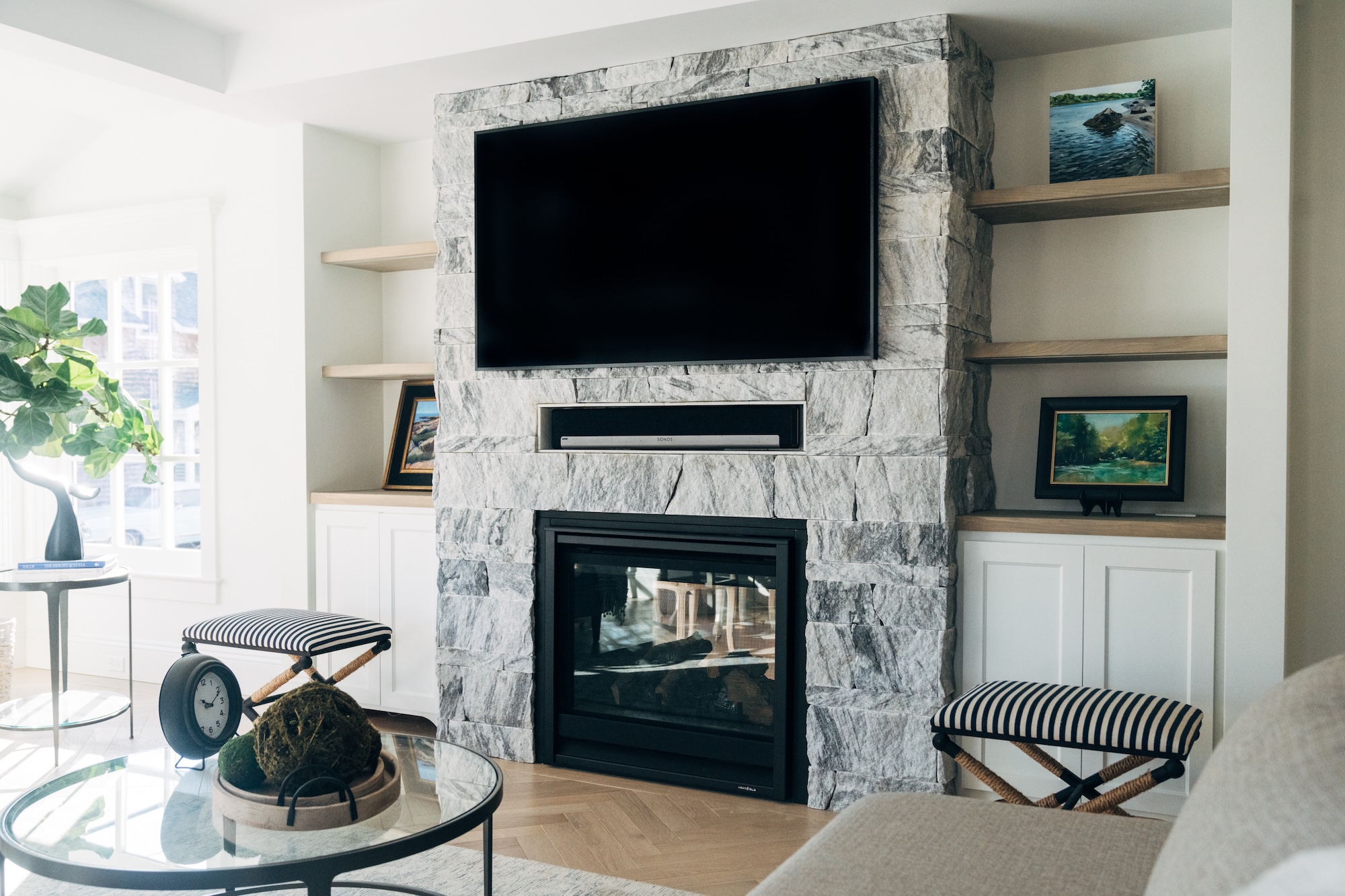
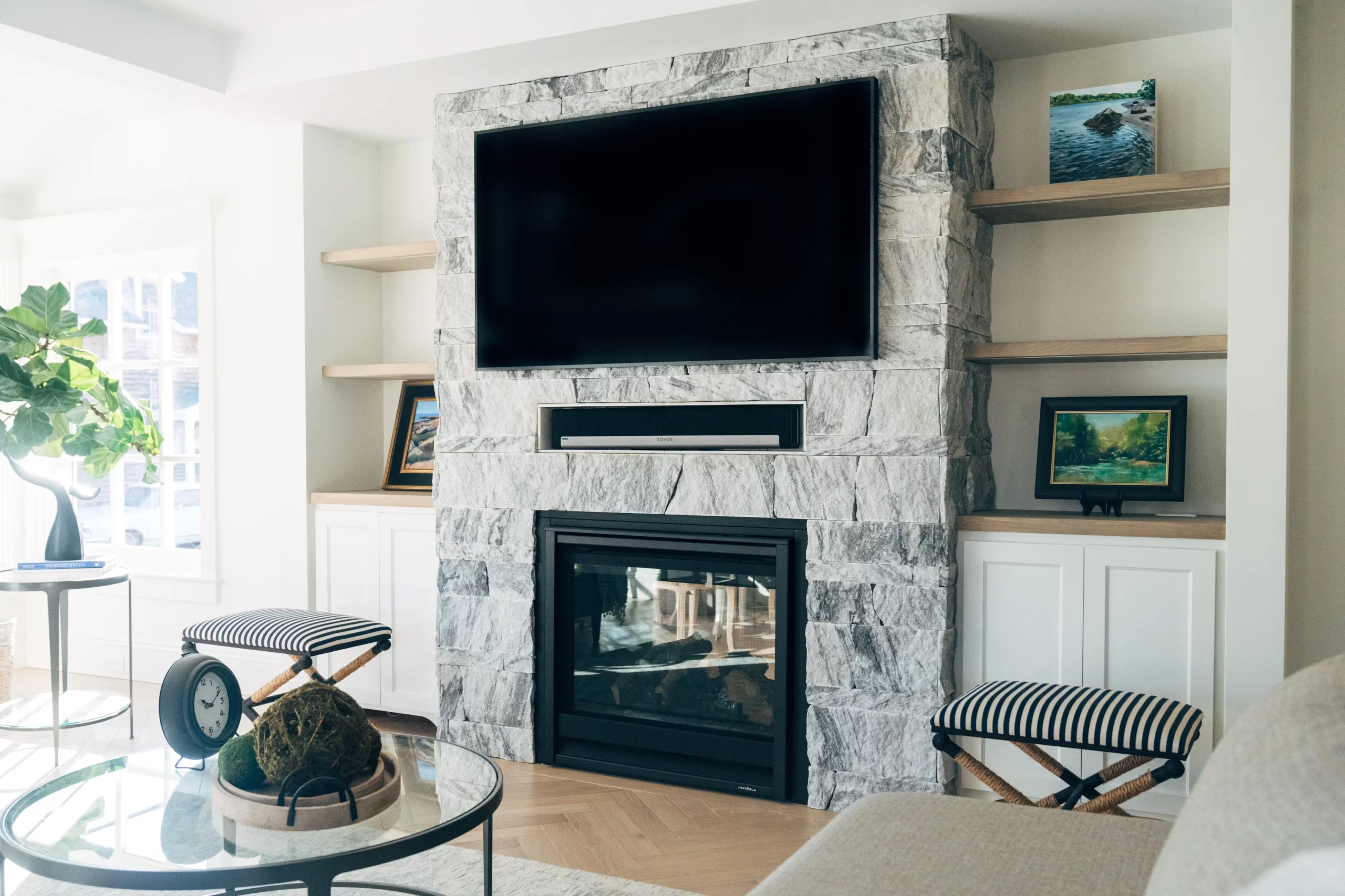
There is a fireplace in a restored Queen Anne Victorian in Narragansett, Rhode Island that tells two stories at once.
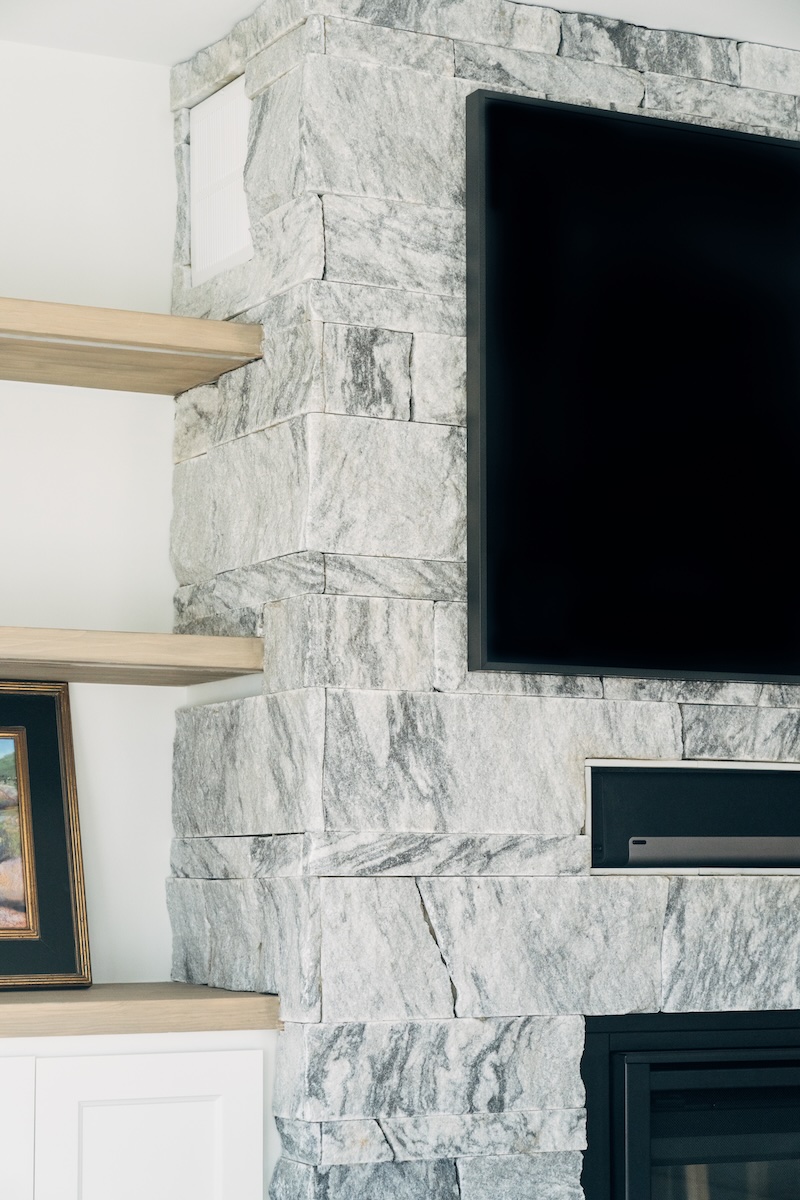
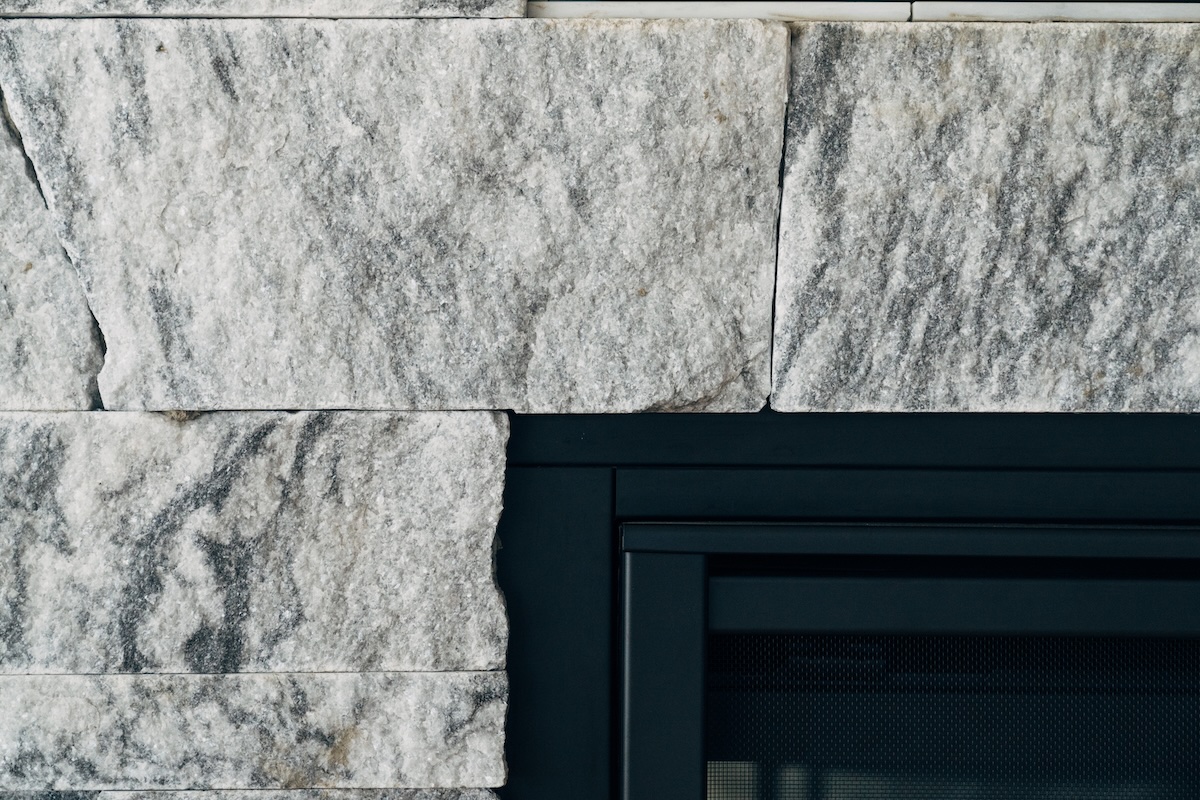
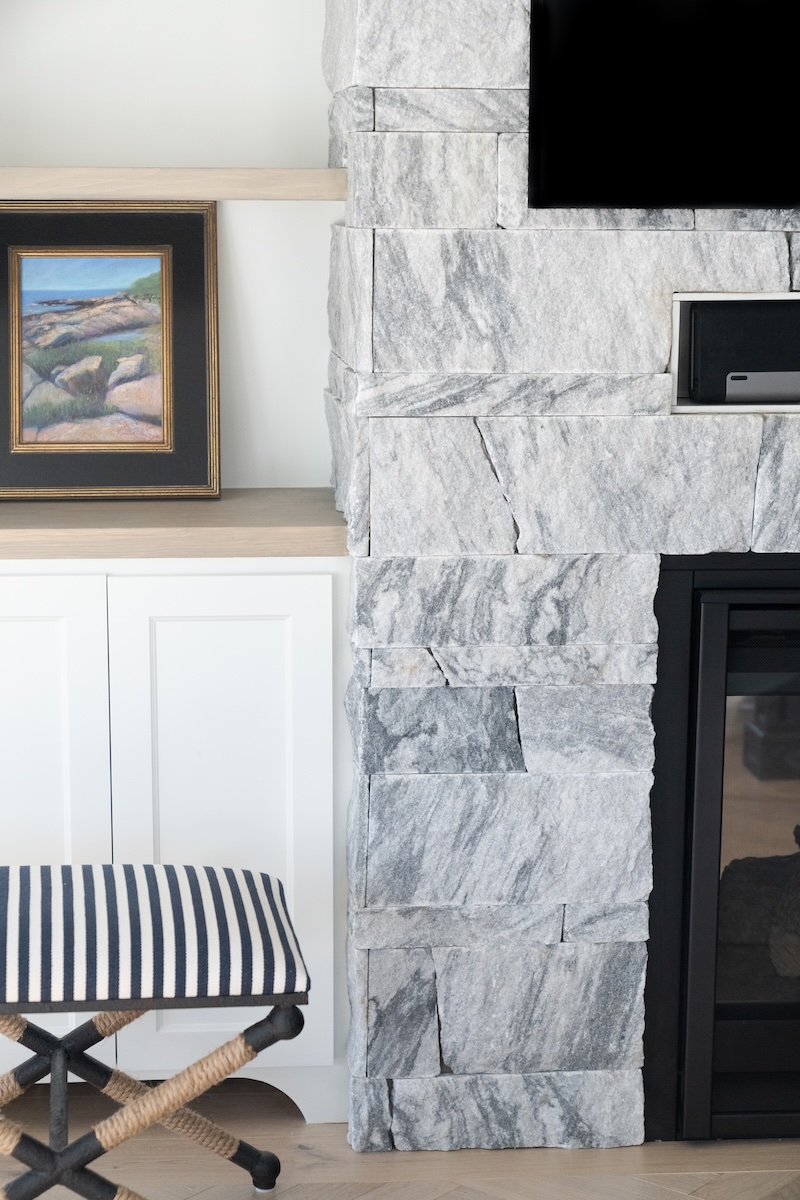
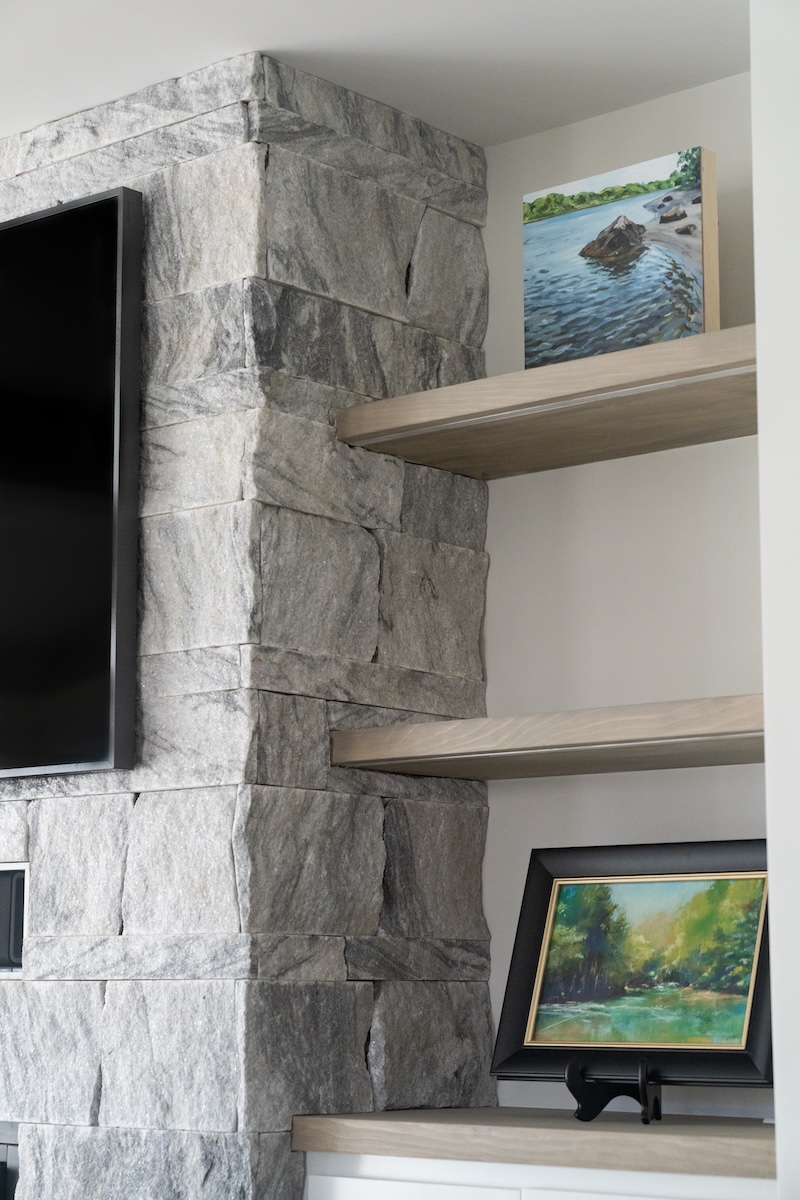
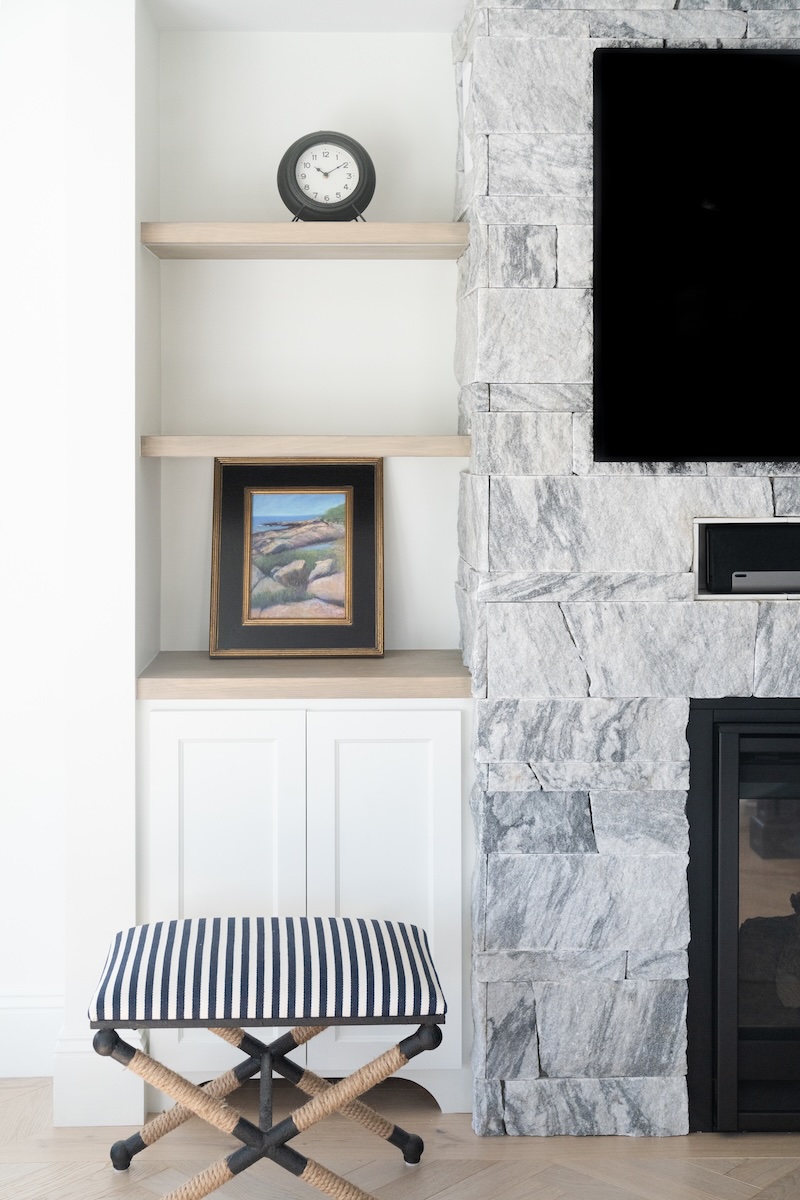
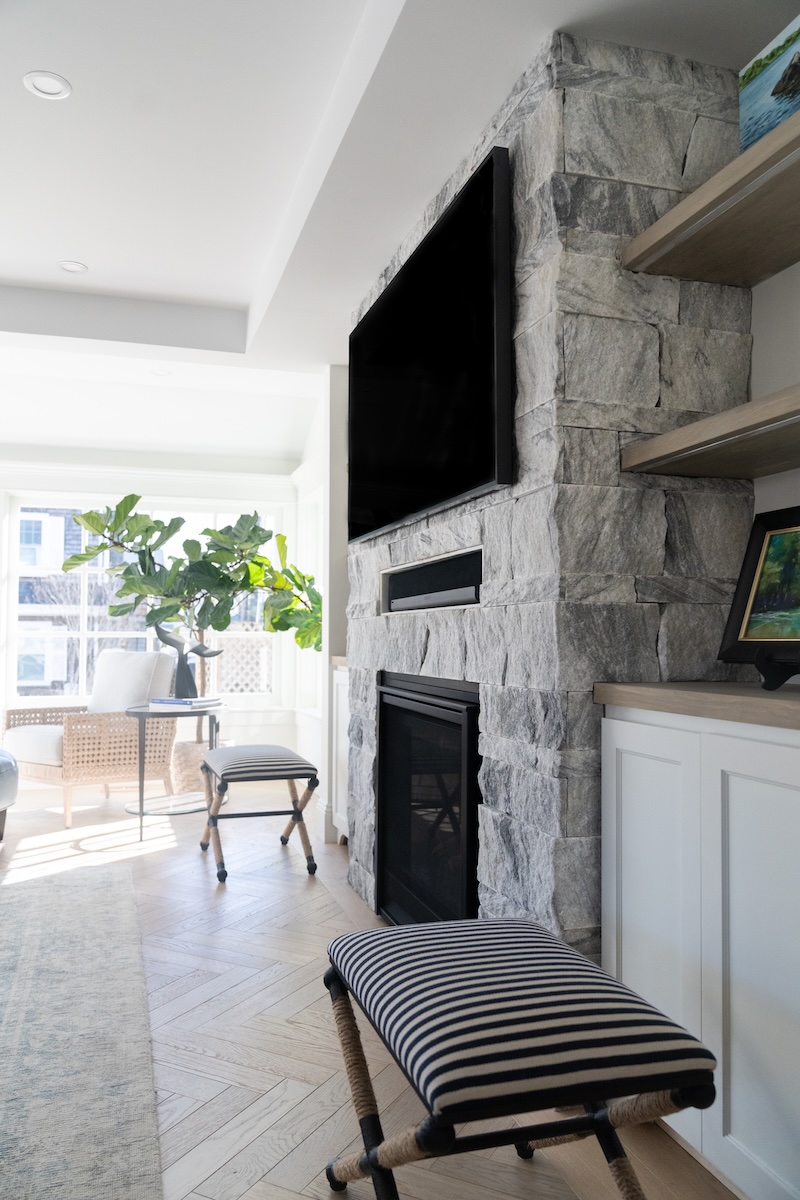
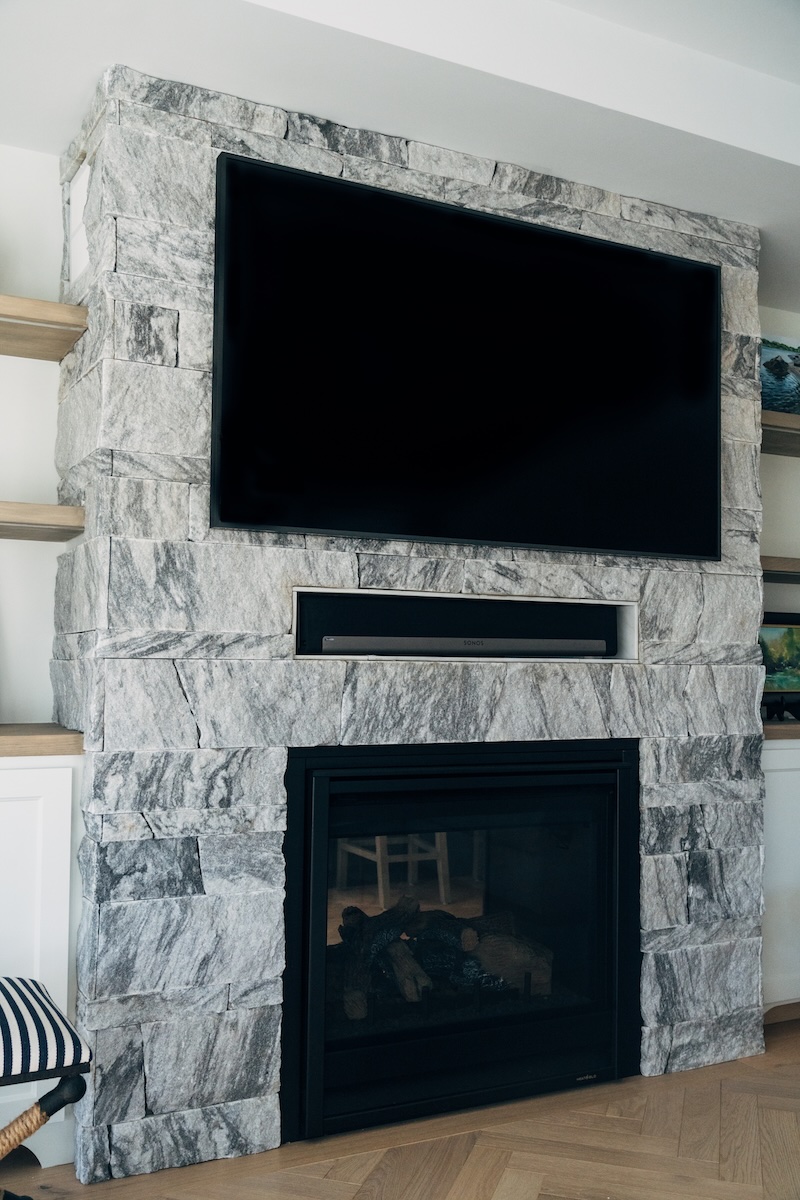
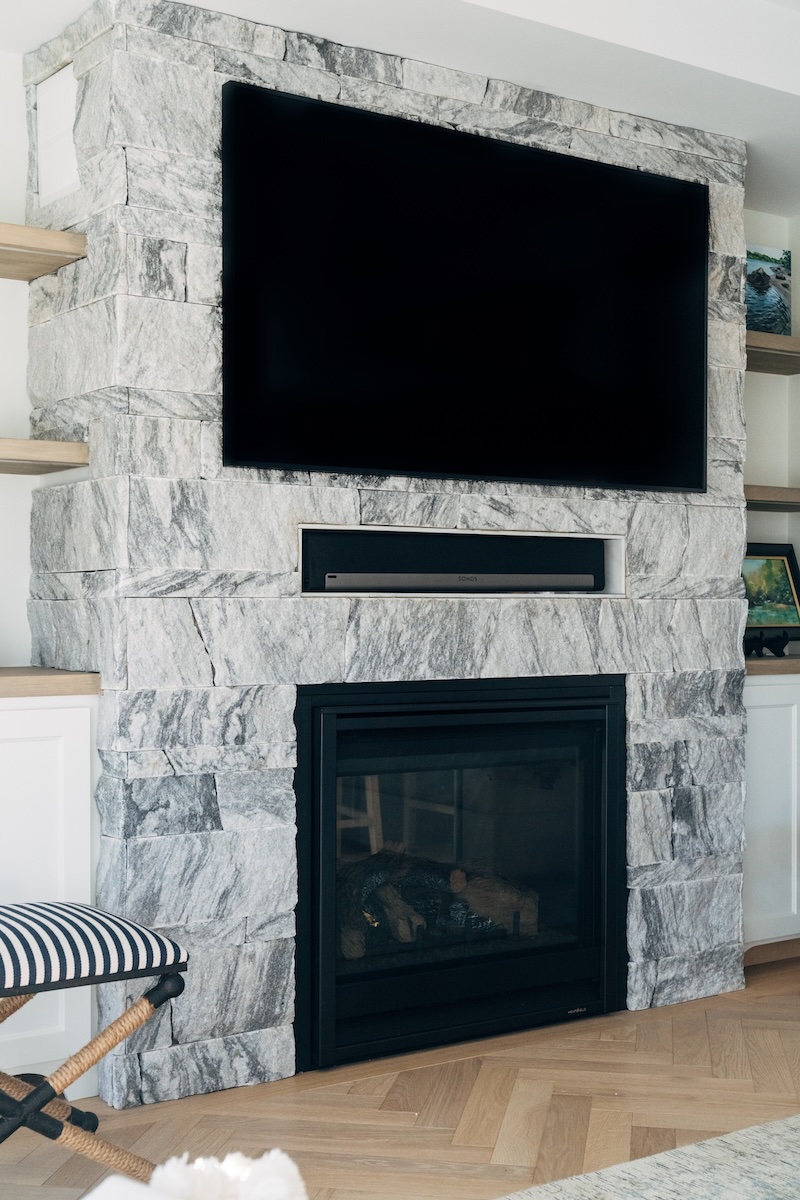
The first is the story of the house itself — a 130-year-old seaside landmark that once sat vacant and weathered on its corner lot, brought back to life by a family who saw what it could be. The second is the story of the marble veneer on its living room fireplace: a split-face Georgia Marble™ – Pearl Grey™ in Berkshire™ format, light and airy enough to open up a room that had been compartmentalized for a century, and rooted in a stone tradition that runs from the Lincoln Memorial to the streets of Atlanta.
That a single fireplace can carry the historical, aesthetic, and material weight altogether is exactly what makes Georgia marble veneer one of the most distinctive choices in residential and commercial design today.
What Is Marble Veneer?
Marble veneer is a thin cut of natural marble and typically ranges from ¾ inch to 1¼ inches for thin veneer formats. It is applied to a vertical wall, fireplace surround, or architectural feature to achieve the look and feel of solid stone construction without the structural demands of full-bed masonry. Unlike manufactured stone or cast stone products, natural marble veneer is solid stone all the way through. There are no aggregates, no pigments, and no artificial textures. When you chip a corner or cut a piece, what you see on the inside is identical to what you see on the face.
For fireplaces specifically, marble veneer offers design flexibility that full masonry cannot match. It can be applied over existing brick, CMU block, or cement backer board, making it one of the most practical paths to a fireplace transformation, whether you are renovating a historic home, finishing a new build, or upgrading an outdoor kitchen fireplace for a year-round living space.
Georgia Marble: A Stone With a 600-Million-Year Résumé
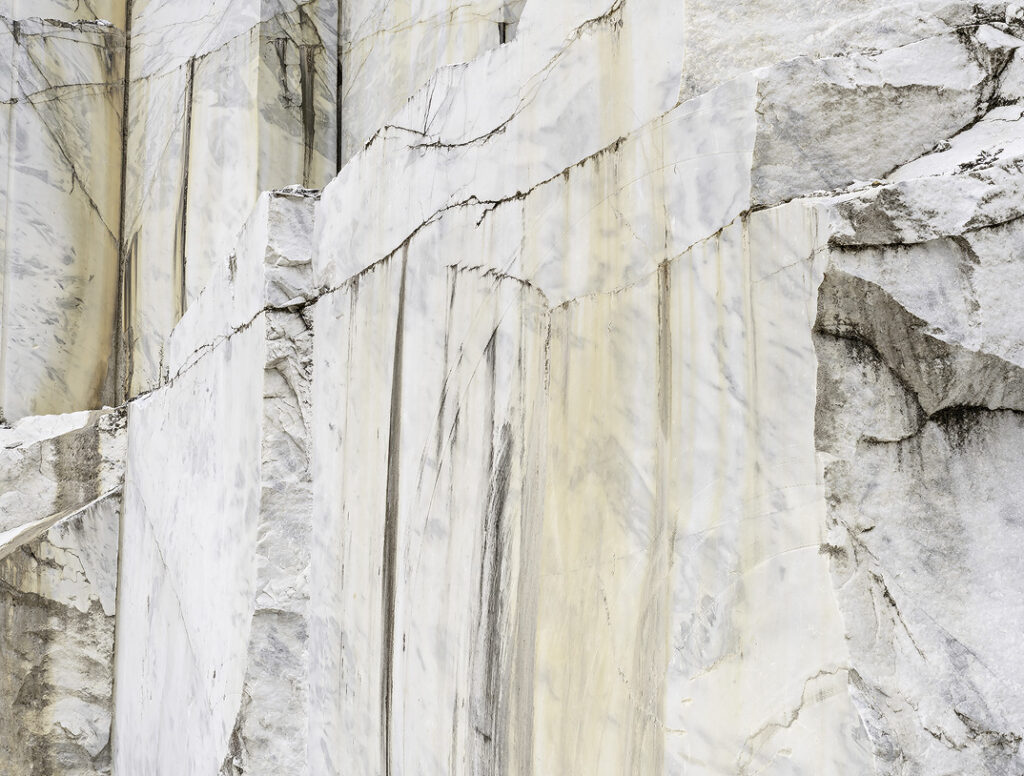
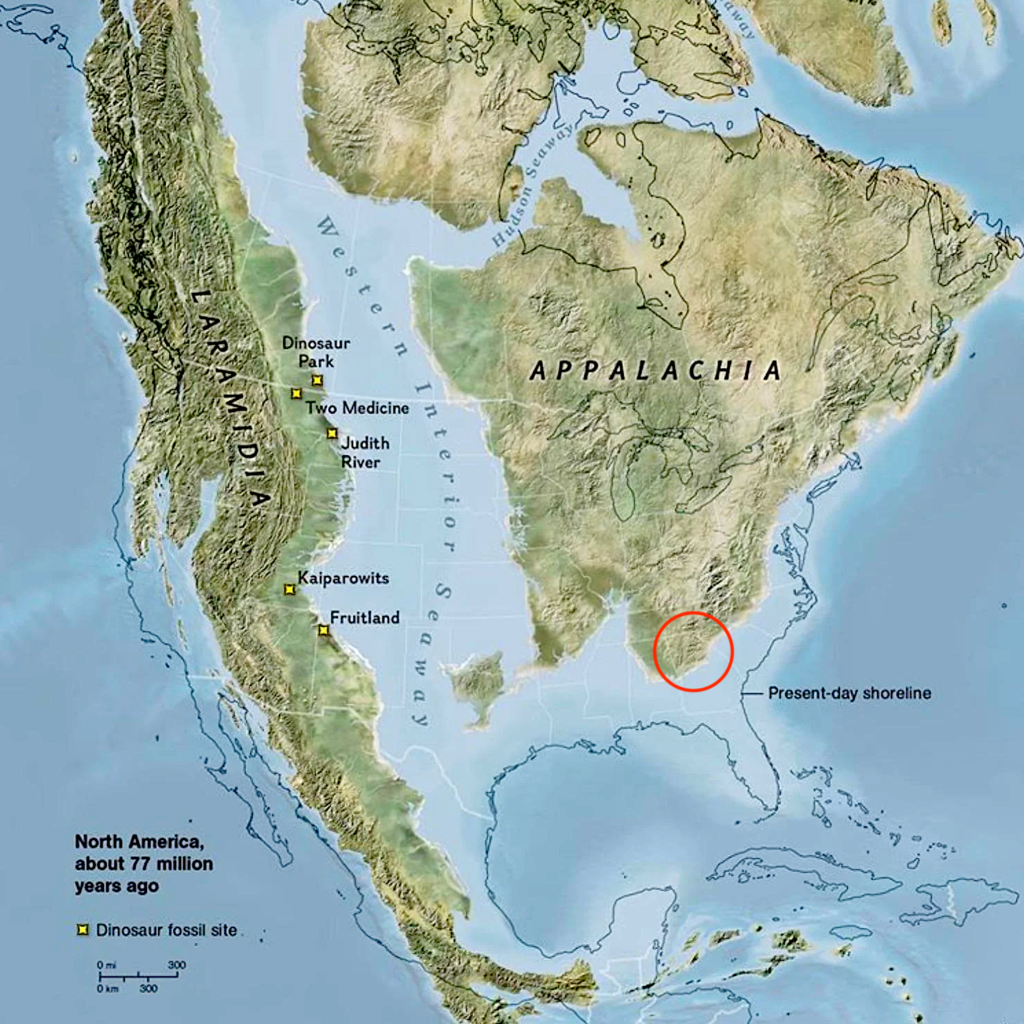
The marble quarried by Polycor in Tate, Georgia began its formation at the bottom of a sea that covered northern Georgia 600 million years ago. Tiny marine organisms lived and died there by the trillions, their calcium carbonate remains gradually building a reef thousands of feet thick above the surrounding sediment. Buried over eons, compressed into limestone, then thrust deep into the earth’s crust approximately 450 million years ago, the heat and pressure of that geological upheaval transformed it into the unique crystalline marble that Henry T. Fitzsimmons first spotted sparkling in the north Georgia foothills in 1835.
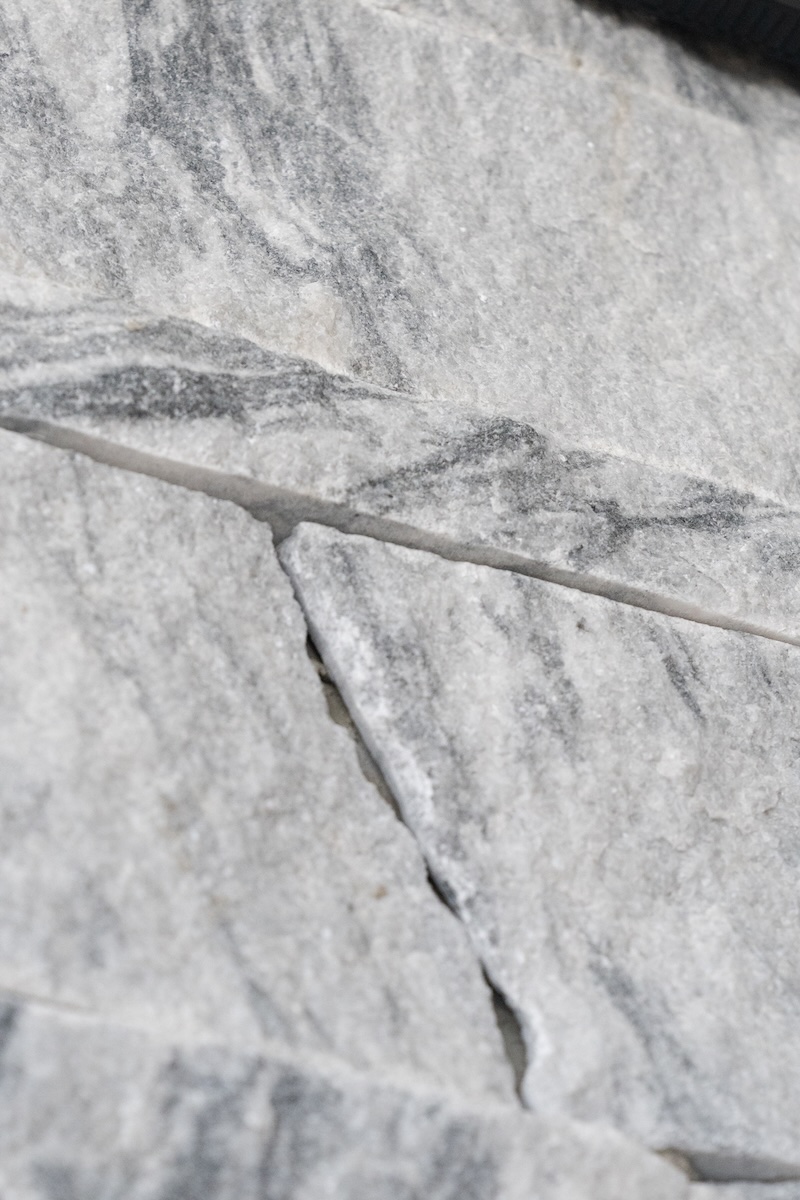
What Fitzsimmons identified, and what architects, sculptors, and designers have prized ever since, is a marble composed of more than 98% pure calcium carbonate. That extraordinary purity means Georgia Marble is free of the minerals and discoloring agents that work from within to stain other stones over time. Its tightly interlocking calcite crystals, visible as a subtle sparkle in the right light, form a near-impenetrable barrier against moisture and dirt — giving it an absorption rate verified by ASTM testing to be among the lowest of any domestic marble.
The proof of that durability is not just a series of numbers in a laboratory report. The proof is in the U.S. Capitol building facade, the Lincoln Memorial sculpture in Washington, D.C., the New York Stock Exchange exterior columns, and the pavers in the Museum of Modern Art sculpture garden in NYC. It is in the grand staircase of the Candler Building in Atlanta, where massive blocks of White Cherokee marble were handcrafted by international artisans into Corinthian columns and ornate carved figures that still draw visitors to touch them more than a century later. It is in the Charleston Library Society, built in 1914 with marble from the same Tate quarry that supplies Polycor’s veneer products today.
When Polycor acquired the Georgia Marble Company, it preserved not just the jobs in Tate, Georgia — it preserved one of the most significant stone traditions in American architectural history.
Why Designers Keep Coming Back to Georgia Marble for Fireplaces
The designers and homeowners who specify Georgia marble for fireplaces consistently describe the same experience: they arrive looking for a marble, and Georgia marble stops them in their tracks.

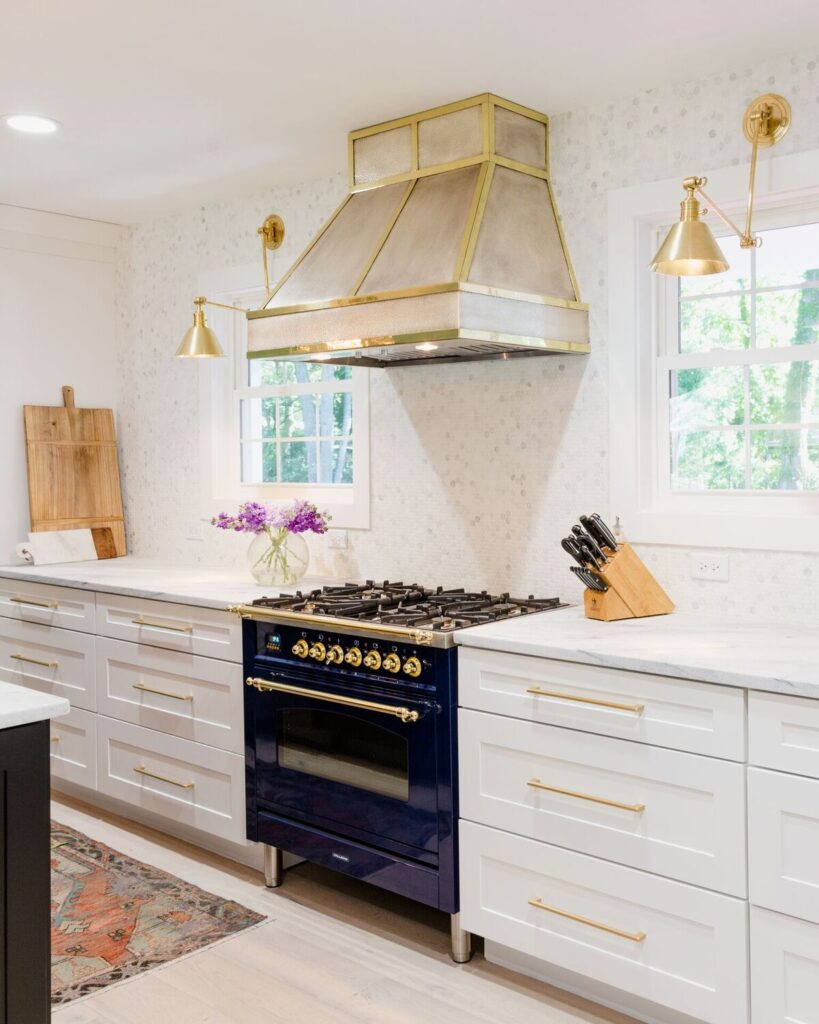
Pam Sessions, president of Atlanta-based Hedgewood Homes and a designer who works with natural stone regularly, put it plainly when she chose Pearl Grey for her own kitchen: “I love the Georgia marble. It has a little more variety over Carrara marble which we see so much of. It’s extremely special.” What Sessions identified as the stone’s defining aesthetic quality — “you can see the little facets, which makes me think that is why it’s more dense” — are the large calcite crystals. These are also the structural features that make it both more beautiful and more durable than the imported alternatives it frequently replaces.
Charleston designer Krystine Edwards came to the same conclusion from a different angle. She had used Carrara and quartz in clients’ homes for years, but when she began her own renovation, she knew she wanted something with more character. “The Georgia Marble™ – White Cherokee™ has such a different texture to it, the movement in it is so beautiful,” she said. “And it looks so good up against my black island and all this brass.” For Edwards, the material choice carried a layer of meaning beyond aesthetics: the White Cherokee she chose for her kitchen waterfall island had also been used in the Charleston Library Society, a piece of regional heritage that connected her renovation to the city she loved.
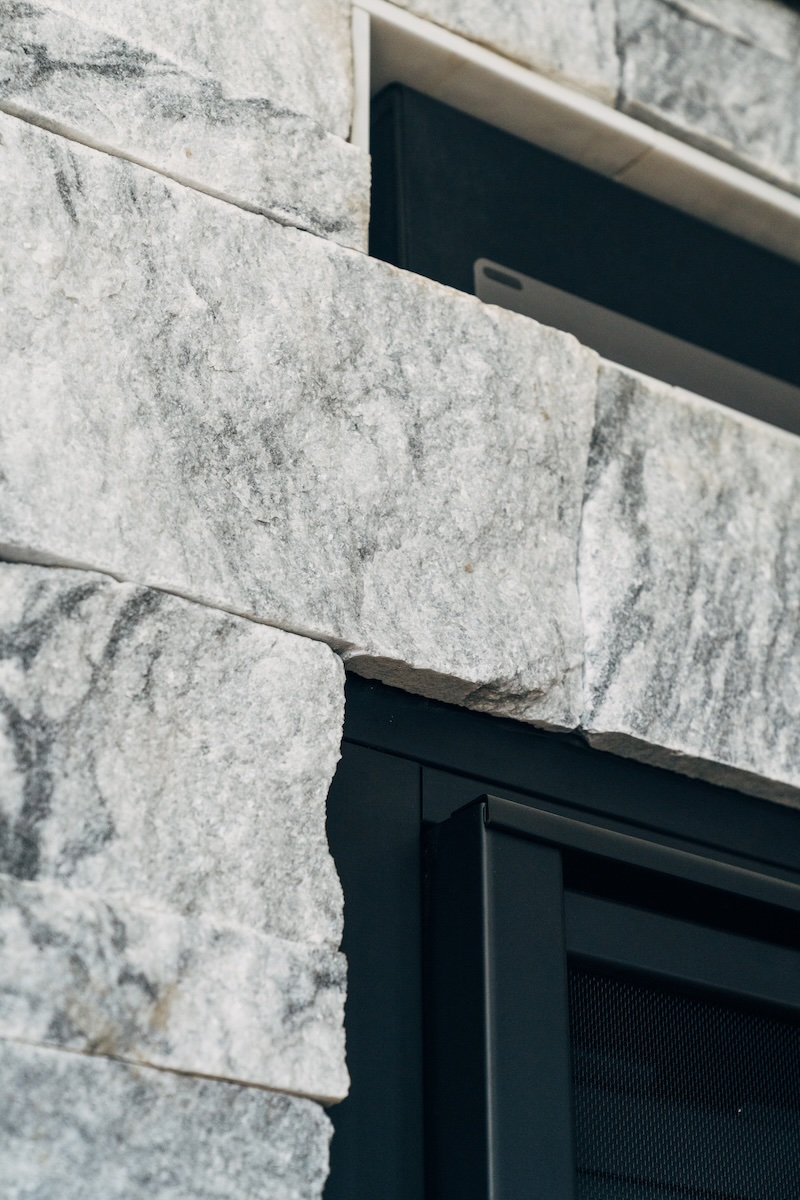
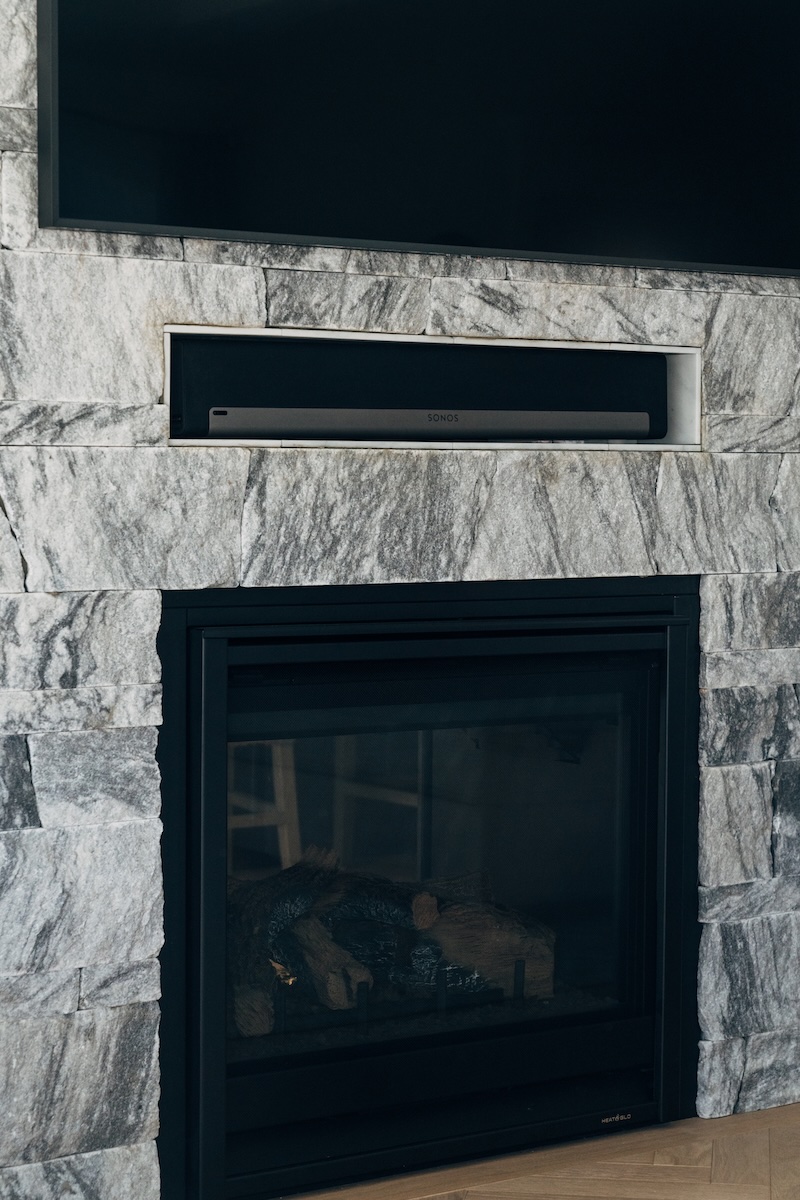
For fireplace applications specifically, that movement and texture translate into something that slab marble cannot always replicate. The Berkshire veneer format — a split-face natural stone with clean sawn edges and four height options from 2¼ inches to 10½ inches — produces an ever-shifting interplay of light and shadow across its textured surface that changes throughout the day as ambient light moves through a room. It is the organic quality that, as interior designer Kristen Martone noted when specifying Berkshire Pearl Grey for the Seaside Victorian fireplace, keeps a space from feeling heavy. “Using something clean, like the Pearl Grey, really didn’t make it feel too heavy. With a lot of fireplaces, the stone can make it feel much heavier. And this house just demanded something that was light and airy and the Georgia Marble veneer fireplace definitely was a great application for that.”
Seth van den Berg of Atlanta-based interior practice The Drawing Room used Pearl Grey throughout a 1920s midtown Atlanta bungalow renovation for countertops, floors, backsplash, and custom fireplaces. His reasoning speaks to the stone’s rare capacity to serve as both backdrop and centerpiece. “The stone offers a unifying language to the home,” he said. The custom fireplaces were fabricated using laminated Pearl Grey slab material to provide visual depth and volume — a technique made possible by Polycor’s ability to yield coordinated countertops, tiles, and custom architectural elements from a single reserved block of marble.
Georgia Marble Veneer for Fireplaces: Material and Format Guide
Polycor’s Berkshire in Georgia Marble is the natural specification for fireplace veneer applications. It is available in both thin veneer and full-bed veneer formats, in split-face finish, across four stone varieties from the Tate quarry.
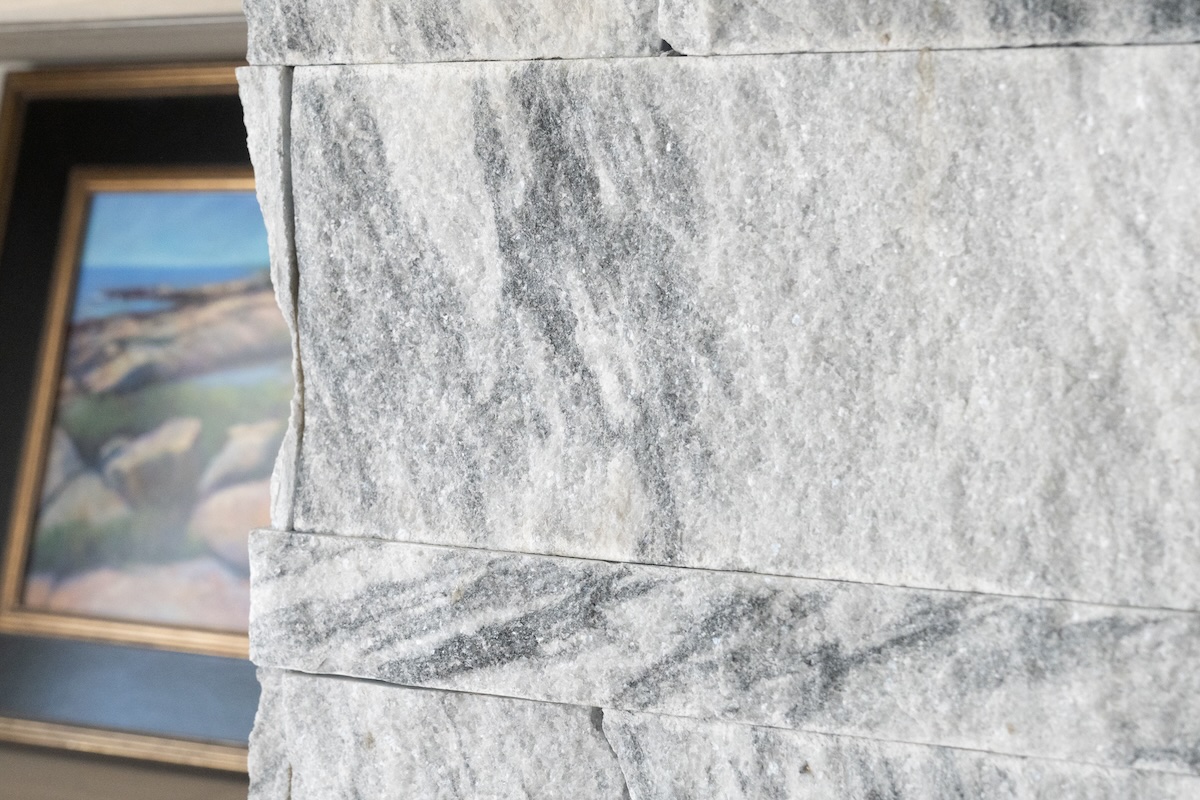
Georgia Marble – Pearl Grey is a white marble with deep, dramatic grey veining — the stone Martone chose for the Seaside Victorian living room fireplace and that Seth van den Berg selected for the Drawing Room’s Atlanta renovation fireplaces. Its veining has a flowing, organic movement that is visually striking without overwhelming a space, making it equally at home in a historic restoration and a contemporary interior.
Georgia Marble – White Cherokee is the white American marble with subtler veining — the stone Asa Candler chose for the Candler Building grand staircase, and the material Brooke Wagner specified for her Newport Beach floor-to-ceiling fireplace surround in ultra-thin 1cm slab format. It is the more versatile of the two white Georgia marbles, working in soft contemporary and traditional settings with equal ease.
Georgia Marble™ – Solar Grey™ reads darker and more dramatic, with deep grey tones that anchor a space. It is the material used for the marble columns in the By George restaurant at the Candler Hotel and is a compelling option for a fireplace that is meant to command a room rather than complement it.
Berkshire Thin Veneer Specifications
Thin veneer flats are available in four heights — 2¼”, 5″, 7¾”, and 10½” — with depth ranging from ¾” to 1¼” and lengths from 8″ to 22″. Thin veneer corners match across the same four heights with depth from 3″ to 4″ and lengths from 6″ to 12″, making it a versatile option for a range of stone fireplace ideas and designs. Mixed pallets are available in both three-size and four-size blends for installations that call for more natural, varied coursing patterns. Full-bed veneer is also available across the same height range at 3″ to 4″ depth for applications requiring greater dimensionality.
Use Polycor’s stone veneer calculator to estimate square footage and pallet quantities for your project.
Note: The 10½” height is not available in Georgia Marble – Pearl Grey.
Indoor and Outdoor Applications
Marble veneer fireplaces are no longer confined to the living room. As outdoor living has become a serious design consideration — equal in importance to the interior spaces it adjoins — Georgia marble veneer has followed it outside.
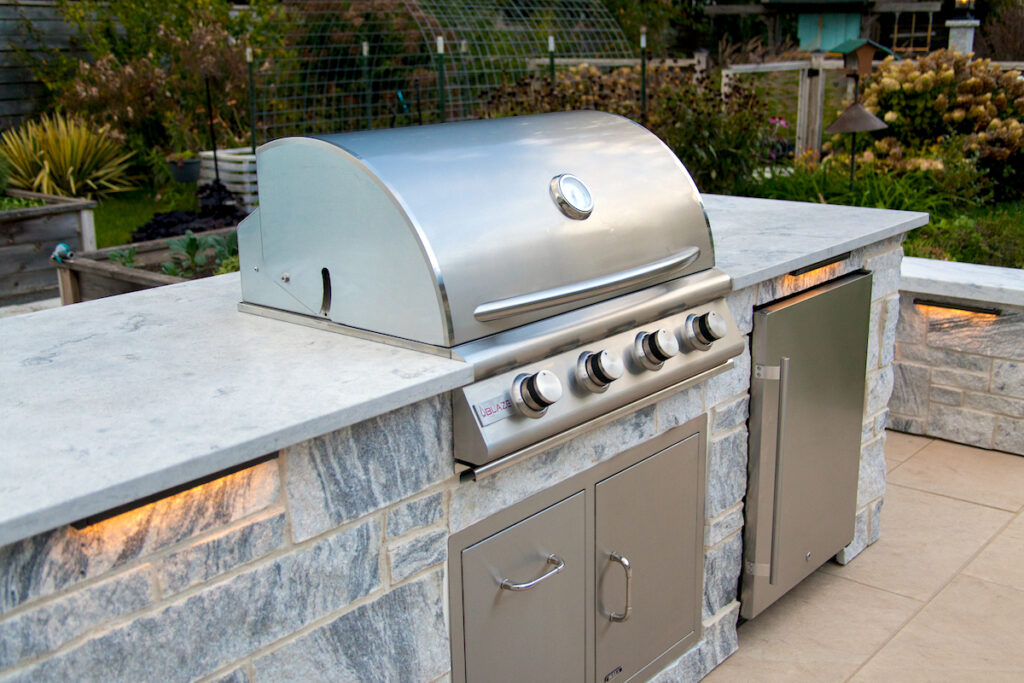
For outdoor home siding, outdoor kitchens, pizza oven enclosures, and covered patio fireplaces, thin veneer is the preferred format. The smaller unit sizes weather the elements more reliably than large full slabs, and Georgia marble’s dense crystalline structure — with its extremely low absorption rate — gives it inherent resistance to freeze-thaw cycles that would compromise less dense stones. Unlike manufactured stone, it contains no dyes or chemicals that fade under UV exposure. What you install is what you will see in twenty years.
For outdoor applications, the split-face finish of Berkshire is both practical and visually appropriate. The textured surface does not show wear or weathering the way a polished surface would, and the organic pattern of the stone reads naturally in an outdoor context — particularly when the fireplace is tied into a broader hardscape that incorporates Indiana Limestone or granite elements.
Marble Veneer vs. Manufactured Stone: The Difference That Matters
The case for natural marble veneer over manufactured stone alternatives is not primarily aesthetic — though the aesthetic gap is significant. It is structural and permanent beyond what synthetic, manmade materials can achieve.
Manufactured and cultured stone products are concrete-based composites with pigmented surfaces. When they chip, crack, or are cut to fit, the interior reveals aggregate and concrete — a fundamentally different material from the face. Natural marble veneer, like all of Polycor’s stone products, is the same composition throughout. The face is not a coating or a veneer of dye and colorants. It is the stone, all the way through, front to back.
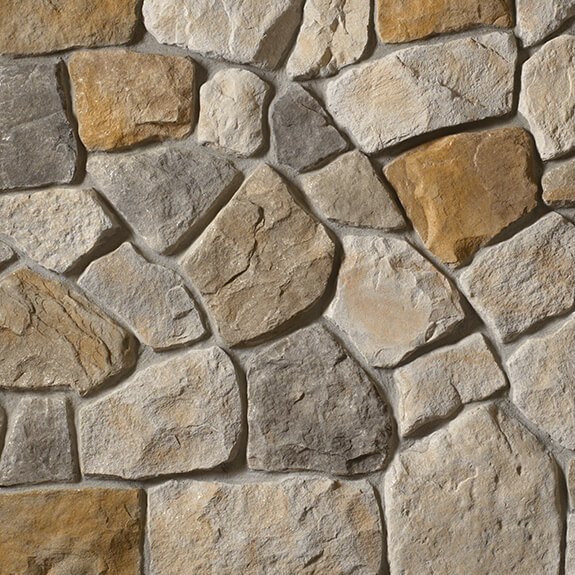
Designer Deb Foglia, who specified Rockford Estate Blend™ Indiana Limestone thin veneer for her family room fireplace, described this quality directly when she noted that the exposed edges of the natural stone look as good as the face — something that faux and cultured stones cannot replicate after chiseling or cutting. Georgia marble carries the same property, with the added dimension of its calcite crystals giving cut edges a luminosity that no manufactured product approaches.
The other distinction worth making is longevity. Georgia Marble has been quarried from the same deposit in Tate, Georgia since 1835. The stone that sculptors carved into the statue of Abraham Lincoln has been sitting outside since 1922, watching over the capital. The fireplace surround a homeowner installs today from Polycor’s Berkshire Pearl Grey is the same stone, from the same geological formation, that has been performing at the highest level in the most demanding architectural applications for nearly two centuries. That is not a marketing claim, but is a geological and historical fact.
A Note on Sourcing and Sustainability
Every piece of Georgia Marble veneer Polycor produces is quarried at the Tate, Georgia facility — one of the few zero-waste quarries operating in the world. Because Polycor owns its quarries and production facilities end to end, it maintains complete chain-of-custody transparency from extraction through finishing. There are no intermediaries, no re-labeling, and no ambiguity about where the stone comes from.
This matters in a stone industry where, as Pam Sessions noted, “today there are many links in that chain of distribution and we can’t always control it at the source” — and where marbles sold under Italian names are sometimes quarried in India or Iran and only cut in Europe. Georgia Marble is quarried in Georgia, manufactured and fabricated in Georgia, and carries the full weight of that American provenance.
Ready to Specify Georgia Marble Veneer for Your Fireplace?
With Polycor’s network of dealers and fabricators across North America, Georgia marble veneer is accessible for residential and commercial projects of any scale — from a single living room fireplace to a whole-home stone program like the one Seth van den Berg executed for the Drawing Room’s Atlanta renovation.
Request a physical sample of Georgia Marble Pearl Grey or White Cherokee to experience the stone’s crystalline sparkle and surface texture firsthand. Or connect with a Polycor expert who can discuss product availability, fabrication options, and local dealer referrals for your specific project.
Explore more stone fireplace ideas in Polycor’s stone fireplace design guide. See the full range of Georgia Marble veneer products and the Berkshire™ product page for complete specifications. View installed fireplace project examples in the limestone fireplace portfolio.