Indiana Limestone Maintenance: Facades vs. Pavers and Patios
“Should this be sealed?” doesn’t have one answer for Indiana limestone. It has an answer that depends on whether the stone is standing vertically on a facade forty stories up, or lying flat on a patio someone walks across barefoot. Both applications are genuinely low-maintenance. They are not low-maintenance in the same way.
Why Maintenance Differs by Application
The Indiana Limestone Institute’s own technical position on water repellents is, in its words, one of “statesman-like silence.” That’s not indecision; it’s an acknowledgment that the right answer depends on the wall, the climate, and the goal. A vertical, above-grade facade needs to manage moisture moving through the wall assembly. A horizontal paved surface needs to manage moisture sitting on top of it, foot traffic, staining from food and drink, and, in wet climates, algae. Those are different physical problems, and they call for different answers, not one rule applied everywhere.
Vertical Facades and Cladding: Why Sealing Is Usually Skipped
For a large-scale facade, the Institute’s Handbook is direct: “Exterior stone will not usually need a sealer or other protective treatment on its upper surface. Allowing the stone to acquire its natural patina with age is usually a better decision than to apply a temporary coating.” The reasoning is about vapor, not aesthetics alone. A properly installed water repellent, where one is used on a vertical wall, is absorbed into the stone’s pores without closing them, so liquid water is reduced at the surface while vapor generated inside the wall assembly can still escape. Coatings that fully seal the surface block that vapor path, and trapped moisture behind a coated facade is a more serious problem than an unsealed one.
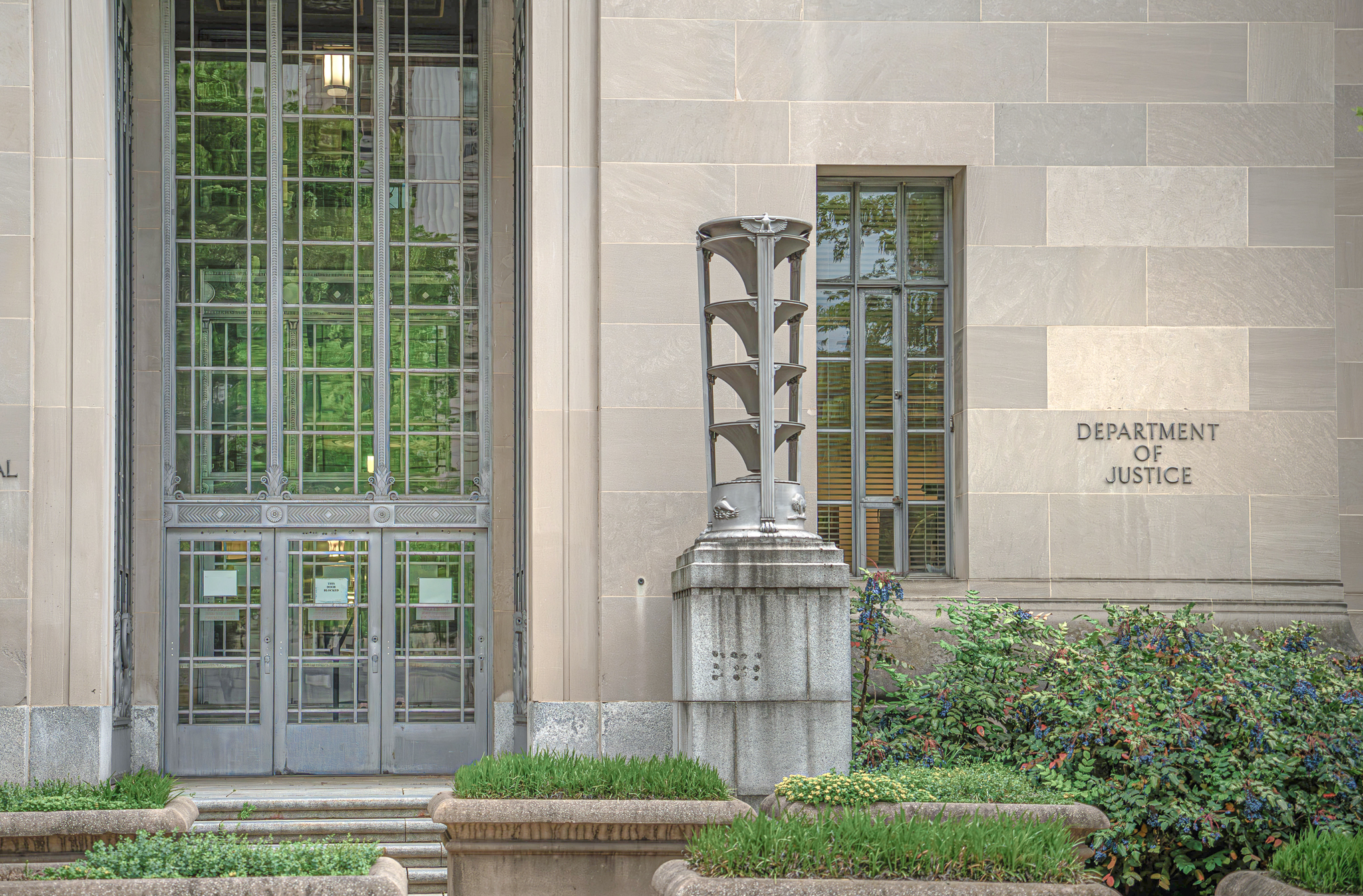
This is also why the Handbook separates water repellents from waterproofers and sealers, even though the terms get used interchangeably on job sites. A water repellent doesn’t change the stone’s color or texture and isn’t waterproof; it will not bridge a failed joint or substitute for proper dampproofing. A waterproof coating does change the surface and can trap vapor. Confusing the two, or specifying one while expecting the performance of the other, is the more common mistake than sealing or not sealing itself.
Cleaning a Facade Instead
Where a facade actually needs attention, it’s almost always cleaning and joint maintenance rather than sealing. Polycor’s own care guide sets real numbers for this: a plain water jet from a power washer, pressure not exceeding 1,200 psi, a 45-degree fan-shaped nozzle held no closer than 12 inches from the stone, removes most accumulation without damage. Acidic cleaners, wire brushes, bleach, and concrete cleaners are all specifically ruled out. Algae, a common accumulation on limestone in wet climates, responds to diluted hydrogen peroxide (a half cup per gallon of water) and a soft bristle brush. Efflorescence, a powdery white salt deposit from moisture carrying soluble salts to the surface, should be brushed or blown off dry, never washed, and will generally resolve on its own once the moisture source is controlled.
Pavers and Patios: Where Sealing Earns Its Place
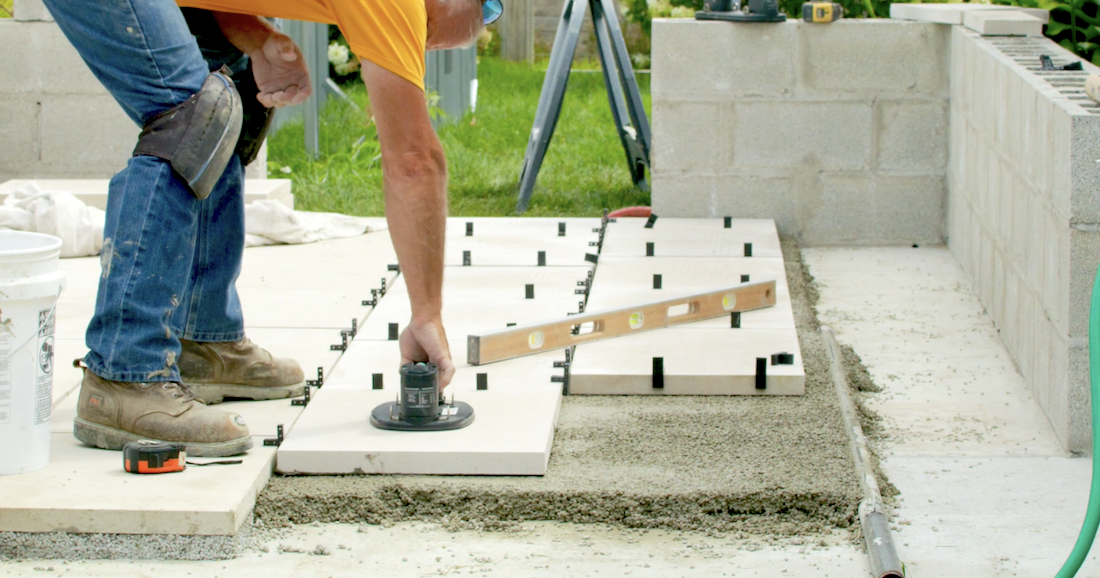
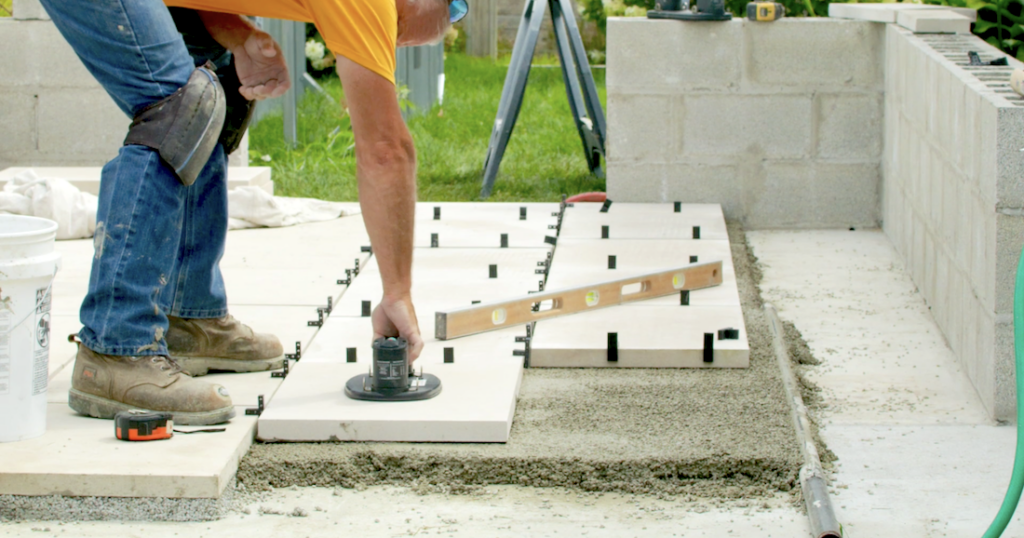
Polycor’s care and maintenance guide is explicit that sealing is not a requirement anywhere in its natural stone products, but it frames the decision differently for hardscaping: “applying an impregnating sealer coating to the limestone surface might be required” to maintain the aesthetic of the original installation, and “a sealer application may aid in cleaning the surface should it become dirty.” That’s a meaningfully different calculus than a forty-story facade. A residential patio sees direct food and drink spills, bare feet, pool chemicals, and constant foot traffic, exposures a facade essentially never has. It’s also small enough that resealing every few years is a realistic maintenance task, where re-treating an entire building envelope is not. Sealing a paver patio is a legitimate, low-maintenance-boosting choice for exactly the reasons it’s usually skipped on a facade: the stakes and the practicality both point the other way.
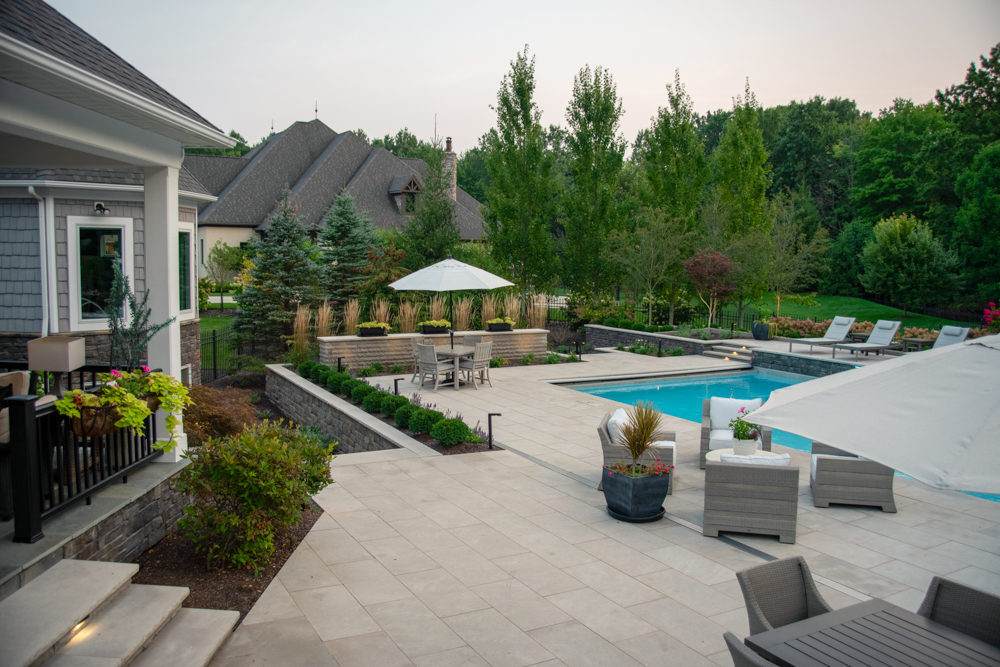
Exterior paving carries its own separate consideration regardless of sealing: isolating the stone from “rising damp.” The Handbook recommends dampproofing all unexposed surfaces so moisture cannot migrate up through the stone from grade or the setting bed, achieved either through dampproofing membranes or through setting mats and pedestals that let moisture drain below the stone’s lower face. Proper slope, crown, and drainage matter more to a paver’s long-term performance than the sealing decision does.
If a water repellent is specified for any vertical application, ILI’s own protocol is worth following rather than a manufacturer’s marketing claims alone: treat a sample on only half its surface for initial evaluation, get the manufacturer’s statement on vapor transmission and guarantee terms in writing, and have the applier and manufacturer agree on wall and weather conditions before application. Water repellents have, in some documented cases, been suspected of contributing to surface scaling, which is precisely why testing and vapor-transmission data matter more than brand selection.
A Maintenance Schedule to Specify
- Facades and cladding: periodic sweeping or blowing of debris; annual hosing with clean water where atmospheric conditions warrant it; re-pointing or re-caulking of joints as needed rather than on a fixed timeline; no default sealing.
- Pavers and patios: the same debris and hosing routine, plus an owner decision on impregnating sealer based on use, climate, and staining tolerance; resealing interval per the specific sealer manufacturer’s guidance.
- Both applications: mild detergent and soft bristle brush for routine cleaning; pH-neutral or approved stone cleaner for stubborn soiling; never wire brushes, acidic cleaners, bleach, or concrete cleaners; test any new cleaner in an inconspicuous area first.
What This Means for Project Specifications
- Don’t write a blanket “seal” or “do not seal” clause across an entire project; scope the decision to the application, vertical facade versus horizontal paving, separately.
- If a water repellent is specified for a vertical wall, require the manufacturer’s written vapor transmission data and guarantee terms, and require a half-surface test panel before full application.
- For paver and patio work, leave the sealing decision with the owner where it’s a maintenance preference rather than a performance requirement, but document the resealing interval the manufacturer recommends.
- Specify cleaning limits explicitly: maximum 1,200 psi, 45-degree fan nozzle, 12-inch minimum standoff, no acidic or concrete cleaners.
- For exterior paving, specify proper dampproofing or a setting-mat/pedestal system rather than relying on sealing to manage rising damp.
Frequently Asked Questions
Usually not. The Indiana Limestone Institute’s Handbook states exterior stone will not usually need a sealer, and that allowing the stone to acquire its natural patina is generally a better decision than applying a coating that could trap vapor inside the wall assembly.
Sealing is not required, but it is a legitimate option for pavers and patios. Polycor’s care guide notes a sealer may aid in cleaning and maintaining the original installation’s appearance, which matters more on horizontal surfaces exposed to foot traffic and spills than on a vertical facade.
A water repellent is absorbed into the stone’s pores without closing them, so vapor can still pass through while surface water is reduced. A sealer or waterproofer coats the surface, changes its appearance, and can block vapor transmission, which is a different and more consequential effect on a vertical wall.
Mild detergent and a soft bristle brush for routine cleaning. For accumulated dirt, a power washer at no more than 1,200 psi with a 45-degree fan nozzle held at least 12 inches from the surface. Acidic cleaners, bleach, wire brushes, and concrete cleaners should never be used.
Efflorescence is a powdery white salt residue left when water carries soluble salts to the stone’s surface and evaporates. It should be brushed or blown off dry, never washed, and typically disappears on its own once the moisture source is controlled.
Periodic sweeping or blowing of debris, plus an annual hosing with clean water for exterior hardscaping depending on atmospheric conditions. Joints should be re-pointed or re-caulked as needed rather than on a fixed schedule.
For material specifications, see the Limestone product page. For more on the material’s history, see Indiana Limestone: America’s Original Building Stone. For the full technical source behind this page, see the Indiana Limestone Institute and Polycor’s own Limestone Care and Maintenance Guide.