
Cast Stone vs. Natural Stone: What Architects Need to Know Before They Specify
Cast stone and natural stone can look nearly identical on a finished facade. They are not built on the same premise, and that difference explains almost everything else in this guide.
Why Origin Determines Performance
Natural stone’s properties are established by geology. Cast stone’s properties are established by manufacturing. Natural stone forms over millions of years before a quarry ever touches it; a quarry extracts and shapes material whose fundamental characteristics already exist. Cast stone, also called cast masonry, starts from a mold: raw cement, aggregate, pigment, and admixtures are proportioned, mixed, and cured the day it’s poured. The material is engineered as it’s shaped, not shaped from something already formed.
That distinction is the throughline for cost, durability, tolerances, and maintenance below. It’s also the reason the two materials, despite looking similar in a rendering, carry different long-term risk profiles once they’re on a building.

How Each Material Is Made
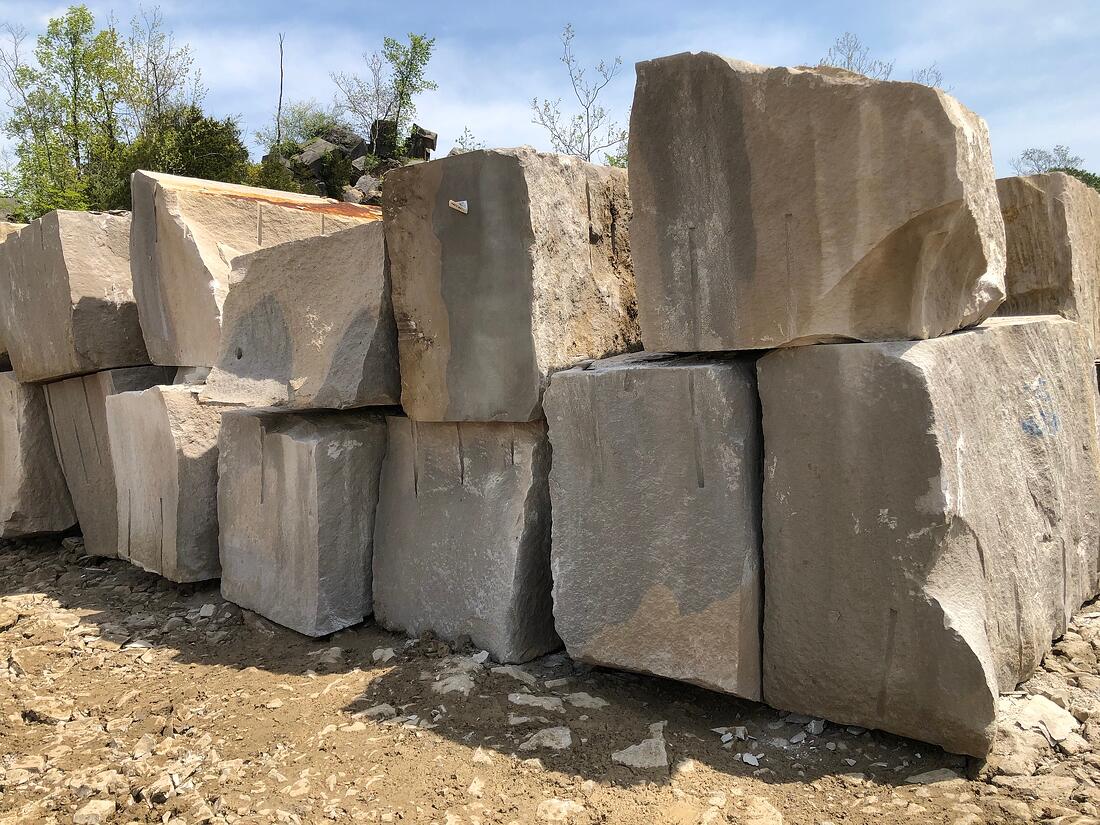
Quarrying Natural Stone
A typical quarry ledge yields 50,000 to 75,000 cubic feet of stone. Blocks are evaluated for color and grain before they’re divided, and each one is assigned a traceable ID back to its exact quarry location. That traceability is what lets a restoration project years later match the original color and grain, and it’s why specifications should call out color and quarry by name, not just species.
Cast Stone: Dry Cast and Wet Cast
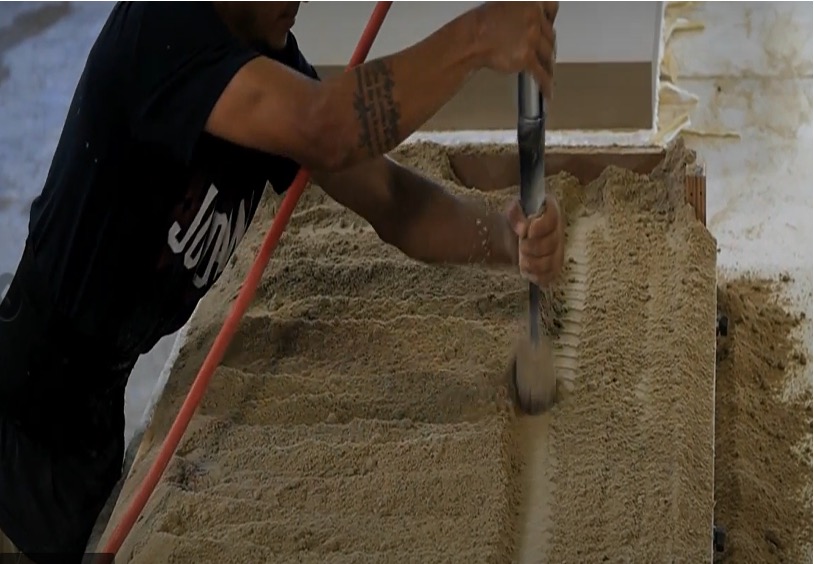
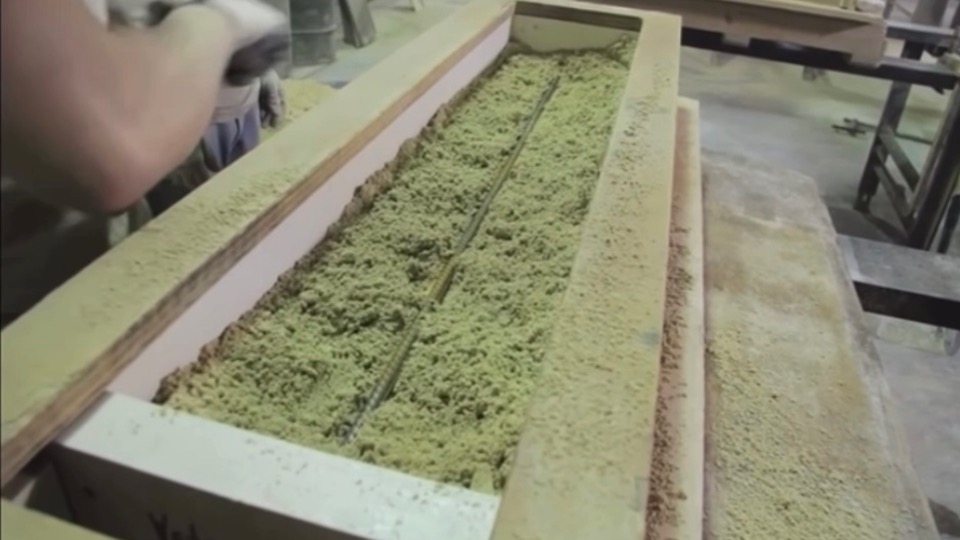
Cast stone producers use one of two methods. Dry cast (vibrant dry tamp) uses a stiff, low-water mix compacted into the mold in lifts. The mold comes off almost immediately, but the unit isn’t structurally ready: it cures in a hydration kiln for roughly 24 hours, then sits in the yard a minimum of 28 days before installation. It’s efficient for repetitive units where the same mold gets reused.
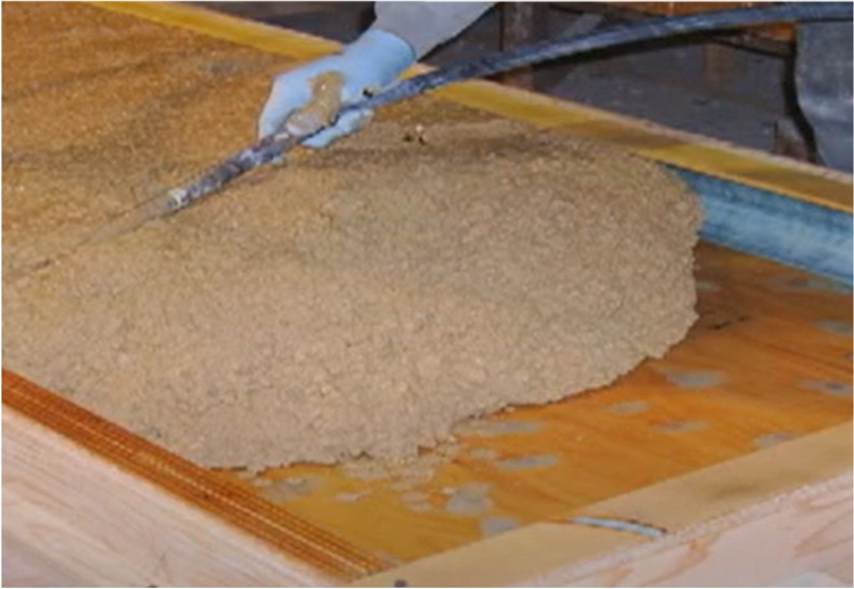
Wet cast uses a fluid, heavily saturated mix poured into a watertight mold, vibrated on a shaker table to remove trapped air, and left in the mold for weeks while it cures. It favors design flexibility over speed for custom, non-repeating components, at a materially higher mold cost.
Both methods finish with an acid wash and a factory sealant. Color consistency in cast stone depends heavily on even temperatures through the hydration kiln and on which aggregate and cement type the producer uses batch to batch; natural stone’s color range comes from the quarry itself.
Cost: Why the Old Assumption Is Outdated
Advances in quarrying and fabrication, larger-format cutting, vacuum lifts, 5-axis CNC, have narrowed the cost gap between natural and cast stone considerably. On Freedom Place at Old Parkland in Dallas, a 210-foot, 7-story building where the specification was switched from cast stone to Indiana limestone mid-design, the natural stone package came in at roughly $6.75 million against a cast stone bid, a difference of about $175,000, or roughly 2.6% more. That premium existed specifically because cast stone demand was high at the time of bidding; under different market conditions the gap moves. The point isn’t that natural stone always costs the same. It’s that the large, assumed premium isn’t automatic, and it’s worth pricing both before ruling either out.
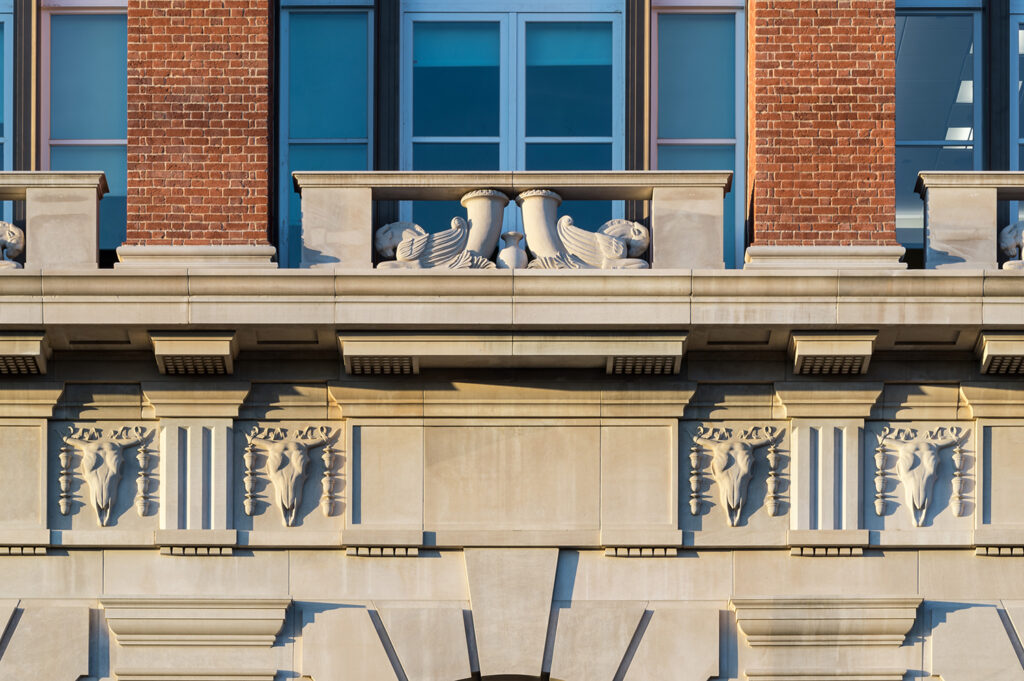
On that same project, the stone installer put it to the building owner directly: “How many times do you want to replace the material?” The first building on the campus, built in 1894, was also Indiana limestone. The switch to natural stone on the newest building wasn’t just a durability decision; it matched a site where stone was already the established material. That’s not unique to this one project; see where natural stone already belongs in America’s architectural vernacular for the broader pattern.
Long-Term Performance and Common Defects
Three failure modes are specific to cast stone and don’t occur in natural stone, because natural stone isn’t manufactured in layers or built around embedded reinforcement.
- Crazing – a surface-level cracking or veining that shows up years after installation. It’s cosmetic, not structural, which is part of why the cast stone industry standardizes on a 10-year warranty.
- Delamination – when dry-cast layers aren’t fully tamped during production, a plane of weakness can develop and surface later as a genuine structural issue.
- Reinforcement corrosion – cast stone relies on embedded rebar. If water reaches it, the metal rusts, expands, and drives further cracking. Natural stone uses external anchors only, so there’s no embedded metal to corrode.
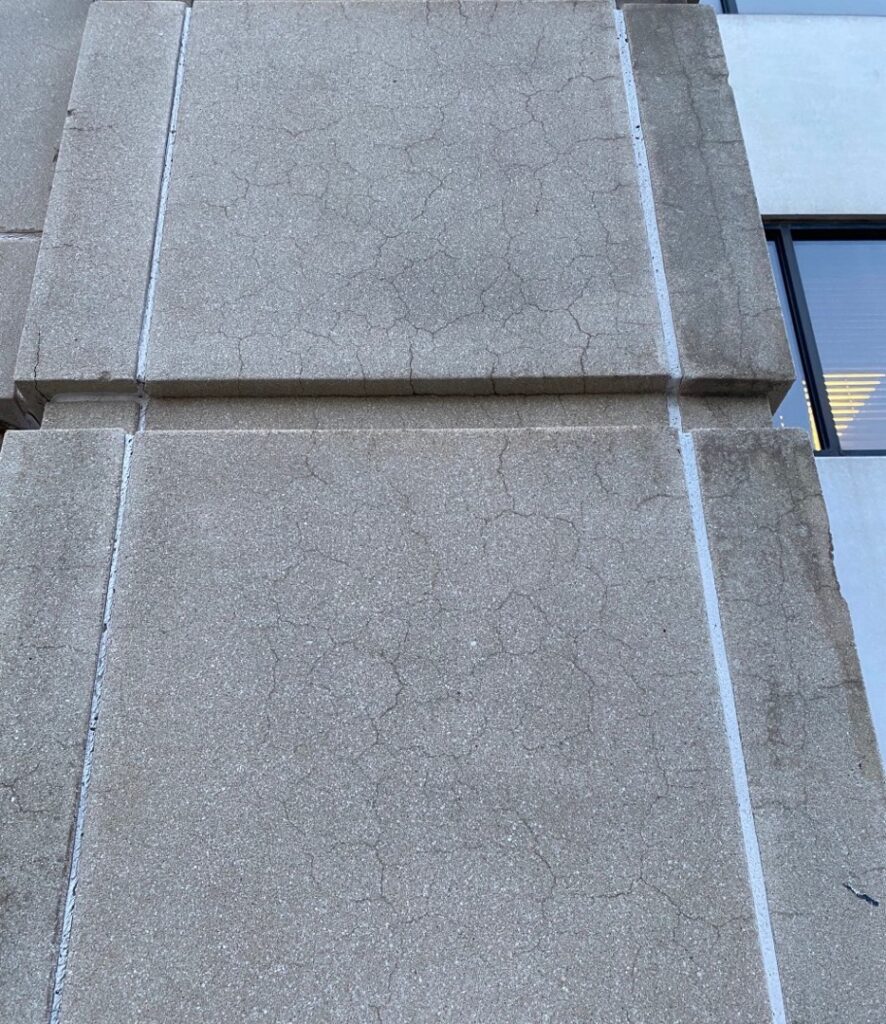
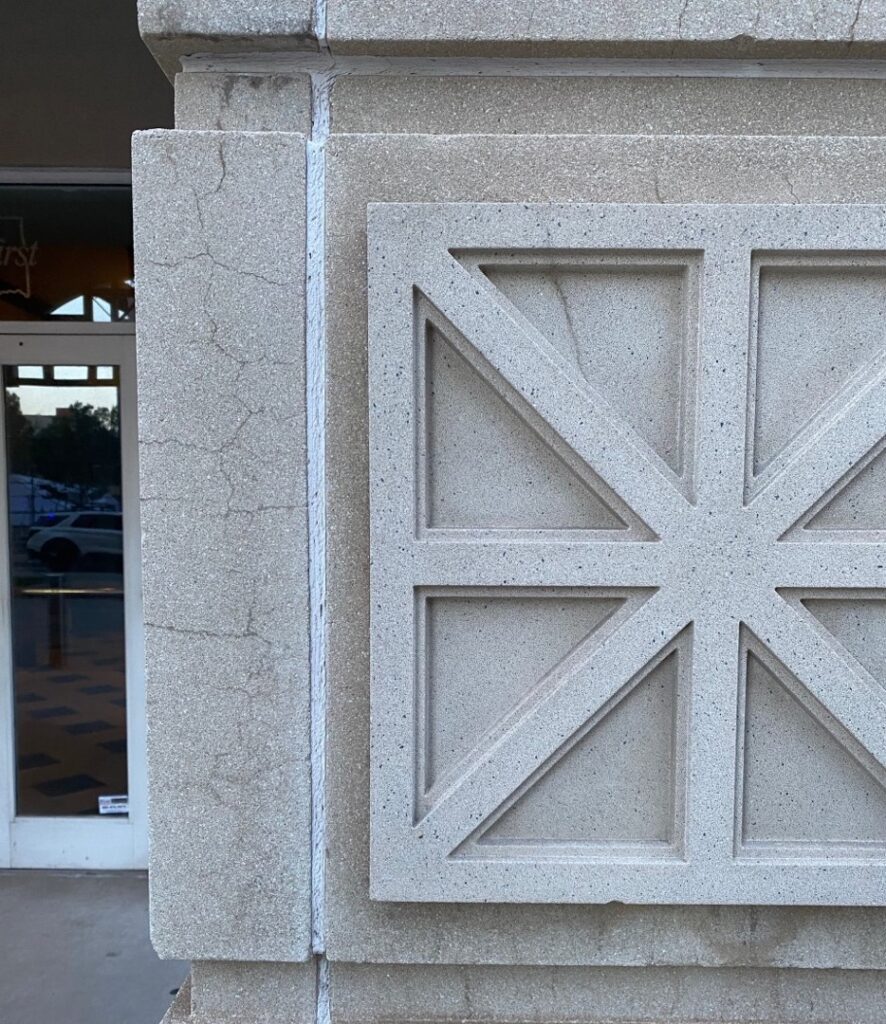
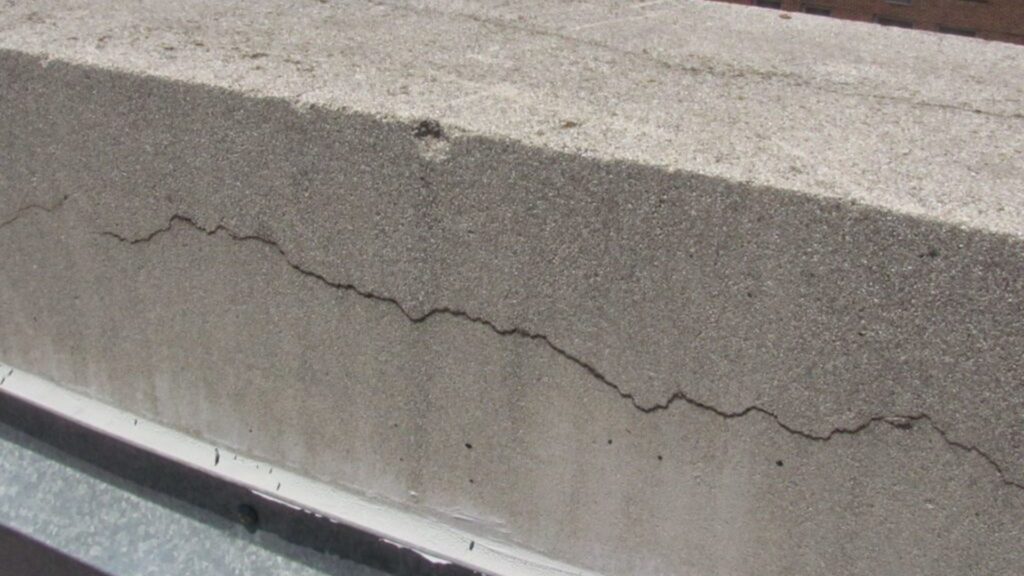
For a closer look at how these three failure modes develop and what they mean for a specification, see cast stone crazing, delamination, and reinforcement failure.
Structural Use and Tolerances
Natural stone has served as both structural material and finished surface for centuries. Cast stone is architectural cladding: it requires structural reinforcement and isn’t intended to carry structural load on its own.
Tolerances follow the same logic. Natural stone, cut from solid block, typically holds to about ±1/16 inch or tighter. Cast stone runs closer to ±1/8 inch and can shrink or bow slightly as it cures. On traditional buildings that variance rarely shows; on large-format modern facades, it can.
Maintenance and Repairability
Natural stone is a through-body material. A chipped edge or a field cut can be dressed on site and will still look right. Cast stone can’t be field-dressed the same way; a cut edge exposes a different surface on the interior and color variation from the surface.
Issues resulting from alkali silica reaction of the cement paste and reactive silica in the aggregates can lead to internal swelling and cracking. Also, corrosion of internal steel frameworks due to moisture penetration can also effect cast stone’s structural integrity and aesthetic appearance. Indiana Limestone is free of these issues and will not exhibit any of these characteristics over time.
Sealing isn’t a single rule across every application. On a large-scale facade, natural stone is generally left unsealed by design: an unsealed wall breathes, allowing vapor generated inside the wall assembly to escape rather than getting trapped behind a coating, and the stone acquires a natural patina over time that the Indiana Limestone Institute considers preferable to a temporary coating.
Sustainability and Embodied Carbon
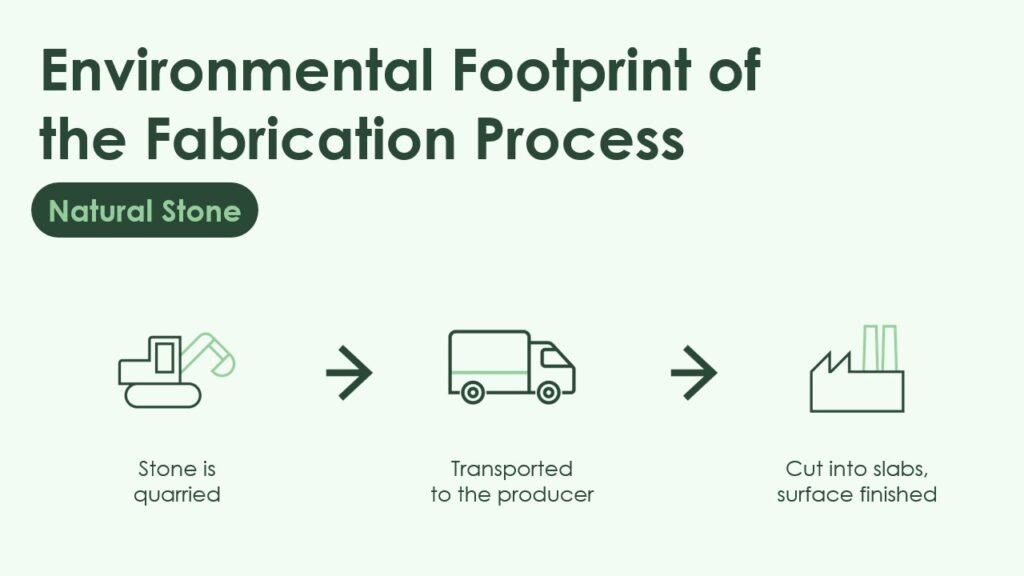
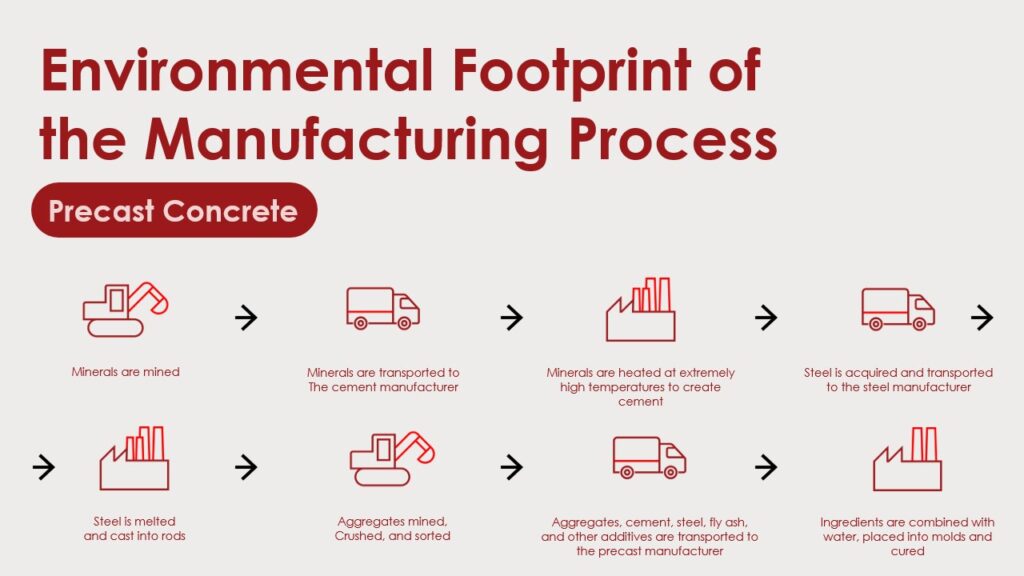
Natural stone’s supply chain is short by comparison, where stone is quarried, transported, and cut to size. Cast stone’s supply chain is longer with more steps in between, involving mining and heating minerals to very high temperatures to turn them into portland cement, acquiring and casting steel reinforcement, mining and transporting aggregates, then combining everything with additional ingredients and curing it in a mold, a process mapped out in a natural stone industry comparison published by the Natural Stone Institute.
In a documented comparison at the Loyola Academy Aquatic Center in Wilmette, Illinois, published Environmental Product Declarations (EPD’s) showed Indiana limestone cladding at a global warming potential of 21.5 kg CO2e/m², against 618.7 kg CO2e/m³ for the concrete alternative. Across the project’s cladding scope, that worked out to 5.18 metric tons of CO2e for the limestone versus 13.74 metric tons for concrete, a 62% reduction. On Freedom Place, a separate project, switching from cast stone to Indiana limestone reduced the facade’s embodied carbon by 77% on an industry-wide basis and 85% on a company-wide (Polycor EPD) basis, depending on which dataset is used.
Architects specifying for sustainability credit should ask for quarries certified under ANSI/NSC 373, the Natural Stone Sustainability Standard, which certifies quarriers and fabricators at Bronze, Silver, Platinum, and Gold tiers and supports Corporate Sustainability Report requirements and LEED credit documentation.
For the full data behind these figures, including the Loyola Academy and Freedom Place comparisons, see embodied carbon: natural stone vs. cast stone compared.
Specification Checklist for Architects
- Call out color and specific quarry by name for natural stone, not just species, to preserve traceability for future match-ups for additions or restorations.
- Specify an integral water repellent for cast stone; it’s common practice but shouldn’t be assumed.
- Specify ANSI/NSC 373 certification for natural stone quarries where sustainability documentation matters to the project.
- Use Type S or Type N mortar for both materials in typical exterior masonry; reserve Type O for repointing and restoration, and avoid Type M, which is strong enough to crack either material.
- Engage the quarry or fabricator before bid, not after. Cost and lead-time surprises trace back to this step more than any other, and mid-design material changes are workable but require early structural coordination.
For the full traceability checklist, mortar guidance, and a worked example of coordinating a mid-design material switch, see how to specify natural stone for traceability and consistency.
This guide draws on Polycor’s AIA continuing education course comparing natural stone and cast stone. To walk your team through the material with a Polycor specialist and earn HSW credit, request a virtual AIA CEU for your firm.
For material specifications and technical data, see the Limestone product page. For more of the history behind the material discussed throughout this guide, see Indiana Limestone: America’s Original Building Stone. And for how this compares to cast concrete pavers specifically, a different material and application than the cast stone covered here, see Cast Concrete vs. Natural Stone Commercial Paving.
Frequently Asked Questions
Natural stone is quarried rock shaped by geology over millions of years. Cast stone is a manufactured cementitious material, molded and cured to resemble natural stone, most often limestone.
No. Cast stone is designed to resemble limestone or other natural stones but is a concrete-based product with its own curing, shrinkage, and reinforcement requirements.
A cosmetic surface cracking or veining that can appear years after installation. It affects appearance, not structural integrity, and is one reason the cast stone industry offers a standard 10-year warranty.
A structural defect caused by incomplete compaction between layers during dry-cast production, which creates a plane of weakness that can surface later.
It depends on the application. Large-scale facades are generally left unsealed so the wall assembly can breathe, while cast stone is factory-sealed as part of manufacturing. Smaller horizontal surfaces like paver patios can benefit from sealing to aid cleaning, even though it is not required.
Type S or Type N for standard exterior applications, Type O for repointing and restoration work. Type M is generally too strong with too high a psi for either material and risks cracking the unit.
In a documented comparison at the Loyola Academy Aquatic Center, published EPDs showed Indiana limestone with 62% less embodied carbon than a comparable cast stone option. Results vary by project and should be confirmed against project-specific EPDs.
Yes. Natural stone can serve as both a structural building material and a finished surface, without the need for internal reinforcement. Cast stone is intended for cladding and requires structural reinforcement.
Natural stone is typically held to about ±1/16 inch. Cast stone is typically manufactured to about ±1/8 inch and may shrink or bow slightly during curing.
Uneven temperatures within the hydration kiln during curing are the most common cause, even when the mix design is identical batch to batch.