Indiana Limestone Landmarks Across America
Cast stone is often chosen because it looks like the buildings around it. The irony is that in most of the United States, the buildings around it were originally built in natural stone, and Indiana limestone specifically. Choosing natural stone on a project surrounded by stone architecture isn’t a novel decision. It’s a continuation of what was already there.
Indiana Limestone Is Already America’s Building Stone
Some 35 of the 50 US state capitol buildings are built with Indiana limestone. It was designated Indiana’s official state stone in 1971, and its use runs from small-town courthouses to the country’s most recognized landmarks. When a project sits near a courthouse, a university hall, or a civic building from this period, there’s a reasonable chance the surrounding architecture is already speaking this material’s language.

Landmarks Across the Country
Northeast
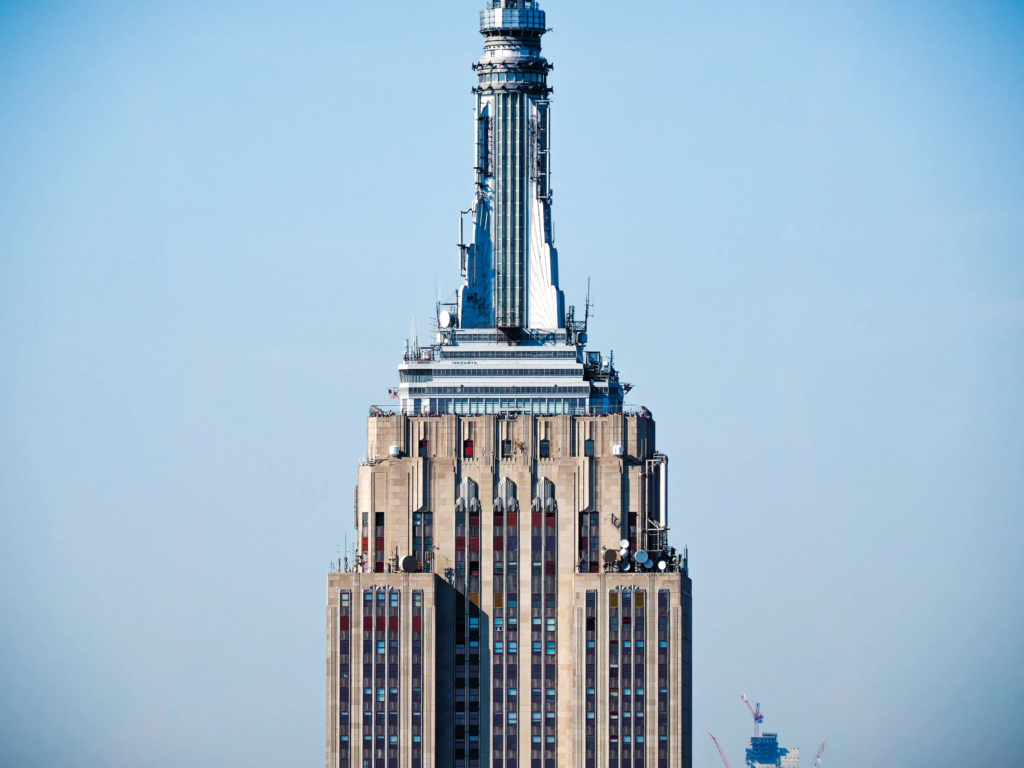
- Empire State Building (New York, 1931) – the Art Deco landmark’s exterior is clad entirely in Indiana limestone.
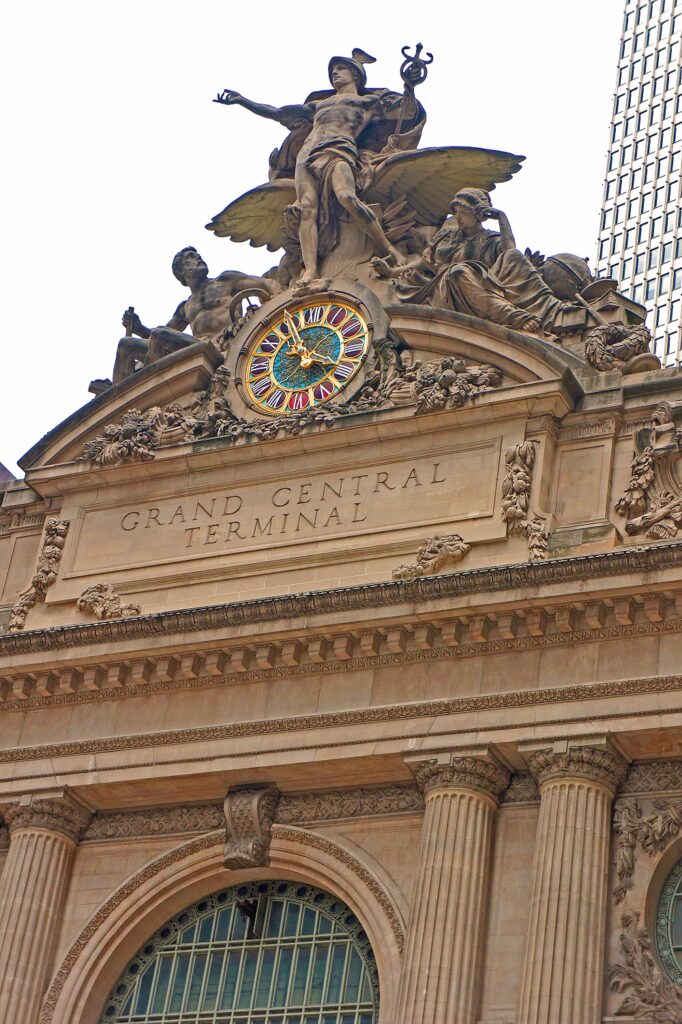
- Grand Central Terminal (New York, 1913) – the upper facade is Indiana limestone, selected after a documented field test against granite and marble; Stony Creek granite was used only at street level.
- Yale University campus (New Haven, 1890s–1930s) – including Sterling Memorial Library (1931) and Harkness Tower, part of decades of Collegiate Gothic construction.
- Penn State University (State College) – a significant portion of its historic core and administrative halls.
Midwest
- Indiana Statehouse (Indianapolis, 1888) – a Neo-Classical building constructed at the source.
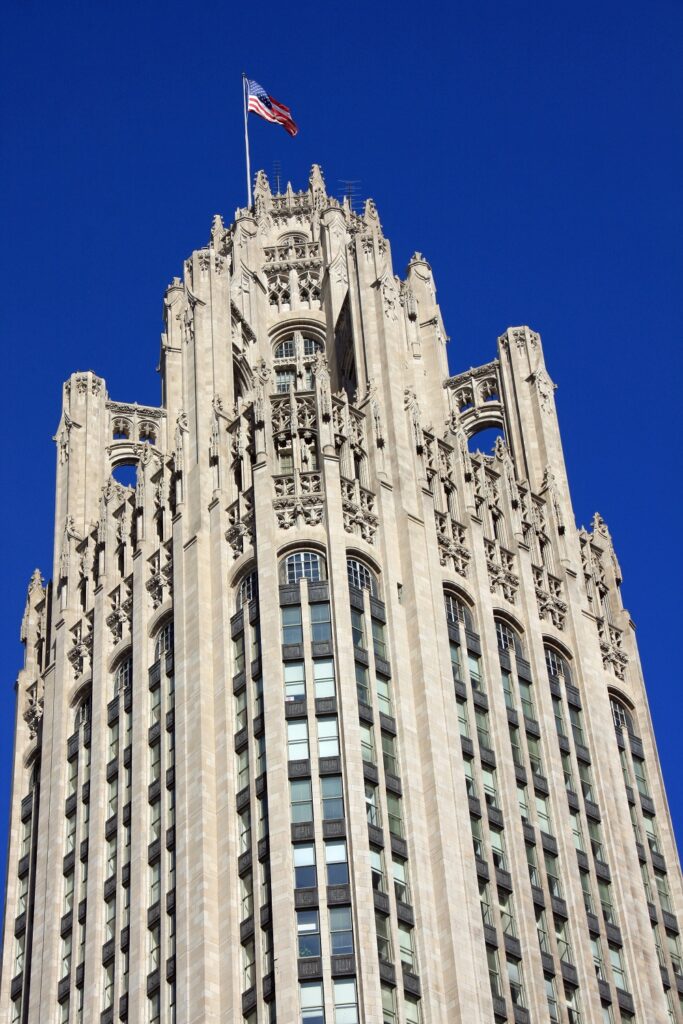
- Tribune Tower (Chicago, 1925) – the Gothic Revival tower’s Indiana limestone walls are studded with more than 150 stones and artifacts gathered from historic sites around the world.
- Merchandise Mart (Chicago, 1930) – an Art Deco commercial building with extensive limestone cladding along the Chicago River. See a walking tour of Chicago’s Indiana limestone landmarks for more from this corridor.
- Minnesota State Capitol (St. Paul, 1905) – specified in part for durability against Northern freeze-thaw cycles.
- North Dakota State Capitol (Bismarck, 1934) – known as the “Skyscraper on the Prairie.”
South and Mid-Atlantic
- Washington National Cathedral (Washington, D.C., 1907–1990) – built over eight decades, constructed almost entirely of Indiana limestone.
- The Pentagon (Arlington, 1943) – the world’s largest low-rise office building, faced in south-central Indiana stone.
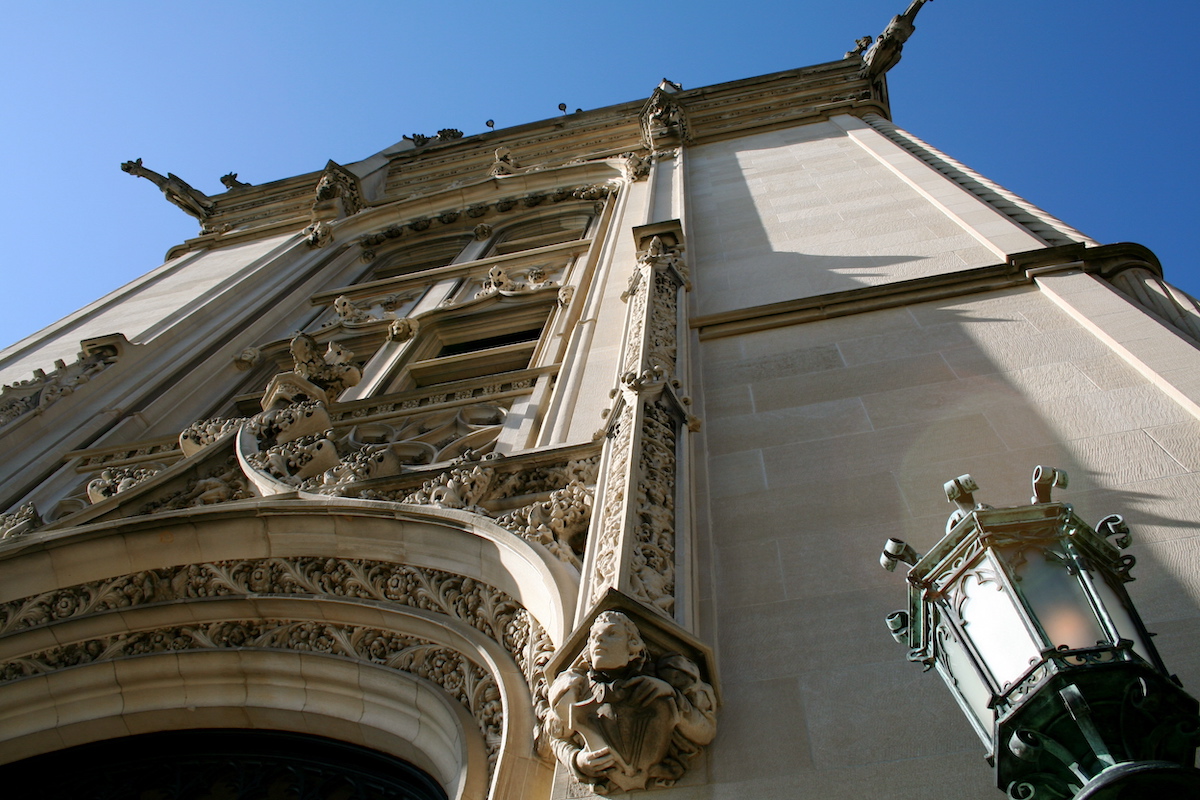
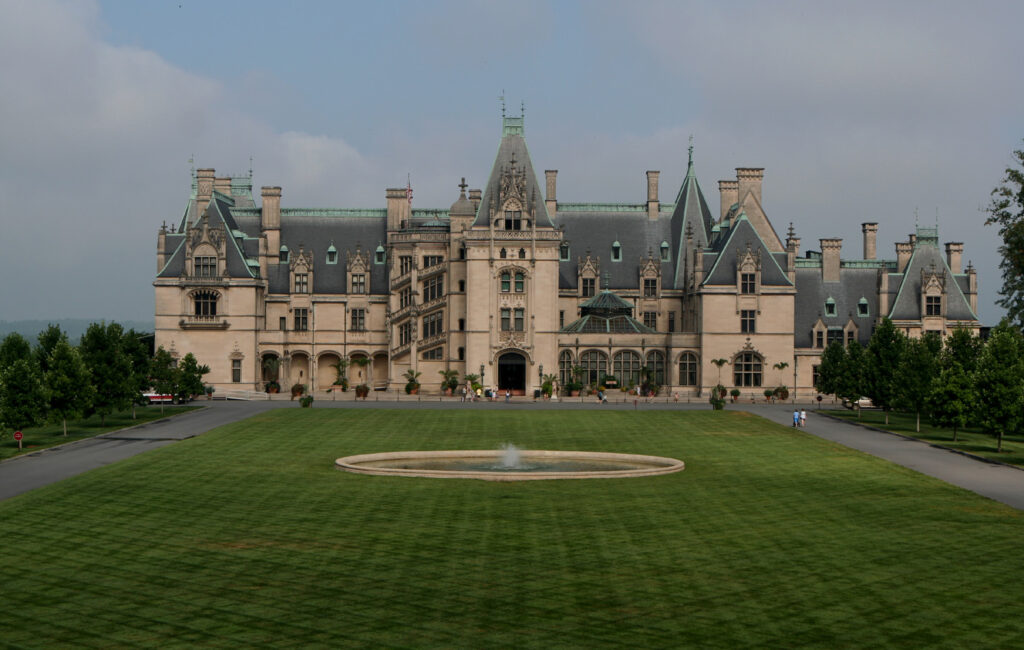
- Biltmore Estate (Asheville, 1895) – America’s largest private residence, designed by Richard Morris Hunt in the Châteauesque style.
- Morton H. Meyerson Symphony Center (Dallas, 1989) – an I.M. Pei design blending limestone with glass.

West
- Greystone Mansion (Beverly Hills, 1928) – a Tudor Revival estate with extensive custom limestone elements.
- Utah State Capitol (Salt Lake City, 1916) – soaring interior corridors detailed in the stone.
The Everyday Vernacular: Banks, Churches, Schools, and Campuses
Landmarks tell part of the story, but the stronger argument for architectural continuity is in the buildings that aren’t landmarks at all. A previously unknown archive of more than 25,000 architectural photographs, discovered in a former Indiana Limestone Company property in Bedford, Indiana and now held by the Indiana Geological and Water Survey in partnership with Indiana University, documents exactly this: the ordinary civic and commercial buildings that made limestone the default material for American towns and cities from the late 1800s through the mid-1900s.
Among the buildings documented in that archive: the Bonwit-Teller & Co. department store on Fifth Avenue, the Chicago Daily News Building (84,000 cubic feet of stone), the William K. Vanderbilt Residence on Fifth Avenue, the Irving Trust Company Building at 1 Wall Street, Tabernacle Presbyterian Church in Indianapolis, Frankford Trust Co. in Philadelphia, the Kappa Delta Rho house (“The Towers”) at Purdue University, the Hardware Mutual Insurance Co. building, the Frances G. Boynton School in Detroit, and Fourth Presbyterian Church. None of these are famous in the way the Empire State Building is. All of them are the reason limestone reads as an established material rather than a novel one in the towns and cities where they stand. For more on how the material shaped one city’s skyline specifically, see New York City’s Iconic Skyline is Grounded in Polycor Stone.
Case Histories from the Indiana Limestone Institute
The Indiana Limestone Institute’s own Handbook documents a separate portfolio of projects, submitted case by case over the Institute’s history rather than pulled from Polycor’s donated photograph archive. It skews toward major institutional and civic work from named architecture firms, a different slice of the vernacular argument than either the famous landmarks above or the everyday commercial buildings in Polycor’s archive: it’s the record of which firms specifically chose Indiana limestone when they had every material in the world to choose from.
- The U.S. Holocaust Memorial Museum, Washington, D.C. – James Ingo Freed of Pei Cobb Freed & Partners.
- The Ronald Reagan Building and International Trade Center, Washington, D.C. – Pei Cobb Freed & Partners.
- The National Constitution Center, Philadelphia, PA – Pei Cobb Freed and Partners.
- Millennium Park, Chicago, IL – OWP&P Architects.
- The NBC Tower, Chicago, IL – Skidmore, Owings and Merrill.
- Procter & Gamble Headquarters, Cincinnati, OH – Kohn Pedersen Fox Associates.
- The Crescent, Dallas, TX – John Burgee Architects with Philip Johnson, and Shepherd & Partners.
- The Dallas Museum of Art, Dallas, TX – Edward Larrabee Barnes Associates.
- Seattle Art Museum, Seattle, WA – Venturi Scott Brown and Associates.
- Duke University Divinity School, Durham, NC – Hartman-Cox Architects.
- The American United Life Insurance Building, Indianapolis, IN – Skidmore, Owings & Merrill.
- Equitable Tower West, New York, NY – Edward Larrabee Barnes Associates.
One entry in the Handbook’s portfolio makes a different point than the rest: the Gate House Stairs at the Louisville Water Co. in Louisville, Kentucky, were destroyed by a tornado and rebuilt using replacement stone cut off-site from job-measured patterns and full-size samples of the original railing. It’s a small, unglamorous example next to a national museum, but it’s the more practical proof that Indiana limestone can be matched and restored after real structural damage, not just aged gracefully under normal weather.
Case Study: Freedom Place at Old Parkland
The first building on the Old Parkland campus in Dallas, built in 1894, was Indiana limestone. When the newest building on that campus, Freedom Place, was switched mid-design from cast stone to Indiana limestone, the decision wasn’t only about durability or cost. It matched a site where stone was already the established material, bookending the campus’s original building with its newest one in the same stone.
What This Means for Design Decisions
On a site with no existing stone context, material selection is a clean-sheet decision driven by cost, performance, and aesthetics. On a site adjacent to a courthouse, a university quad, a civic district, or any building from the era when limestone was the default American building stone, there’s a fourth factor: whether the new building reads as part of its surroundings or apart from them. Cast stone can approximate the look. Natural stone, and Indiana limestone specifically, is the material the surrounding architecture is actually built from.
For material specifications, see the Limestone product page. For more on the material’s history, see Indiana Limestone: America’s Original Building Stone.
Frequently Asked Questions
The Empire State Building, Grand Central Terminal, the Washington National Cathedral, the Pentagon, the Biltmore Estate, Tribune Tower, and roughly 35 of the 50 US state capitol buildings are all built with Indiana limestone.
Approximately 35 of the 50 state capitol buildings in the United States are constructed with Indiana limestone.
Yes. The Empire State Building’s exterior is clad entirely in Indiana limestone, completed in 1931.
When a new building sits near existing stone architecture, such as a courthouse, university campus, or civic district, matching that material helps the new building read as part of its surroundings rather than apart from them.
No. An archive of over 25,000 architectural photographs documents its use in ordinary banks, churches, schools, apartment buildings, and university buildings across the United States from the late 1800s through the mid-1900s, not just famous landmarks.
Yes. The first building on the Old Parkland campus, built in 1894, was Indiana limestone. When Freedom Place was switched from cast stone to Indiana limestone mid-design, it matched the material of the campus’s original building.