
Specifying Indiana Limestone for Facades and Cladding
This guide covers specifying Indiana limestone for vertical applications, facades and cladding, and for projects weighing it directly against cast stone. It doesn’t repeat the ASTM testing framework that applies broadly across stone types and paving applications; for that grounding, see The Art of Specifying Natural Stone, Polycor’s general specification guide for architects and design professionals. What’s here is narrower and more specific: a specification that just says “Indiana limestone” leaves too much to chance for a facade or cladding project, since the stone varies by quarry and even by ledge within a quarry, and getting the specification language right up front is what makes a future repair, addition, or restoration possible without a color mismatch years down the line.
The Stone Itself: Freestone Properties and Grain Grades
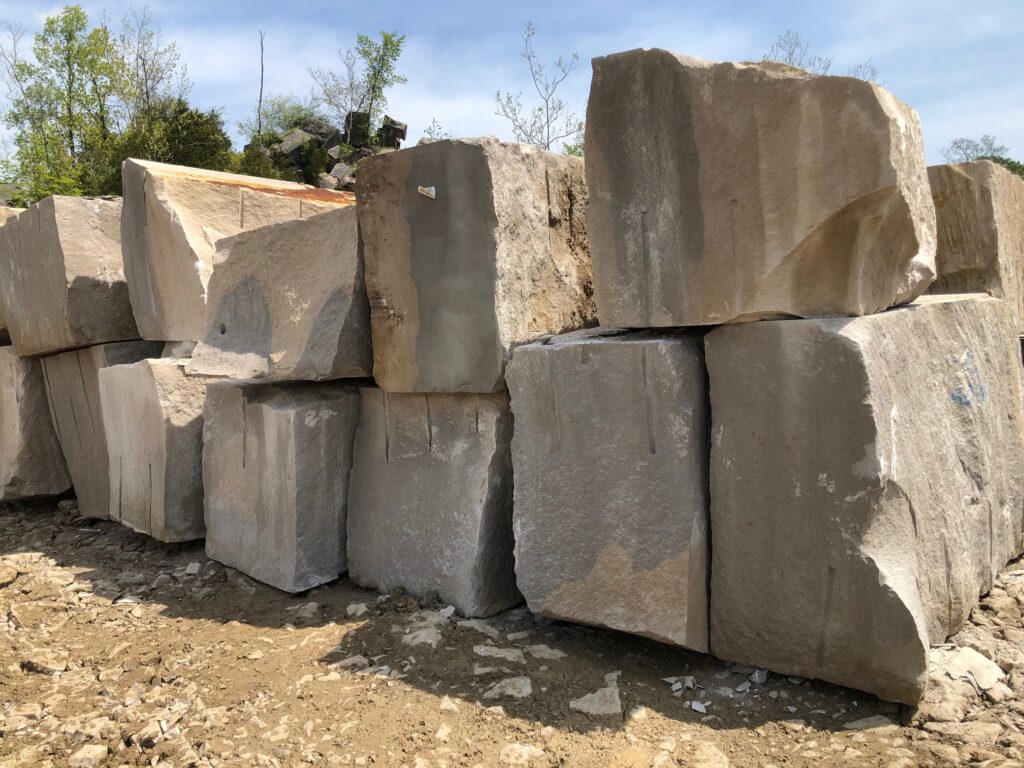
Indiana limestone is quarried exclusively from the Salem Limestone formation in south-central Indiana and classified under ASTM C568 as a Type II (Medium Density) Dimension Limestone, the standard that establishes the minimum physical requirements a specifier can hold the material to. Citing ASTM C568 directly in the specification, rather than just naming the stone, is what gives that requirement contractual weight.
A True Freestone
What sets Indiana limestone apart from many other sedimentary limestones is that it is a true freestone: it has no pronounced bedding planes or directional weaknesses, so it can be cut and carved in virtually any direction without splitting along natural layers. That’s not a cosmetic detail, it’s what makes complex cornices, moldings, and sculptural work practical in the first place, and it’s why the material machines predictably whether a fabricator is working traditional tooling or 5-axis CNC. A stone without this property restricts what a designer can ask a fabricator to do; this one generally doesn’t.
Grain Grades
Indiana limestone is defined by color, cool gray or warm buff, and separately by grain structure, graded as Select, Standard, or Rustic. A Variegated selection allows a blend of all three within a single installation while still meeting ASTM C568 criteria. The engineering properties are essentially equivalent across these grades; the distinction is aesthetic. Individual producers may also market proprietary selections that fall within the accepted definition of Indiana limestone, so specifying the grade by name, not just “Indiana limestone,” is what actually controls the finished appearance.
Polycor lists each color-and-grain combination as its own named product: Full Color Blend, Standard Buff, Rustic Buff, Standard Gray, Rustic Gray, and Standard Silver Buff. Specifying by the exact product name, rather than the grade alone, is what a fabricator actually orders against.
Because no two pieces of natural stone are identical, and the range of natural variation grows with project size, larger projects should rely on range samples or full-size mock-ups to set expectations before fabrication begins, not on the grade name alone. That variation isn’t a defect to be minimized in the spec; it’s what the material actually looks like once it’s on a building.
Why Traceability Matters
Each quarried block is graded for color and grain and assigned a unique ID that traces back to its exact location in the quarry. That record is what lets a fabricator match a future addition or repair to the original material years or decades later. It only works, though, if the original specification captured enough detail to look the record up. Naming the stone species alone isn’t enough; the color blend and, ideally, the quarry itself should be part of the spec.
Specification Checklist
- Call out color and specific quarry by name for natural stone, not just species, to preserve traceability for future match-ups.
- If specifying cast stone alongside or instead of natural stone, require an integral water repellent in the mix design; it’s common practice but shouldn’t be assumed.
- Specify ANSI/NSC 373 certification for natural stone quarries where sustainability documentation matters to the project.
- Confirm anchor detailing and cover requirements with the structural engineer before bid, not after award.
- Request the fabricator’s tolerance range in writing rather than assuming industry defaults, particularly on large-format facades.
Mortar Selection for Indiana Limestone and Cast Stone Facades
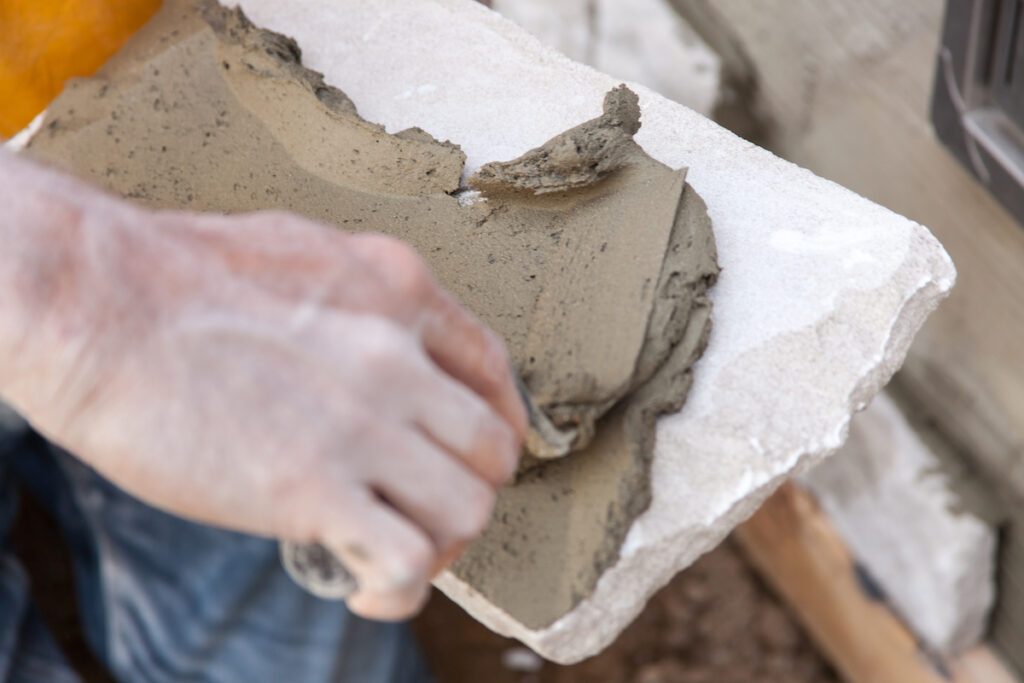
Mortar selection for vertical masonry, facades and cladding set in mortar joints rather than dry-laid, follows the same M-to-K strength scale for both Indiana limestone and cast stone. Types run from M to K in a rough strength order, named by taking the phrase “mason work” and using every other letter. Type M is a hydraulic mortar, strong enough for below-grade structural work but strong enough to crack limestone or cast stone if used above grade, since it doesn’t flex with the unit. Type S and Type N sit in the working middle and are the standard choice for most exterior masonry with either material: workable for the mason, not so strong that it fights the stone. Type O is weaker and slower-setting, and it’s the right choice specifically for repointing and restoration work, where the mason needs more time and the existing material needs a softer match rather than a harder one.
Coordinating a Mid-Design Material Change
Freedom Place at Old Parkland switched from cast stone to Indiana limestone after the design was already underway, and the record of what that took is useful for anyone considering the same move. The shop drawing process took nearly a year to complete before fabrication began, driven partly by design changes and partly by real detailing differences between the two materials. Moving to natural stone allowed for larger pieces and fewer joints, which meant new anchoring details: the structural engineer on that project developed over 200 bespoke connection types across soffits, keystones, cornices, and columns. None of it was a reason not to switch. It’s a reason to bring the fabricator and structural engineer in as soon as the switch is under consideration, not after the new material is already specified.
For material specifications and technical data, see the Limestone product page. For the history behind the material, see Indiana Limestone: America’s Original Building Stone.
Frequently Asked Questions
Call out the color blend and specific quarry by name, not just the stone species, so a future repair or addition can be matched back to the original block records.
Type S or Type N for standard exterior applications with either material, Type O for repointing and restoration work. Type M is too strong for either material above grade and risks cracking the unit.
The letters come from taking the phrase mason work and using every other letter, a naming convention rather than an abbreviation of the mortar’s ingredients.
Yes, though it requires early coordination with the fabricator and structural engineer. On Freedom Place at Old Parkland, the switch required close to a year of shop drawing work and over 200 bespoke connection details before fabrication began.
An integral water repellent in the mix design, since it is common practice but not automatic, along with the fabricator’s aggregate testing protocol and tamping quality control process.